
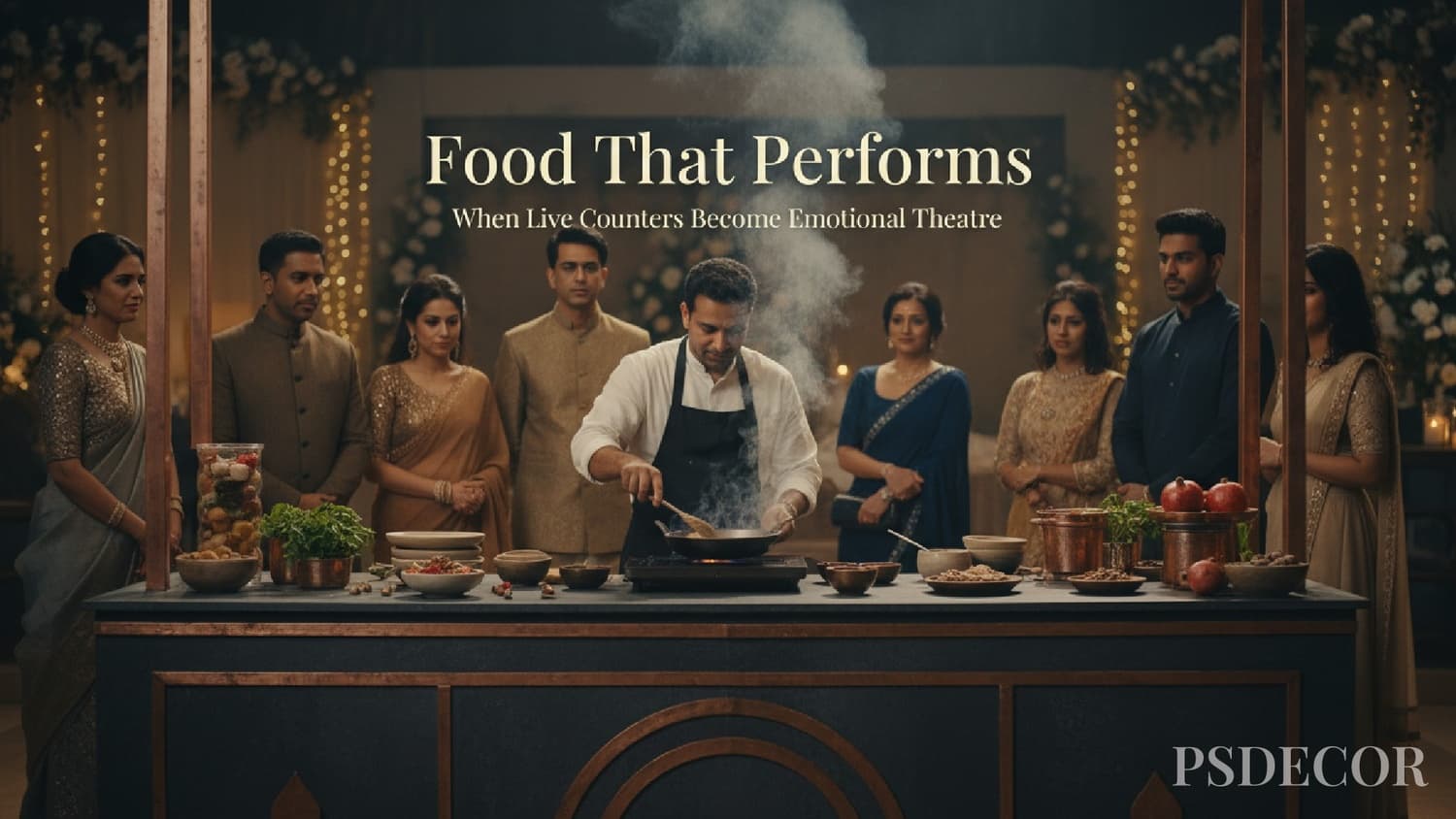
There's a moment at modern weddings that didn't exist a few years ago.
A guest stops mid-conversation. A chef looks up from a sizzling pan and starts talking—not about ingredients, but about why this dish exists. Someone nearby smiles and says, 'This tastes like my childhood.'
That pause? That smile? That quiet emotional shift?
That's food performing.
Because in today's weddings, food isn't being served anymore. It's being staged.
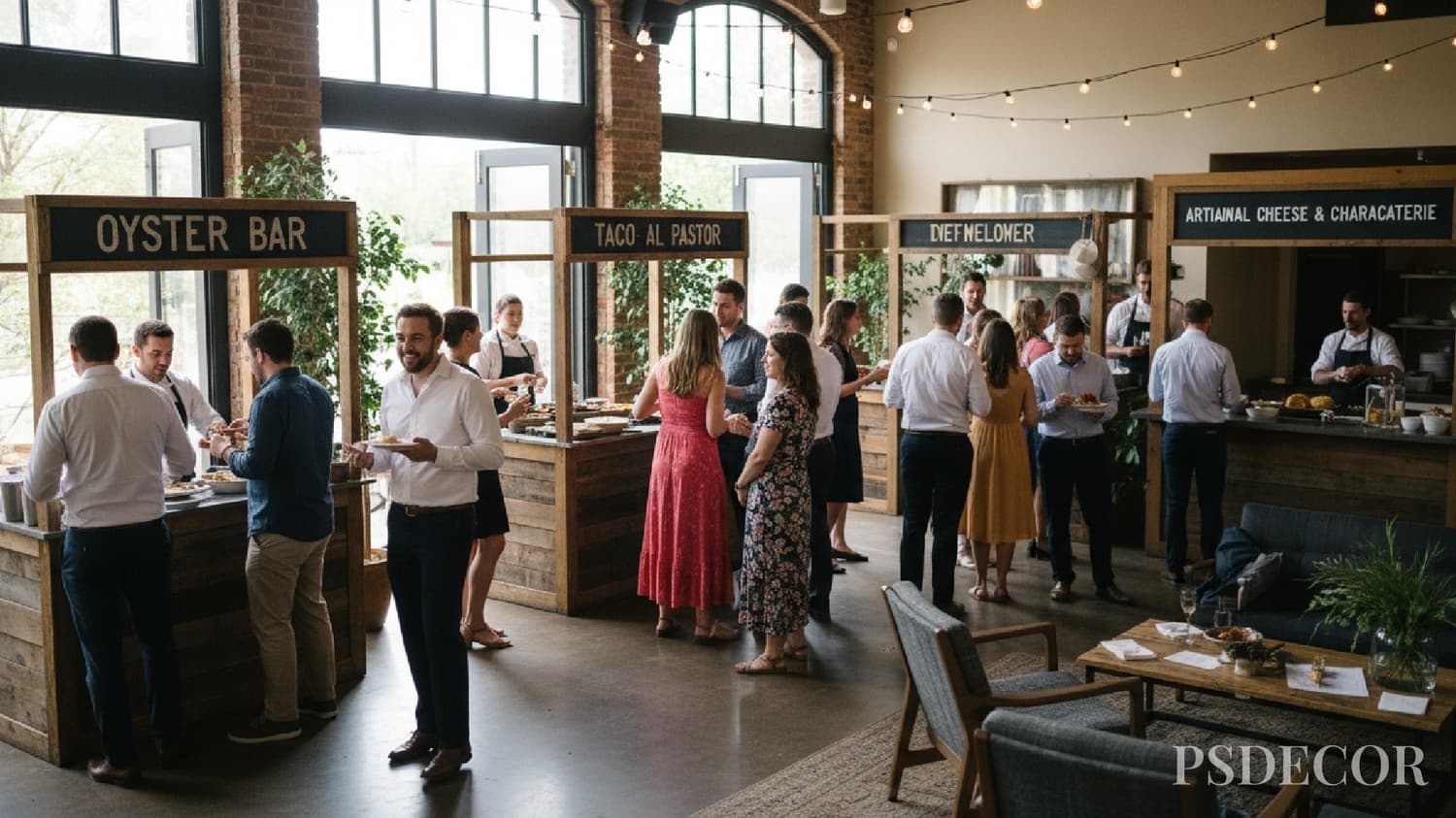
Live counters have officially entered their theatre era—designed not just to feed guests, but to move them. What used to be background activity has become one of the most emotionally charged, intentionally designed parts of the celebration.
And no, this isn't about trends. It's about memory, identity, and storytelling, served hot.
The Shift No One Talks About (But Everyone Feels)
For years, wedding food was measured by quantity. More dishes. Bigger spreads. Longer menus. The logic was simple: abundance equals generosity.
But something changed.
Guests stopped remembering what they ate. Couples stopped caring about impressing everyone. And suddenly, food had to do more than exist.
Now, food has a role to play.
It sets tone. It carries personal history. It becomes part of the emotional architecture of the wedding.
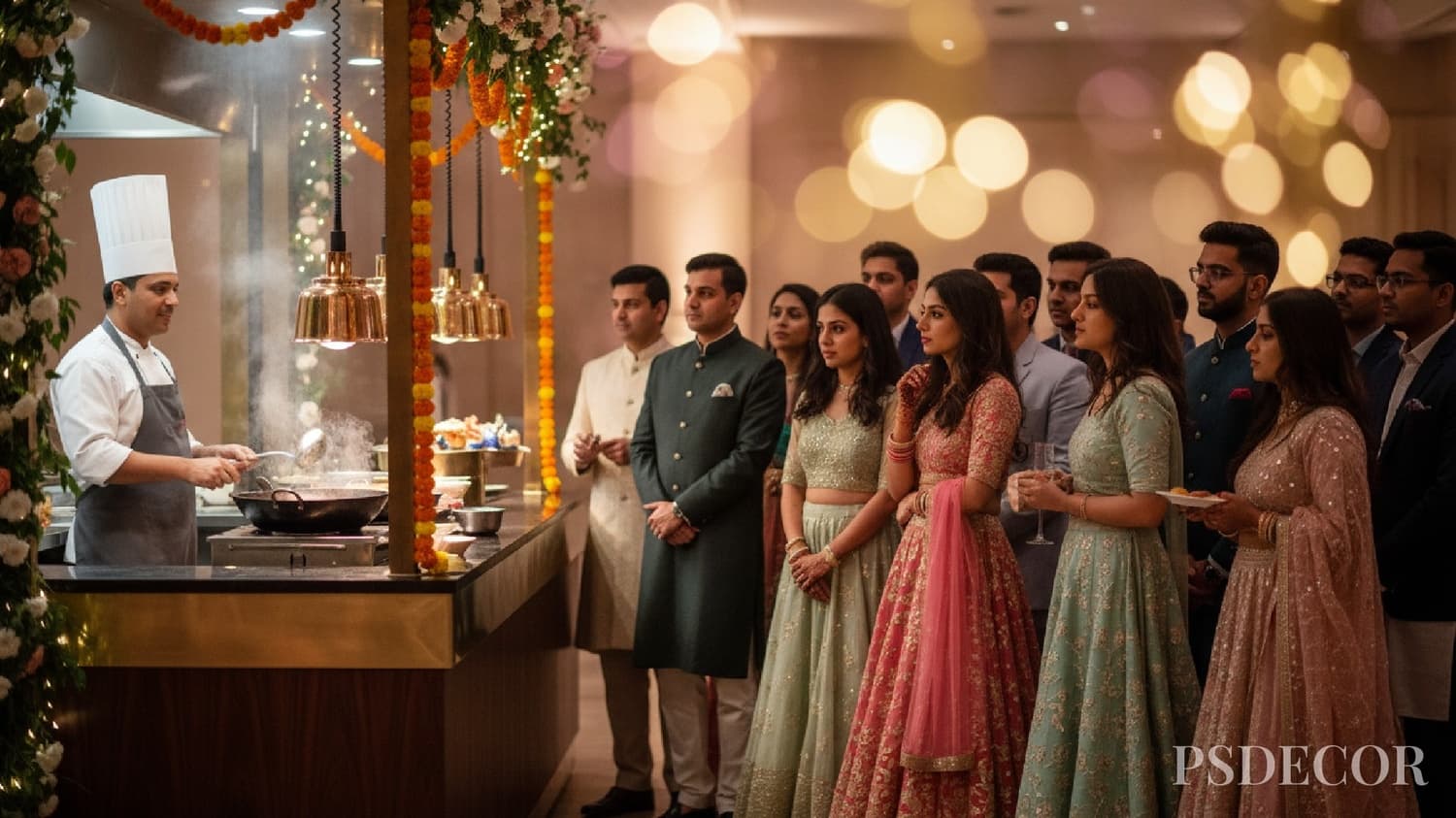
Live counters—once practical, now poetic—are where this transformation is most visible. They've evolved from functional food stations into immersive, interactive moments that feel closer to performance art than catering.
Welcome to the era of food that performs.
Childhood-Food Revival Counters: Nostalgia, Served Intentionally
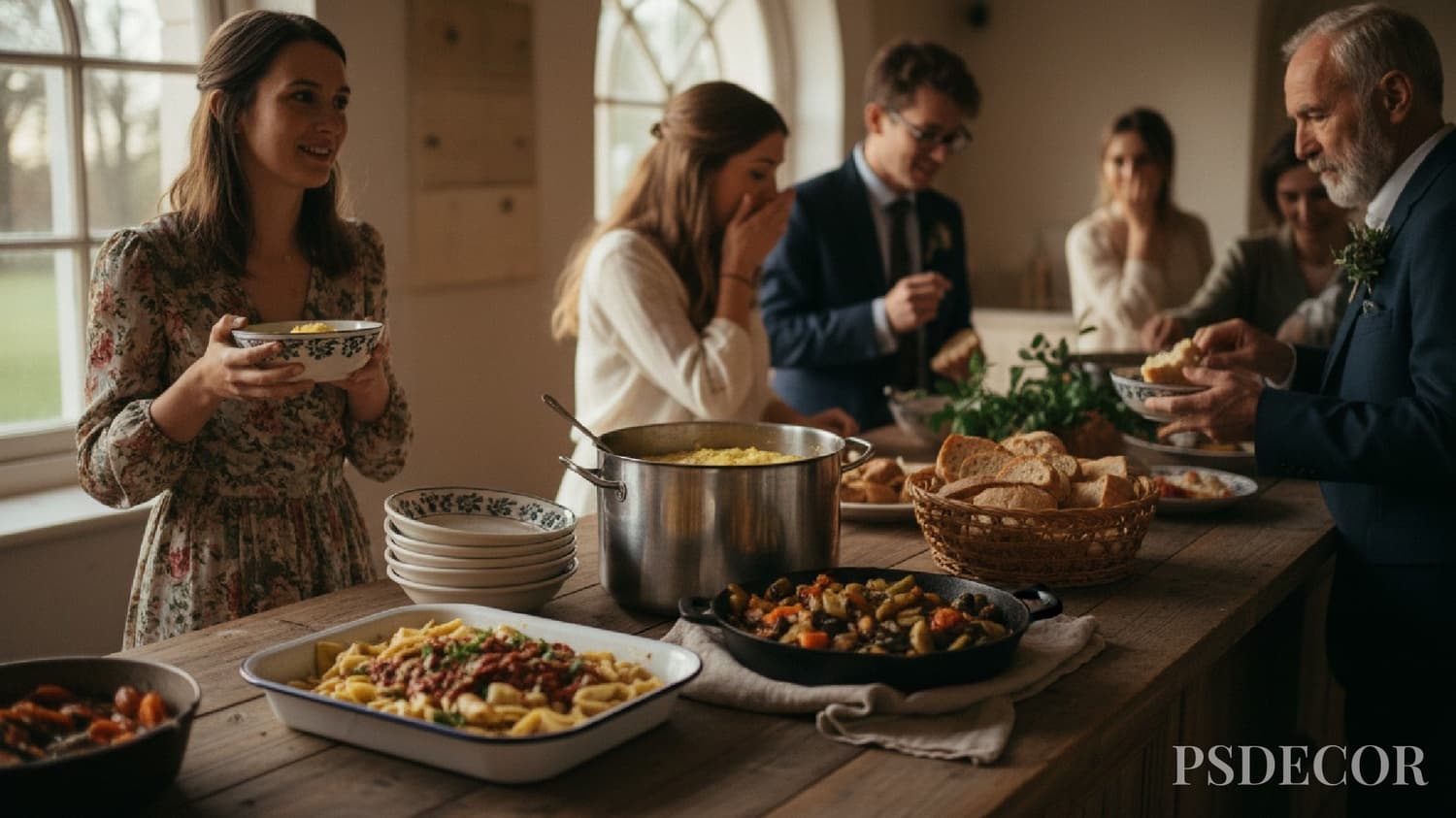
Some of the most powerful wedding food moments today don't look luxurious at all.
They look familiar.
A counter inspired by school-tiffin snacks. A dish that only existed in one neighbourhood, on one street corner. A festival sweet made the way a grandmother used to insist was 'the right way.'
This isn't accidental nostalgia. It's deeply intentional.
Couples are bringing their personal histories into the menu—not as gimmicks, but as emotional anchors. These childhood-food revival counters don't exist to impress guests. They exist to connect them.
Because nostalgia is one of the fastest emotional shortcuts there is. One bite, and you're not at a wedding anymore—you're eight years old, standing barefoot in a kitchen, or sharing food with friends after school.
When designed well, these counters aren't casual. They're carefully curated spaces:
- The vessels matter
- The signage tells a story
- The pacing invites guests to linger
It's memory, made edible.
Regional Love Stories Told Through Cuisine
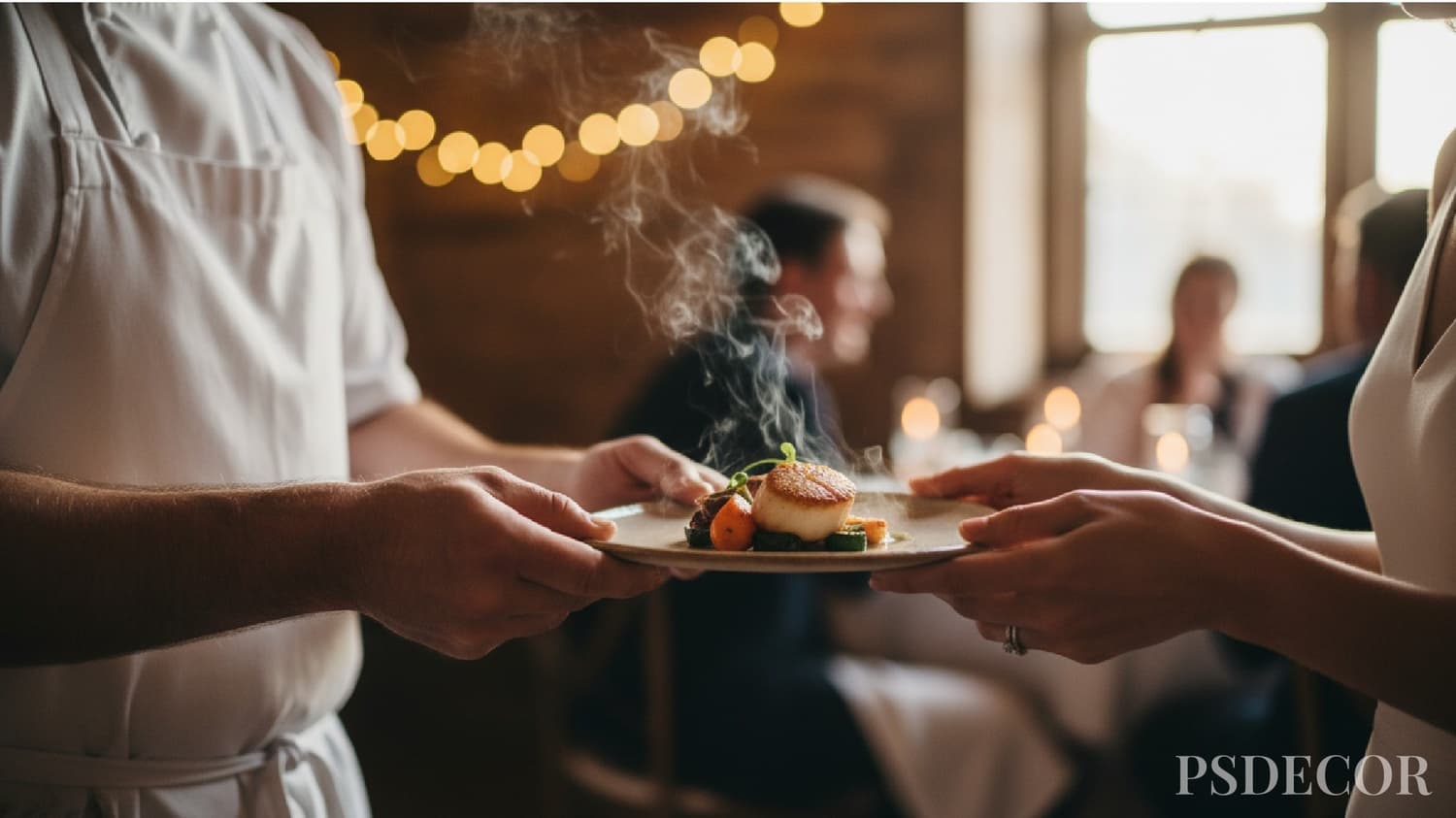
Not all love stories come from the same place—and now, neither does the food.
Couples from different regions are using live counters to narrate their journey without saying a word. One counter speaks in one culinary language. Another answers in a completely different one. Together, they form a conversation.
This isn't about showing off regional diversity. It's about honoring origin stories.
Maybe it's where one partner grew up versus where the other learned independence. Maybe it's the place they met versus the place they return to for comfort. Maybe it's north meets south, coastal meets inland, hometown meets chosen city.
The key shift? These aren't chaotic multi-cuisine spreads. They're curated chapters.
Each counter has:
- A clear narrative
- A distinct mood
- A reason to exist
Guests don't feel overwhelmed. They feel guided—moving through a love story told in flavors, textures, and aromas.
This is food as emotional geography.
When Chefs Become Performers, Not Just Professionals
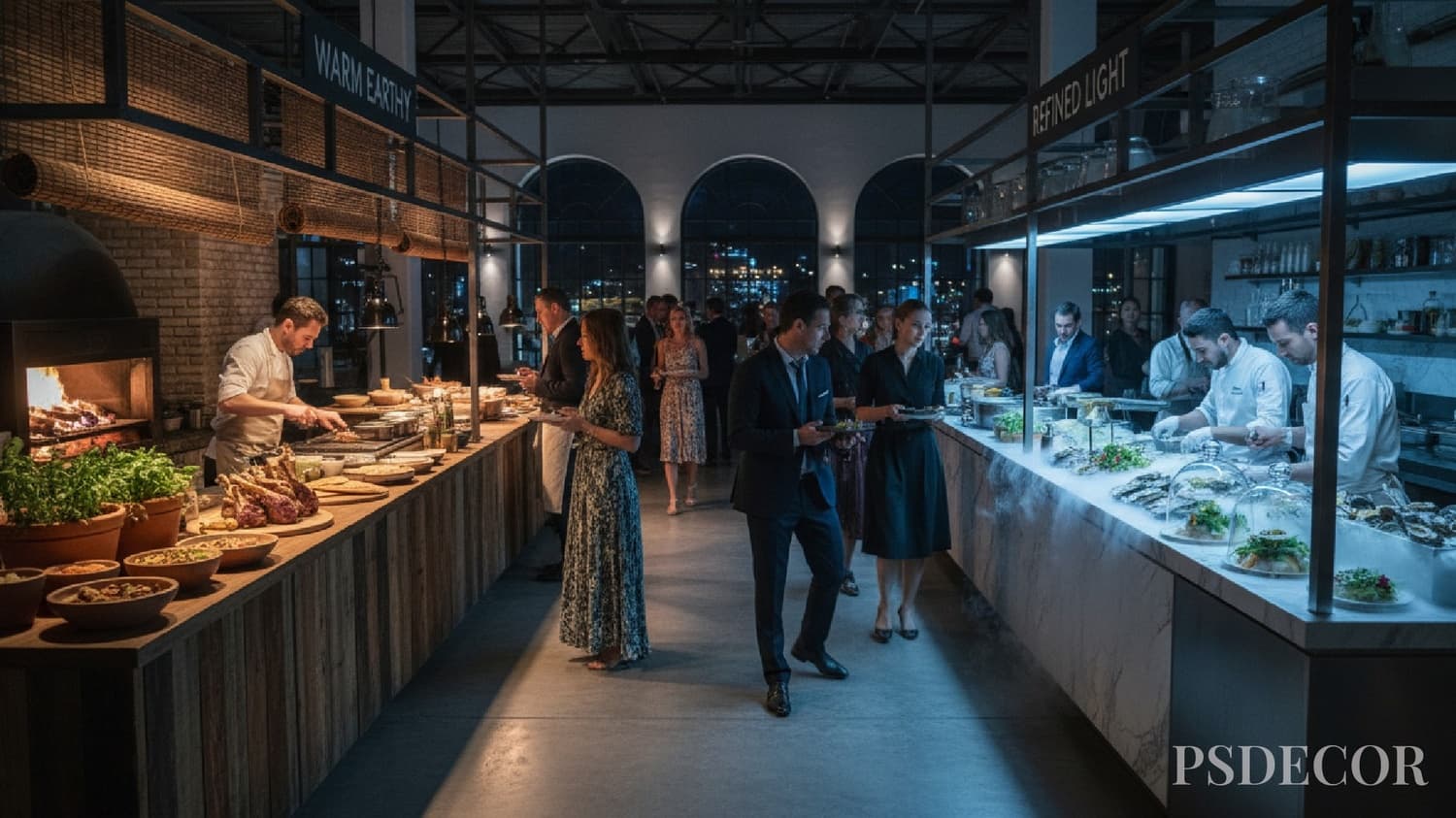
In traditional setups, chefs were invisible. Efficient. Silent.
Not anymore.
Today's live counters thrive on interaction. Chefs speak. They explain. They respond. They read the room. They remember faces.
The counter becomes a stage, and the chef, a storyteller.
This isn't small talk. It's scripting.
• Why this dish exists
• Where the recipe comes from
• Why it's being cooked this way, right now
Guests aren't just waiting for food. They're participating in an experience.
And something subtle but powerful happens when a chef makes eye contact and tells a story: the guest slows down.
They stop scrolling. They stop rushing. They become present.
In a wedding full of noise, that presence is rare, and deeply valuable.
Visual Plating: When the First Bite Is With the Eyes
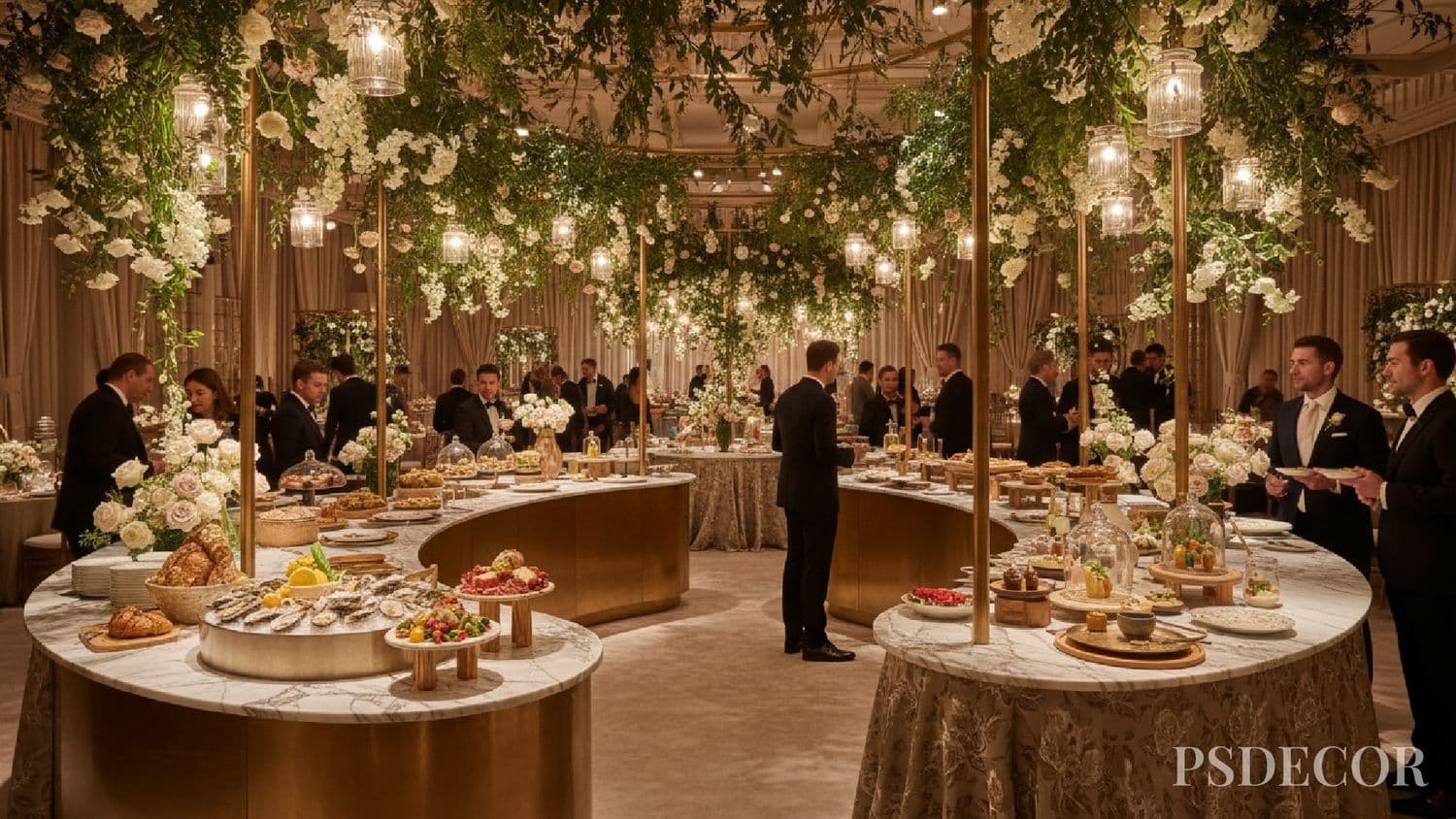
Before guests taste anything, they see it.
And in modern wedding design, that moment matters more than ever.
Plating is no longer just about elegance—it's about storytelling. The colours, the textures, the vessels, the layout of the counter itself—all of it communicates mood before flavor.
Overloaded buffets are being replaced by visually intentional stations:
- Negative space instead of clutter
- Height, smoke, movement instead of static trays
- Materials that echo the overall décor language
Food now belongs to the design conversation.
When plating aligns with the wedding's visual identity, something clicks. Guests may not consciously articulate it, but they feel coherence.
They remember it.
Because people don't remember lists. They remember scenes.
Non-Linear Dining: Letting Guests Discover, Not Consume
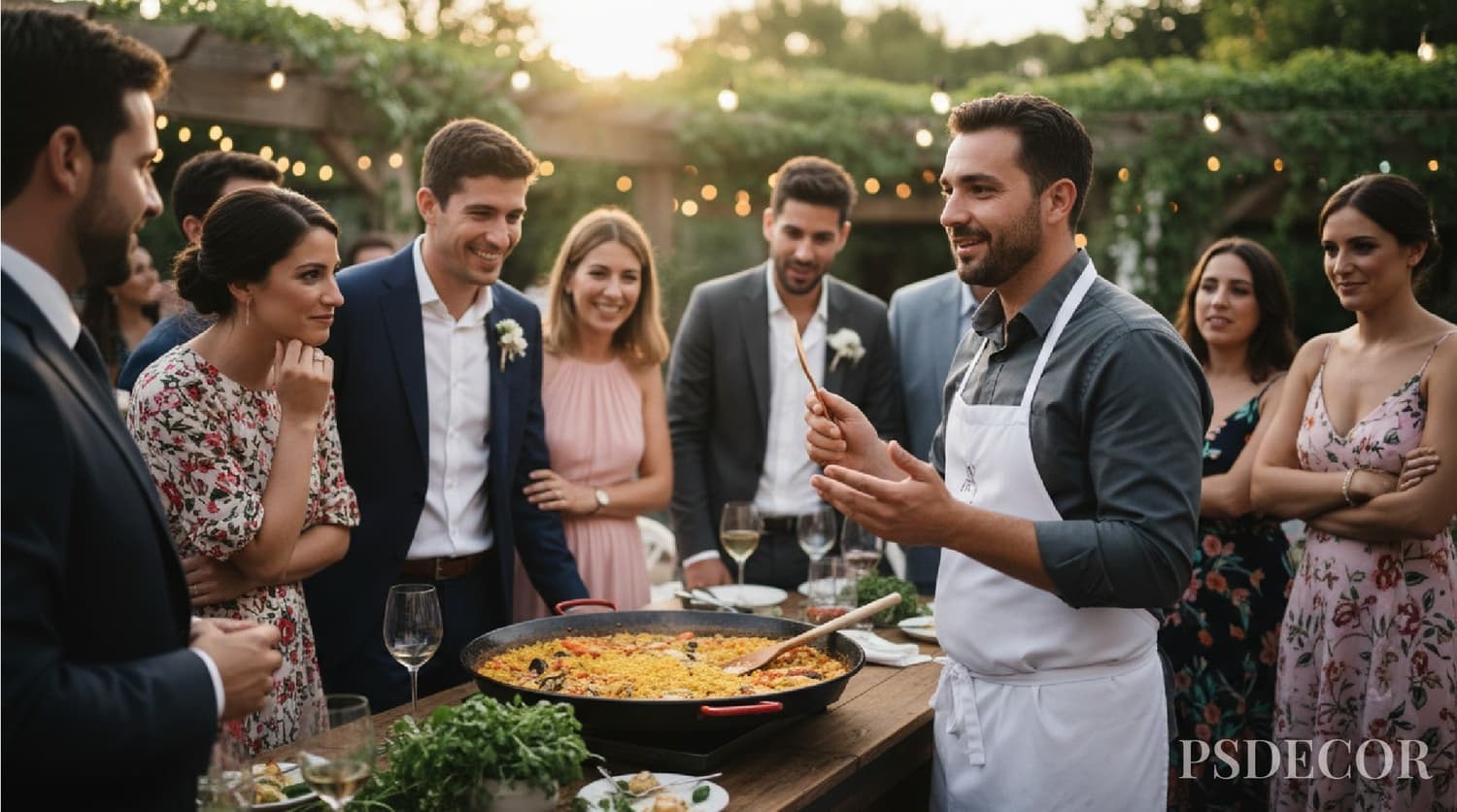
The old format was predictable: starters, mains, desserts. Everyone moved together. Everyone finished together.
Now? Dining is being unstructured—on purpose.
Non-linear dining journeys allow guests to explore food the same way they explore spaces:
- Discovering counters in phases
- Returning to favorites
- Eating based on curiosity, not obligation
This keeps energy alive.
There's no food coma moment. No lull where the room deflates. Instead, the experience flows—guests moving, talking, reacting, sharing.
Food becomes part of the wedding's choreography, not a pause in it.
Why This Is Happening Now
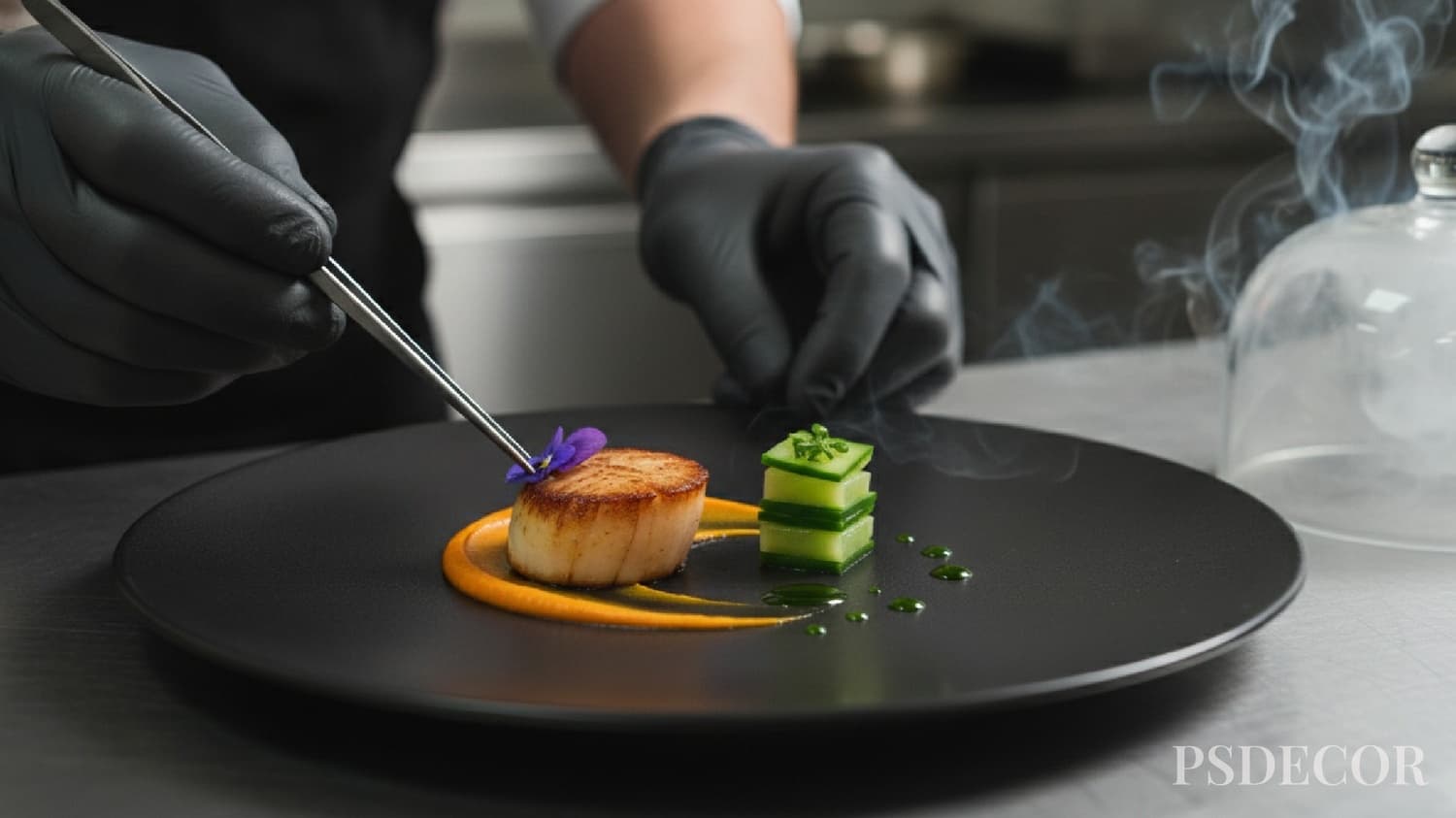
This shift didn't come out of nowhere.
We're living in an experience-first culture. Attention spans are shorter, but emotional expectations are higher. People crave meaning over magnitude.
Weddings are no longer about proving anything. They're about expressing something.
Food that performs exists because couples want their guests to feel something, not just be fed.
And live counters are the perfect medium:
- They're flexible
- They're personal
- They allow stories to unfold in real time
This isn't a trend that will fade. It's a reflection of how people want to gather now—with intention, emotion, and memory at the center.
Designing Food Experiences, Not Just Menus
Here's the truth most people miss:
Food that performs doesn't happen by accident.
It requires:
• Narrative thinking
• Spatial awareness
• Emotional intelligence
• And a deep understanding of how people move, pause, and connect in a space
When food is treated as part of the design, not an afterthought, it becomes unforgettable.
This is where thoughtful collaboration matters. When décor, layout, lighting, and food experiences speak the same language, the wedding stops feeling assembled, and starts feeling authored.
For couples who believe their celebration should be remembered not just for how it looked, but for how it felt, designing food as an emotional experience is no longer optional—it's essential.
And for those conversations that begin with, 'We want our food to mean something,' it helps to work with a team that understands storytelling as deeply as aesthetics.
Connect with PS Decor
- 📞 Call: +91 7599208222
- 📧 Email: info@psdecor.in
- 🌐 Website: www.psdecor.in