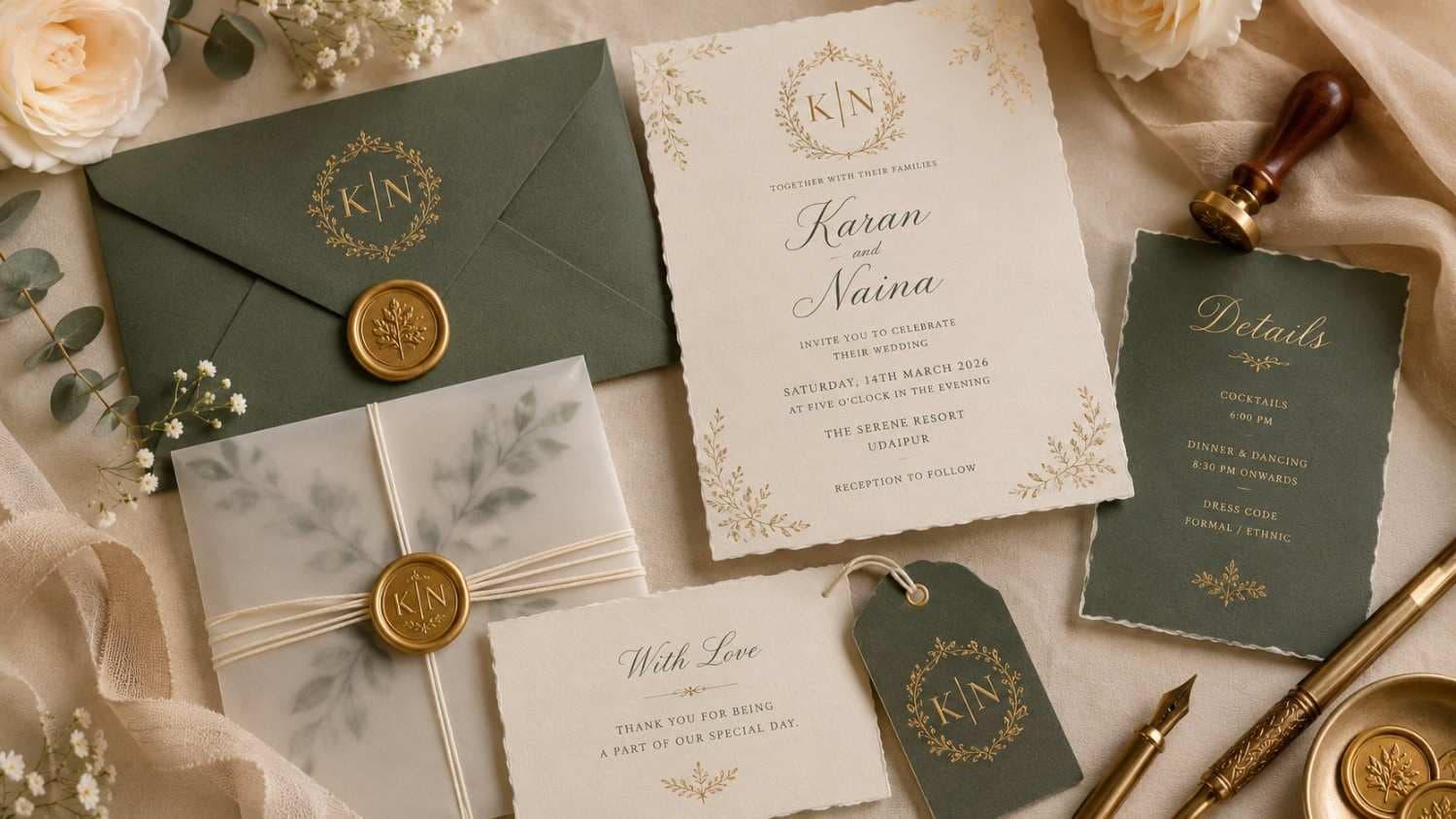
Wedding stationery is often the first physical touchpoint a guest has with a wedding, arriving weeks before the actual event. In 2026, couples are treating invitations, save-the-dates and day-of stationery as an extension of their personal identity rather than a generic printed formality. Monograms, wax seals and custom typography have become the three most requested personalisation elements, turning a simple card into something guests keep rather than discard.
This shift reflects a broader move in wedding planning: couples want details that feel specifically theirs, not templated. Stationery, being tactile and visible from the very first interaction, has become one of the easiest ways to set that tone early.
Why Personalised Stationery Matters in 2026
- It sets guest expectations for the overall wedding style before they even arrive
- Monograms and custom design elements are increasingly carried through to décor, favours and signage for a consistent visual identity
- Guests are more likely to keep and photograph stationery that feels designed rather than mass-produced
- Personalisation has become more accessible with digital design tools and specialised stationery vendors
- It allows couples to reflect cultural, regional or personal elements that generic templates cannot capture
Wedding Monograms: Designing a Couple's Visual Identity
A monogram combines the couple's initials into a single custom mark, often used across invitations, welcome signage, favours and even projected lighting at the venue.
Common monogram styles
- Classic interlocking initials — traditional, elegant, and versatile across formal and semi-formal weddings
- Illustrative monograms — initials combined with floral, regional or thematic motifs
- Minimalist line-art monograms — simple, modern designs that work well for contemporary or fusion weddings
- Cultural motif monograms — initials integrated with traditional patterns, such as paisley, mandala or regional art styles
Where monograms are used beyond invitations
• Welcome boards and entrance signage
• Wedding favours and gift packaging
• Napkins, coasters and table settings
• Digital save-the-dates and wedding websites
Couples who plan the monogram early, ideally before finalising the invitation design, are able to carry it consistently across every touchpoint of the wedding rather than treating it as an isolated design element.
Wax Seals: Small Detail, Strong Impact
Wax seals have moved from a purely decorative envelope closure to a signature design element that guests notice immediately upon opening their invitation.
Types of wax seals
- Traditional wax seals — made with sealing wax and a metal stamp, offering an authentic, slightly textured finish
- Adhesive wax seals — pre-made seals that are stuck onto envelopes, offering a similar look with easier application for large guest lists
- Custom stamp seals — engraved with the couple's monogram, initials or a symbol relevant to their story
Practical considerations
Traditional wax seals can be fragile during transit, so couples often reinforce them with a light spray sealant or reinforced tape backing. For large guest lists, adhesive wax seals offer a good balance between authenticity and practicality. Seal colour is typically chosen to match the invitation's colour palette rather than a random gold or red default.
Beyond envelopes
Wax seals are increasingly used on menu cards, welcome kits and even as a decorative element on ribbon-tied favour boxes.
Custom Fonts: Setting the Tone Before Guests Read a Word
Typography plays a bigger role in stationery than most couples initially expect. Font choice communicates the wedding's overall tone before a guest reads a single word of the invitation.
Matching fonts to wedding style
- Elegant script fonts — suited to traditional or romantic weddings, often paired with foil detailing
- Clean modern sans-serif fonts — used for contemporary or minimalist wedding themes
- Bold decorative fonts — chosen for vibrant, festive weddings with strong colour palettes
- Custom hand-lettered fonts — designed specifically for the couple, often based on their own handwriting or a calligrapher's custom work
Consistency across stationery pieces
A common mistake is mixing too many font styles across save-the-dates, invitations and day-of stationery. Most designers recommend limiting a stationery suite to two or three fonts — one primary display font and one or two supporting fonts for details like names, dates and venue information.
Building a Cohesive Stationery Suite
Rather than designing each piece separately, most couples in 2026 plan their monogram, seal and font choices together as a single design system, then apply it consistently across:
- Save-the-dates
- Main wedding invitations
- RSVP cards
- Day-of programs and menu cards
- Thank-you cards sent after the wedding
This consistency is what makes stationery feel like a cohesive brand identity for the wedding rather than a set of unrelated printed items.
Practical Tips for Planning Personalised Stationery
- Finalise the monogram and colour palette before starting invitation design, since it influences every other piece
- Order 10–15% extra printed invitations to account for last-minute guest list additions or printing errors
- Request physical proofs or samples before finalising wax seal colour and font pairing, since screen colours often differ from print
- Plan production timelines carefully, as custom stationery with wax seals and foil detailing typically takes longer than standard printing
- Keep a digital version of the monogram and design assets for reuse across décor and signage
Conclusion
Personalised wedding stationery has become far more than an invitation formality. Monograms, wax seals and custom fonts, when planned together as a cohesive design system, give a wedding a distinct visual identity from the very first guest interaction. The extra planning time required for these details is generally rewarded with stationery that guests actually notice, keep and remember.
At PS Decor, wedding planning includes coordinating with stationery designers to ensure invitations and print materials align with the overall décor and theme, creating a consistent visual experience from the first save-the-date to the wedding day itself.
Frequently Asked Questions
- When should couples finalise their wedding monogram?
Ideally before starting invitation design, since the monogram often influences colour palette and typography choices used throughout the stationery suite. - Are traditional wax seals durable enough for postal mailing?
They can be, though many couples use reinforced adhesive backing or opt for adhesive wax seals for guest lists sent by post to avoid breakage in transit. - How many fonts should a wedding stationery suite use?
Most designers recommend limiting the suite to two or three fonts to maintain visual consistency across all pieces. - Can a monogram be used beyond the wedding invitations?
Yes, monograms are commonly extended to signage, favours, table settings and even wedding websites for a consistent visual identity. - How far in advance should custom stationery be ordered?
At least two to three months in advance, especially for designs involving wax seals, foil printing or fully custom fonts, which require longer production timelines.