
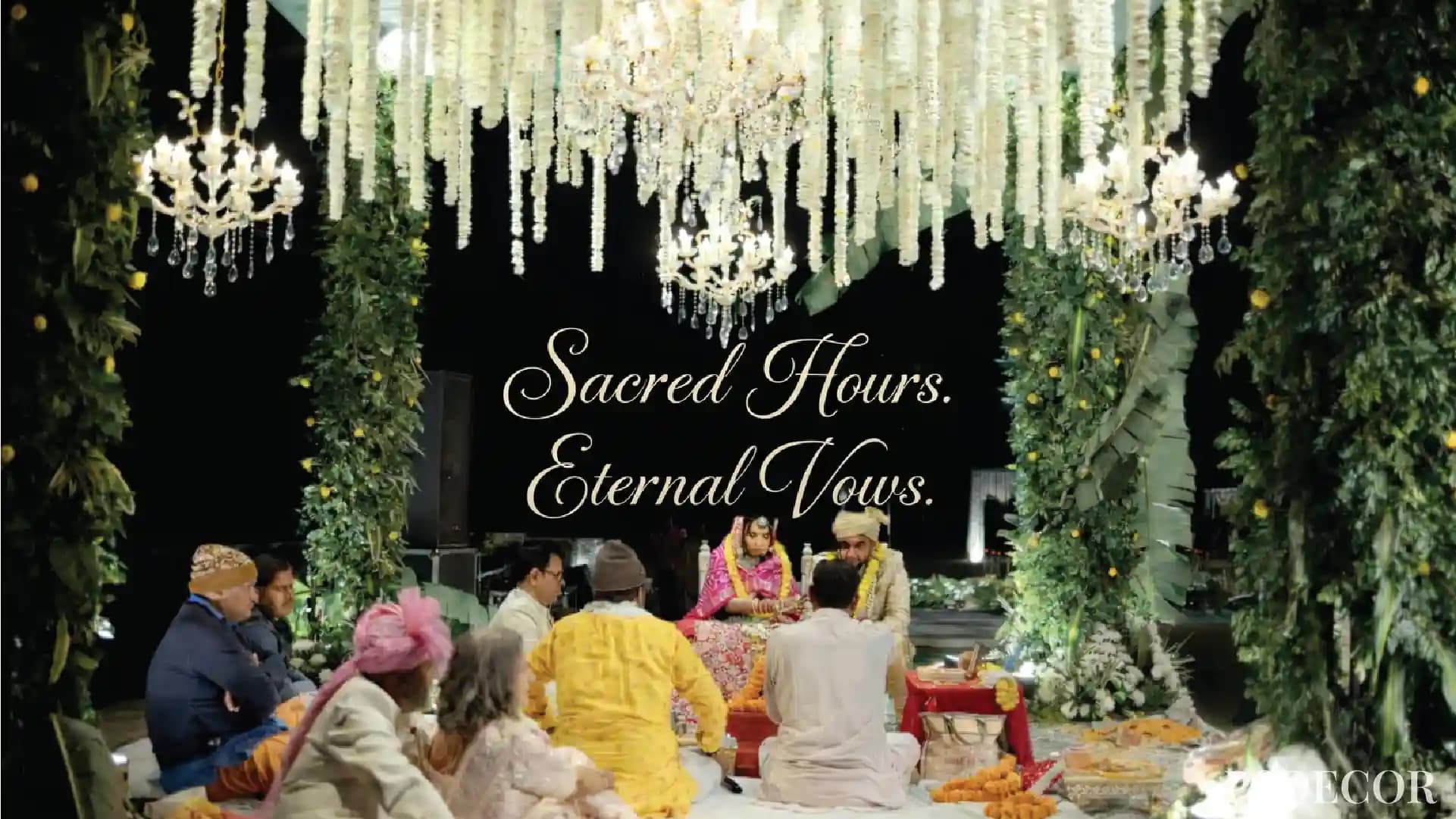
Marriage in Sanatan Dharma is not merely a social contract. It is Vivah Sanskar, one of the sacred Shodasha Samskaras (16 life rituals) described in the Grihya Sutras. It marks the transition into Grihastha Ashrama, the foundation upon which Dharma, Artha, Kama, and Moksha are sustained.
According to Brihat Parashara Hora Shastra and Muhurat Chintamani, the timing of marriage determines the energetic blueprint of the union. A well-chosen Vivah Muhurat harmonises planetary frequencies, strengthens marital stability, enhances prosperity, and safeguards emotional compatibility.
In Vedic thought, time is not linear — it is conscious. Every Tithi, Nakshatra, and Paksha carries a distinct vibration. Choosing a wedding date aligned with these cosmic currents ensures that two destinies merge under celestial blessing rather than karmic friction.
Here is the complete, month-wise Shubh Vivah Muhurat 2026–27, carefully aligned with Sanatan Panchang principles.
What Makes a Wedding Muhurat Auspicious?
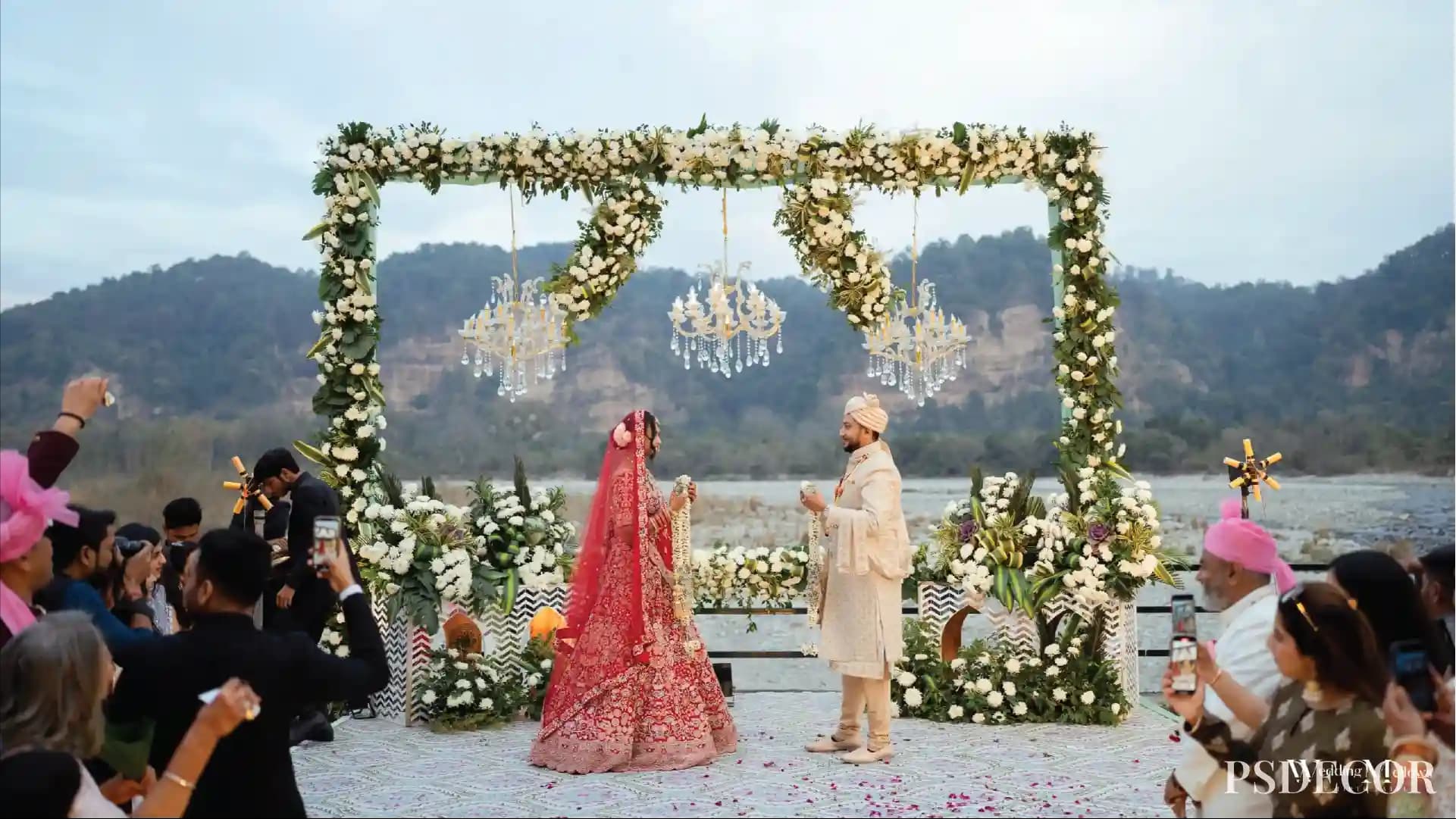
Before diving into the dates, it's essential to understand what actually makes a Muhurat powerful.
1. Tithi (Lunar Day)
Certain Tithis like Tritiya, Panchami, Saptami, Dashami, Ekadashi, Dwadashi, and Trayodashi are traditionally considered favourable for Vivah. They represent growth, harmony, and stability.
2. Nakshatra (Lunar Constellation)
Nakshatras like Rohini, Magha, Uttara Phalguni, Revati, Anuradha, Mrigashira, and Uttara Bhadrapada are celebrated in scriptures for supporting marital harmony and prosperity.
3. Shukla vs Krishna Paksha
Shukla Paksha (waxing moon) symbolises expansion and growth, making it highly preferred for weddings. However, certain Krishna Paksha combinations are also acceptable if supported by strong Nakshatras.
4. Role of Guru and Shukra
Jupiter (Guru) governs Dharma and expansion; Venus (Shukra) governs marriage and romance. When these grahas are not combust or retrograde in harmful ways, marriage muhurats become more favourable.
5. Why Pitra Paksha Is Avoided
During Pitra Paksha, energies are directed toward ancestral offerings (Shraddha). As per Dharmashastra tradition, auspicious celebrations like marriage are paused during this period. Hence, October 2026 has no Vivah Muhurat.
Month-wise Shubh Vivah Muhurat 2026–27
March 2026 – Chaitra Krishna Paksha
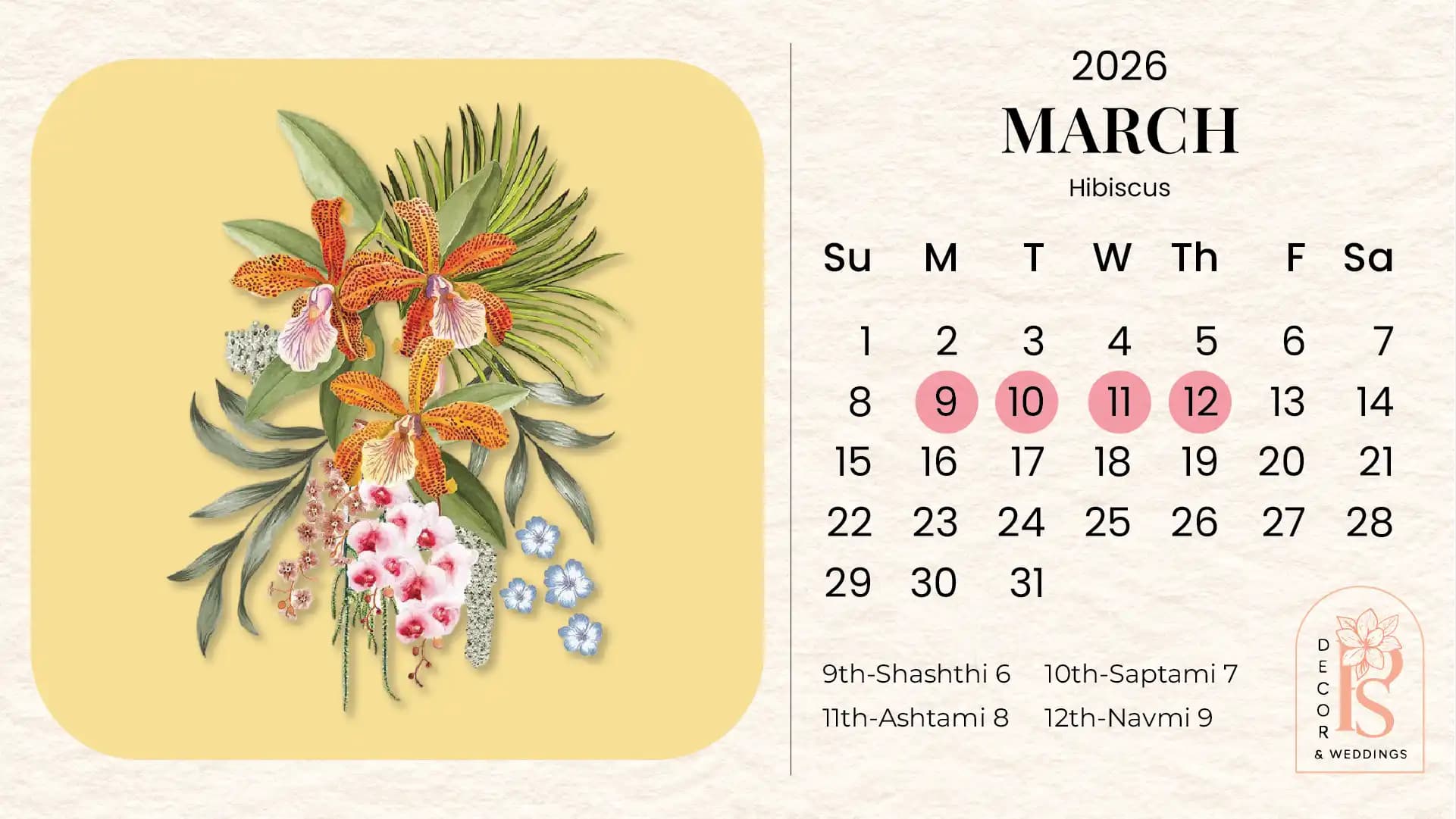
- 9 March 2026 – Shashthi – Anuradha
- 10 March 2026 – Saptami – Anuradha
- 11 March 2026 – Ashtami – Mool
- 12 March 2026 – Navmi – Mool
Chaitra marks the Vedic New Year in many regions. Anuradha Nakshatra is ruled by Mitra, deity of friendship, symbolising loyalty in marriage. Mool Nakshatra, though intense, supports transformative unions when properly guided.
This month offers limited but spiritually potent dates.
April 2026 – Vaishakh Shukla Paksha
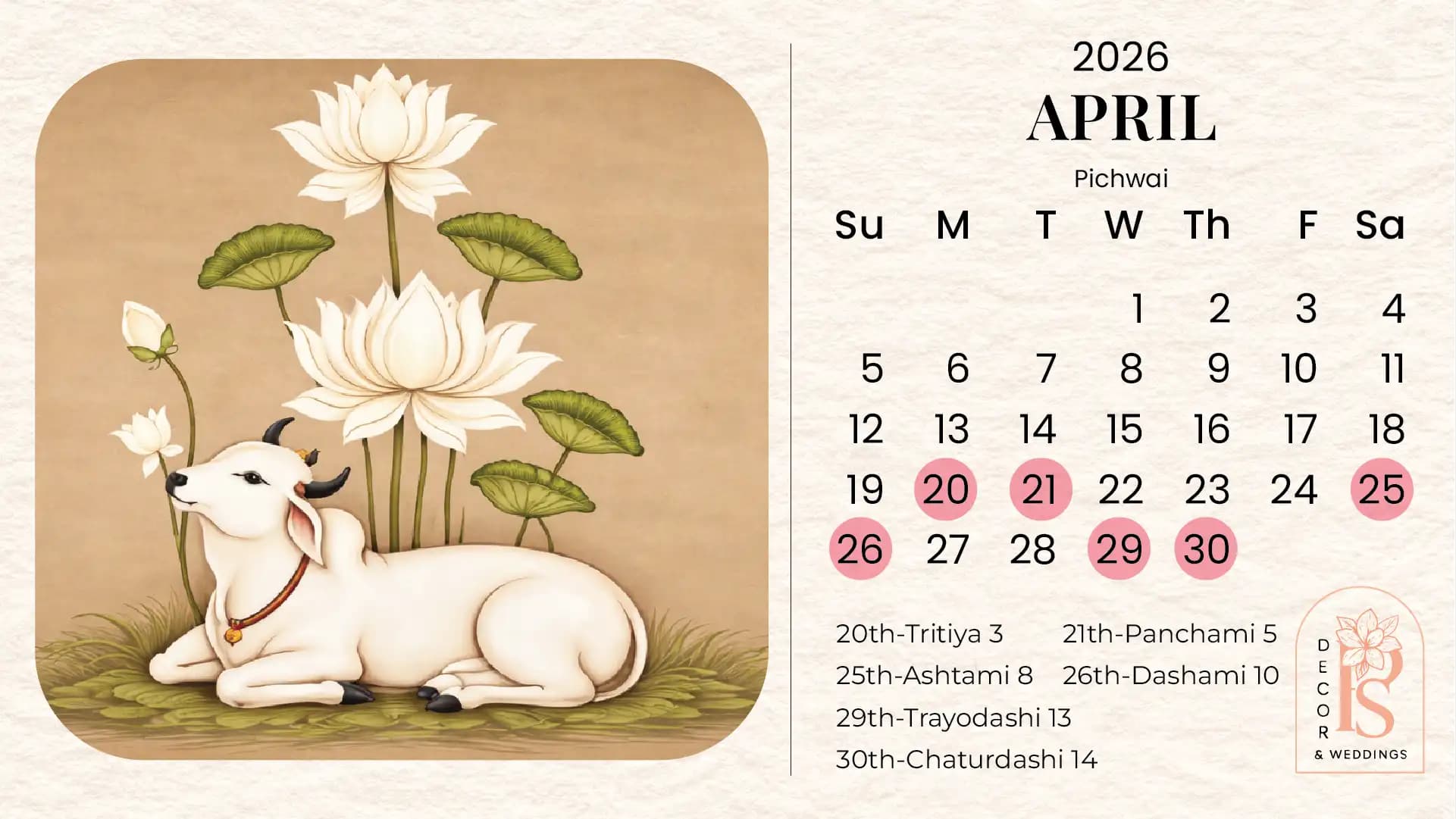
- 20 April – Tritiya – Rohini
- 21 April – Panchami – Mrigshira
- 25 April – Ashtami – Magha
- 26 April – Dashami – Magha
- 29 April – Trayodashi – Chitra
- 30 April – Chaturdashi – Chitra
Vaishakh Shukla is highly auspicious. Rohini is one of the most celebrated Nakshatras for marriage, associated with growth and abundance. Magha connects to ancestral blessings. Chitra symbolises artistic beauty, ideal for grand celebrations.
April 2026 is one of the strongest wedding windows.
May 2026 – Jyeshtha Krishna
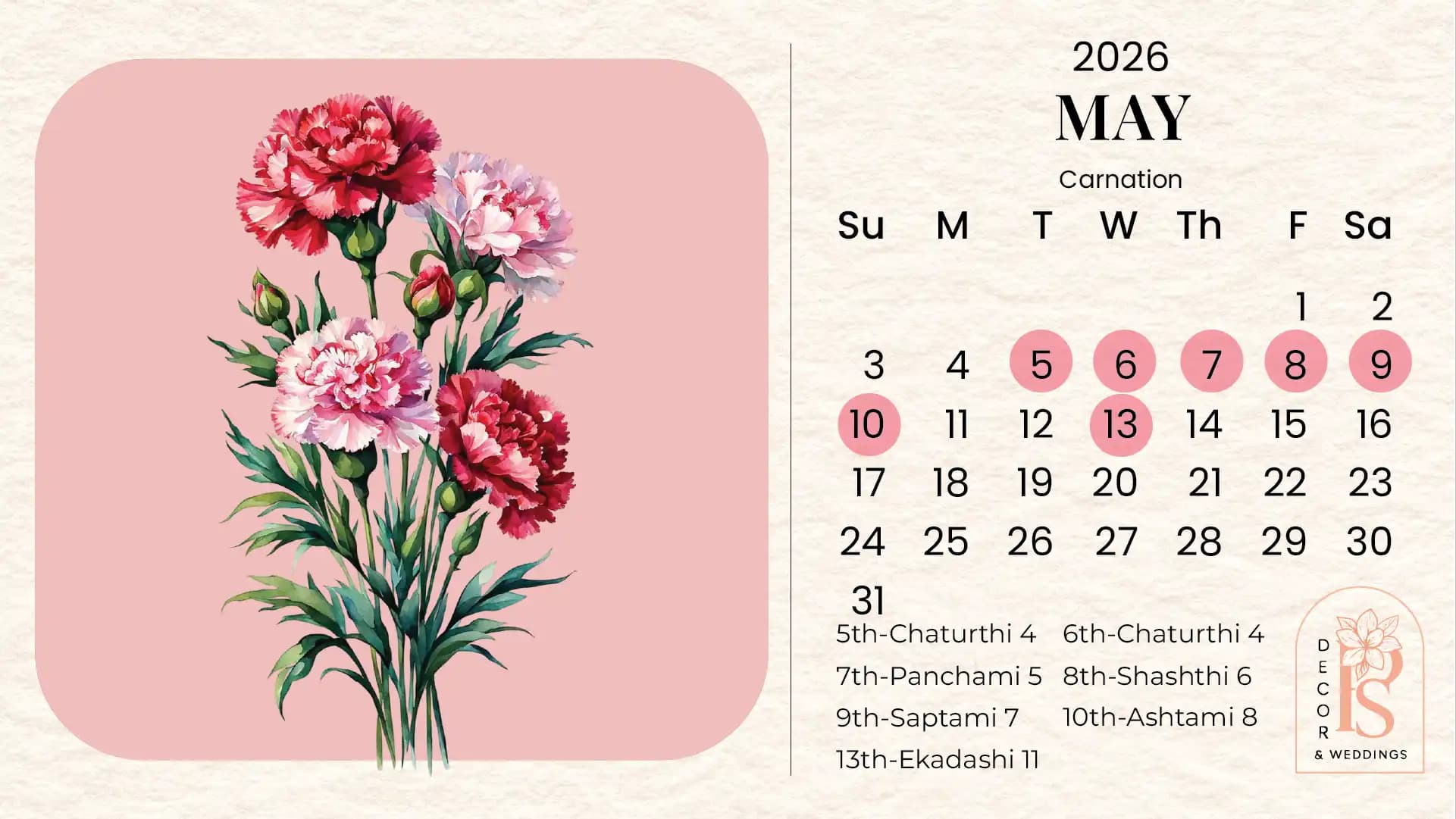
- 5 May – Chaturthi – Mool
- 6 May – Chaturthi – Mool
- 7 May – Panchami – Uttara Shadha
- 8 May – Shashthi – Uttara Shadha
- 9 May – Saptami – Dhanishtha
- 10 May – Ashtami – Dhanishtha
- 13 May – Ekadashi – Revati
Uttara Shadha signifies 'universal victory.' Dhanishtha brings prosperity and rhythm. Revati is extremely auspicious, symbolising nourishment and smooth journeys.
May is strong for spiritually aligned and traditional weddings.
June 2026 – Jyeshtha Shukla
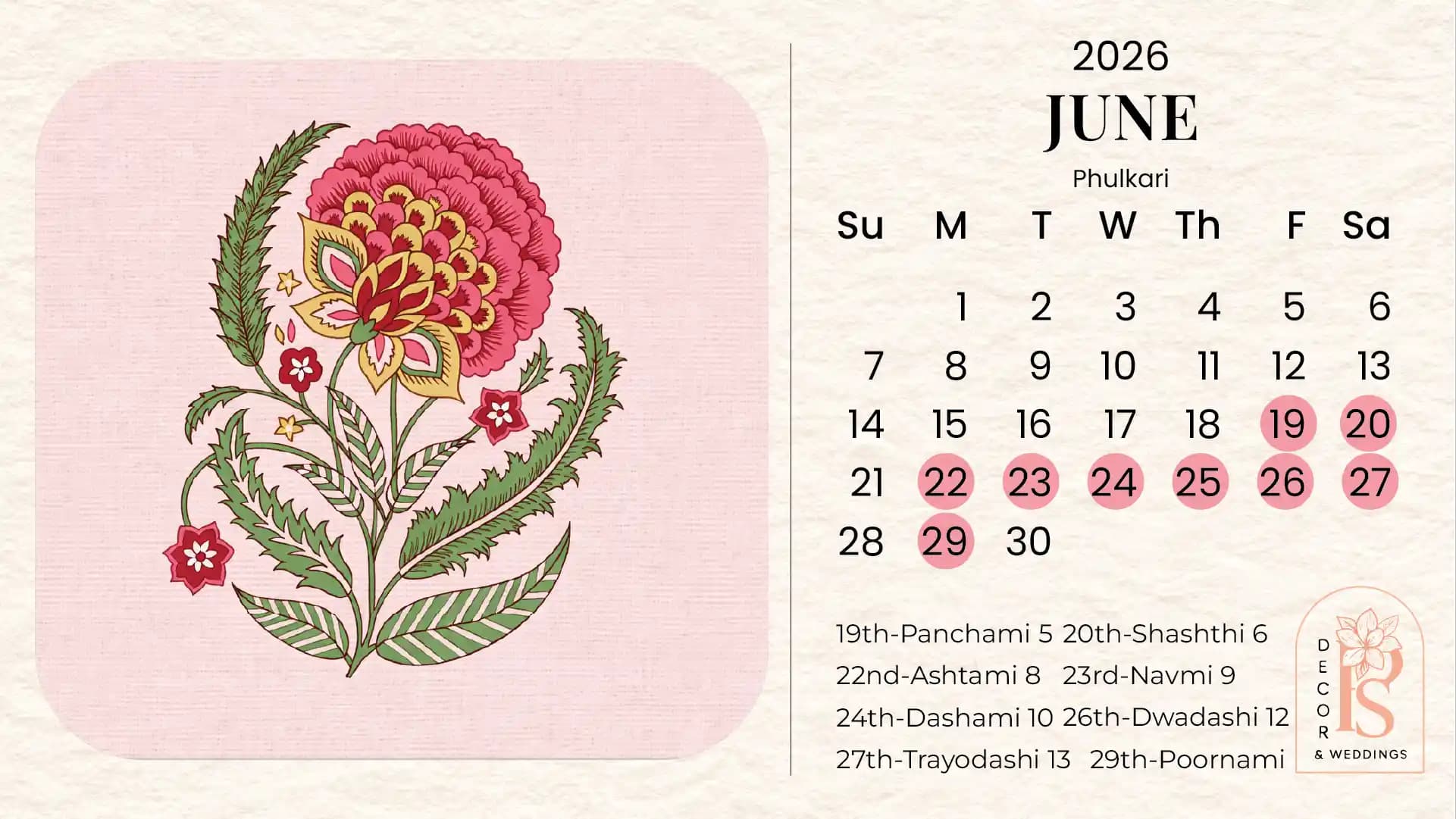
- 19 June – Panchami – Magha
- 20 June – Shashthi – Magha
- 22 June – Ashtami – Hast
- 23 June – Navmi – Hast
- 24 June – Dashami – Chitra
- 26 June – Dwadashi – Anuradha
- 27 June – Trayodashi – Anuradha
Magha again invokes ancestral strength. Hast supports craftsmanship and domestic harmony. Anuradha strengthens partnership loyalty.
June is ideal for both destination weddings and traditional ceremonies.
July 2026 – Ashaadha Krishna
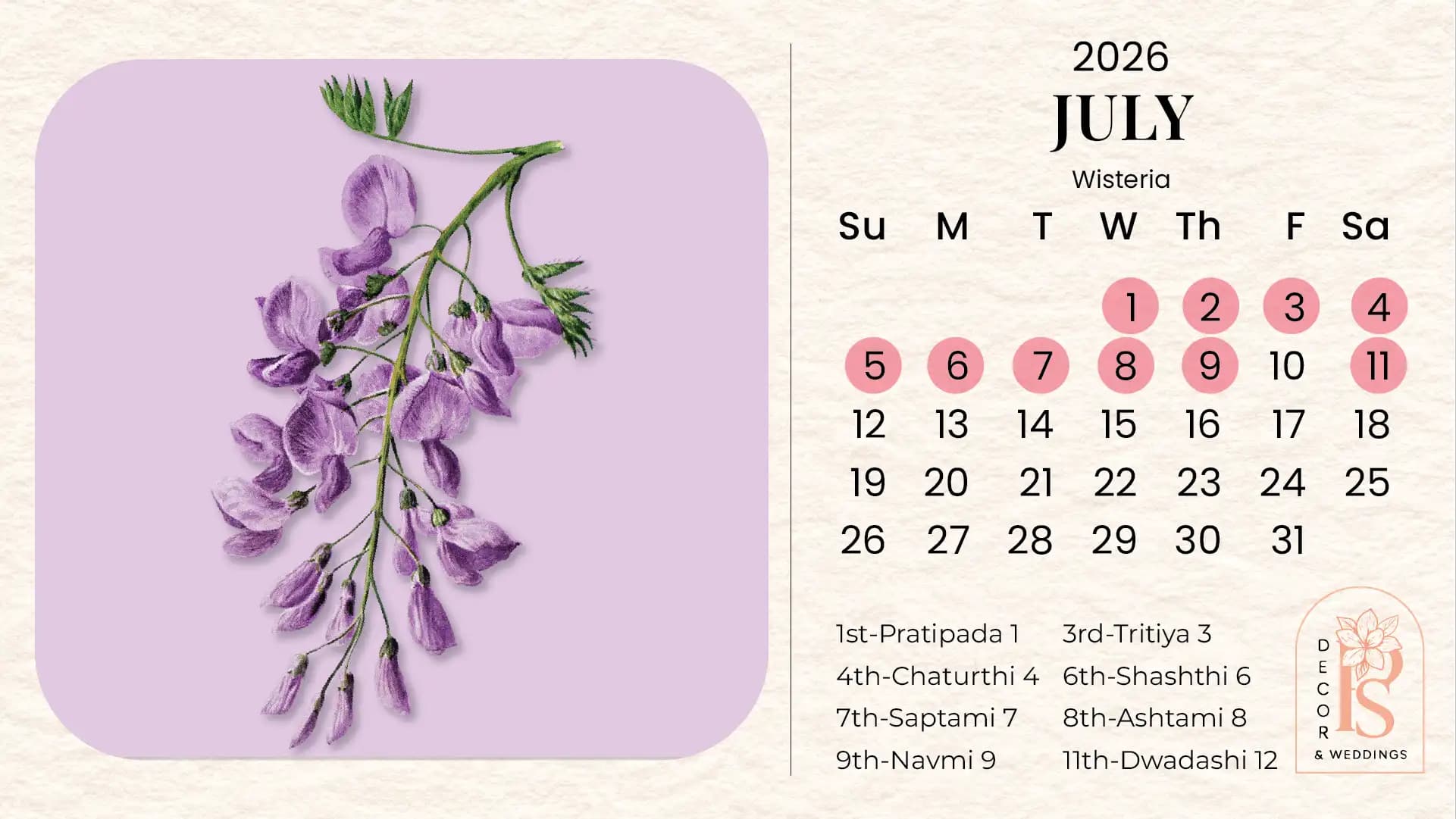
- 1 July – Pratipada – Uttara Shadha
- 3 July – Tritiya – Dhanishtha
- 4 July – Chaturthi – Dhanishtha
- 6 July – Shashthi – Uttara Bhadrapad
- 7 July – Saptami – Uttara Bhadrapad
- 8 July – Ashtami – Ashwini
- 9 July – Navmi – Ashwini
- 11 July – Dwadashi – Rohini
Ashwini symbolises new beginnings. Rohini again brings prosperity. July has moderate but vibrant dates.
August 2026 – Shraavan & Bhadrapad
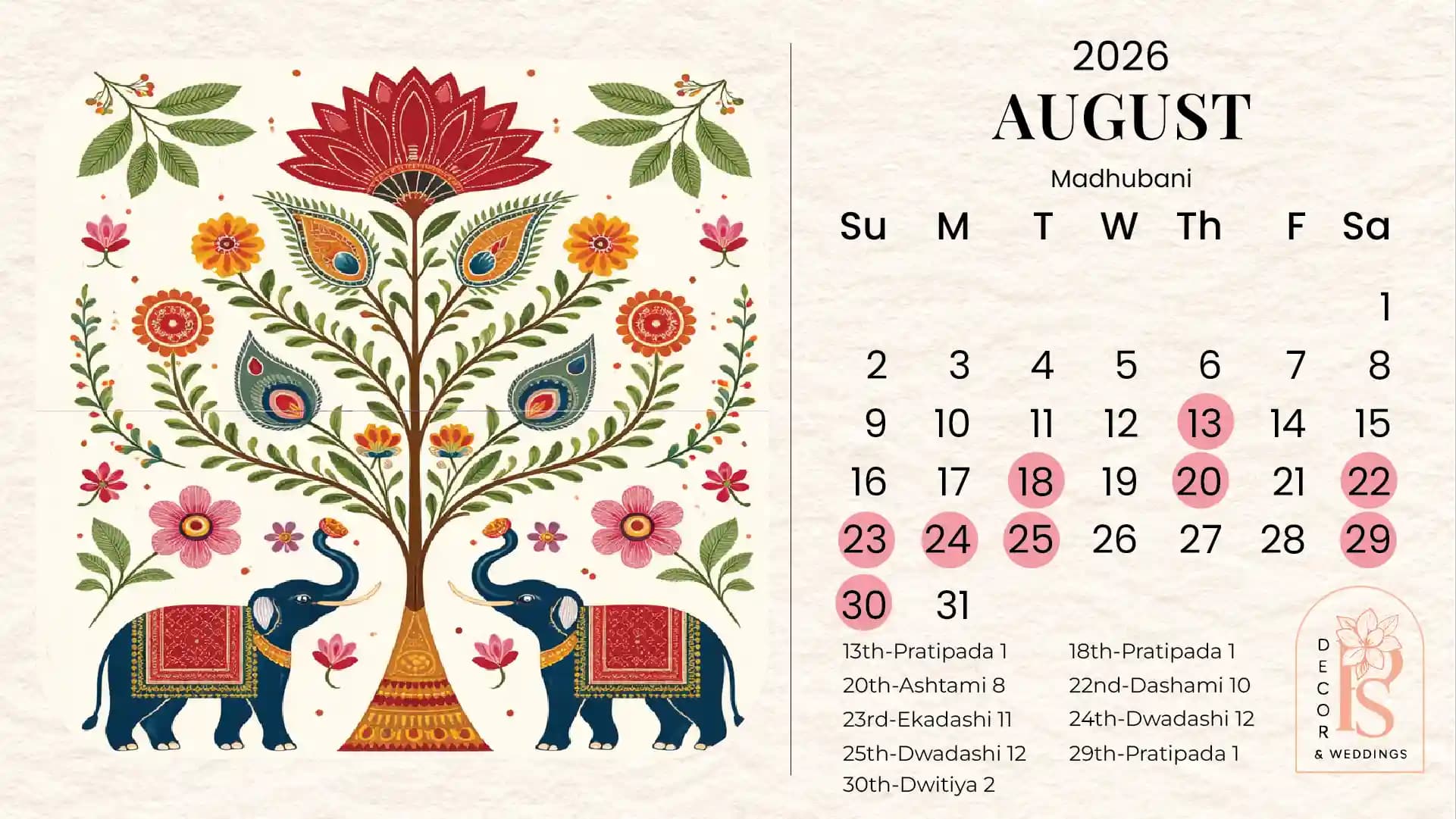
- 13 Aug – Pratipada – Magha
- 18 Aug – Shashthi – Swati
- 20 Aug – Ashtami – Anuradha
- 22 Aug – Dashami – Mool
- 23 Aug – Ekadashi – Mool
- 24 Aug – Dwadashi – Uttara Shadha
- 25 Aug – Dwadashi – Uttara Shadha
- 29 Aug – Pratipada – Uttara Bhadrapad
- 30 Aug – Dwitiya – Uttara Bhadrapad
Shravan month carries devotional energy. Swati symbolises independence balanced with partnership. Uttara Shadha ensures stability.
September 2026 – Bhadrapad
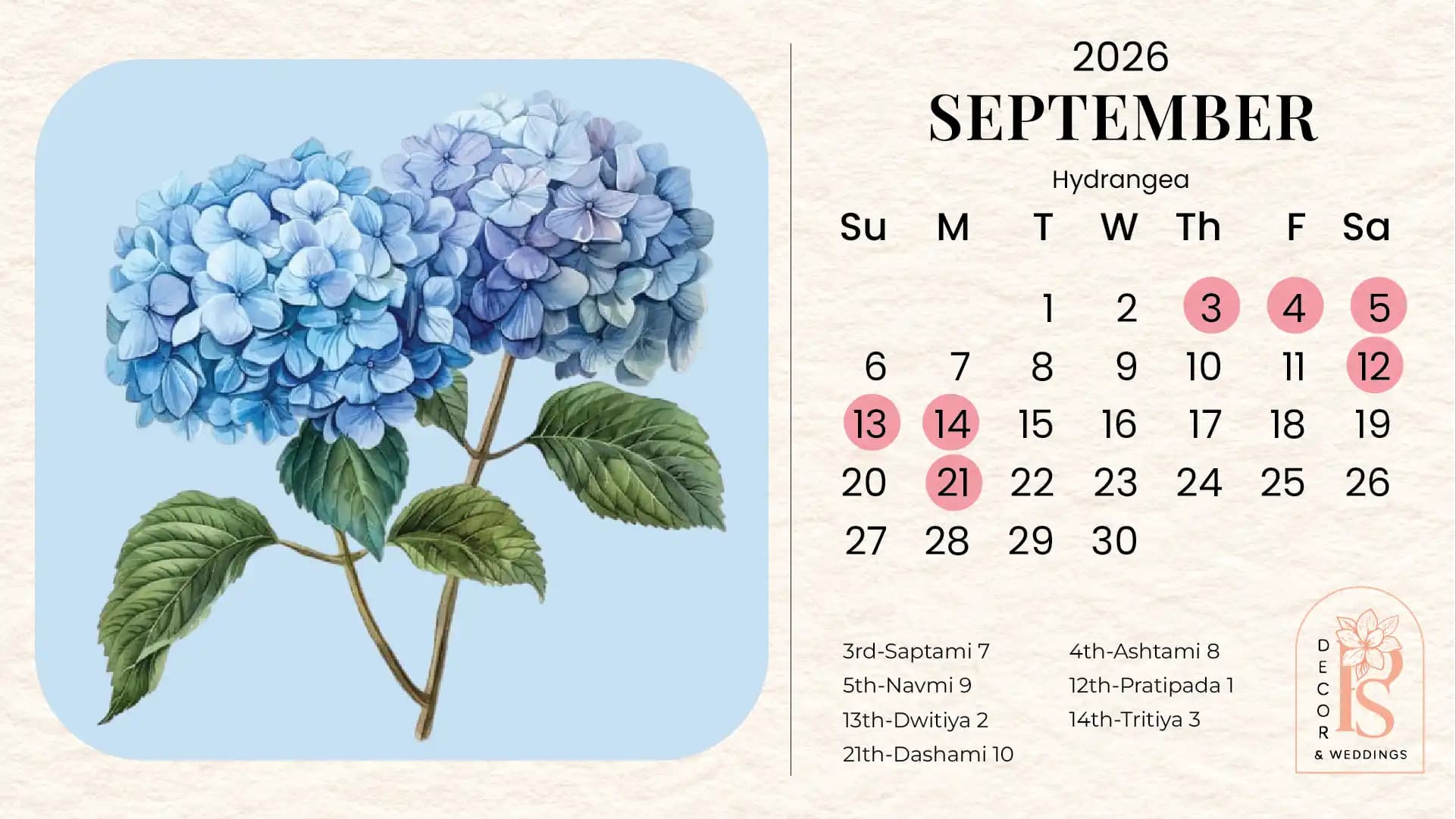
- 3 Sept – Saptami – Rohini
- 4 Sept – Ashtami – Rohini
- 5 Sept – Navmi – Mrigshira
- 12 Sept – Pratipada – Hast
- 13 Sept – Dwitiya – Chitra
- 14 Sept – Tritiya – Swati
- 21 Sept – Dashami – Uttara Shadha
September offers elegant, spiritually balanced muhurats before Pitra Paksha begins.
October 2026 – No Muhurat (Pitra Paksha)
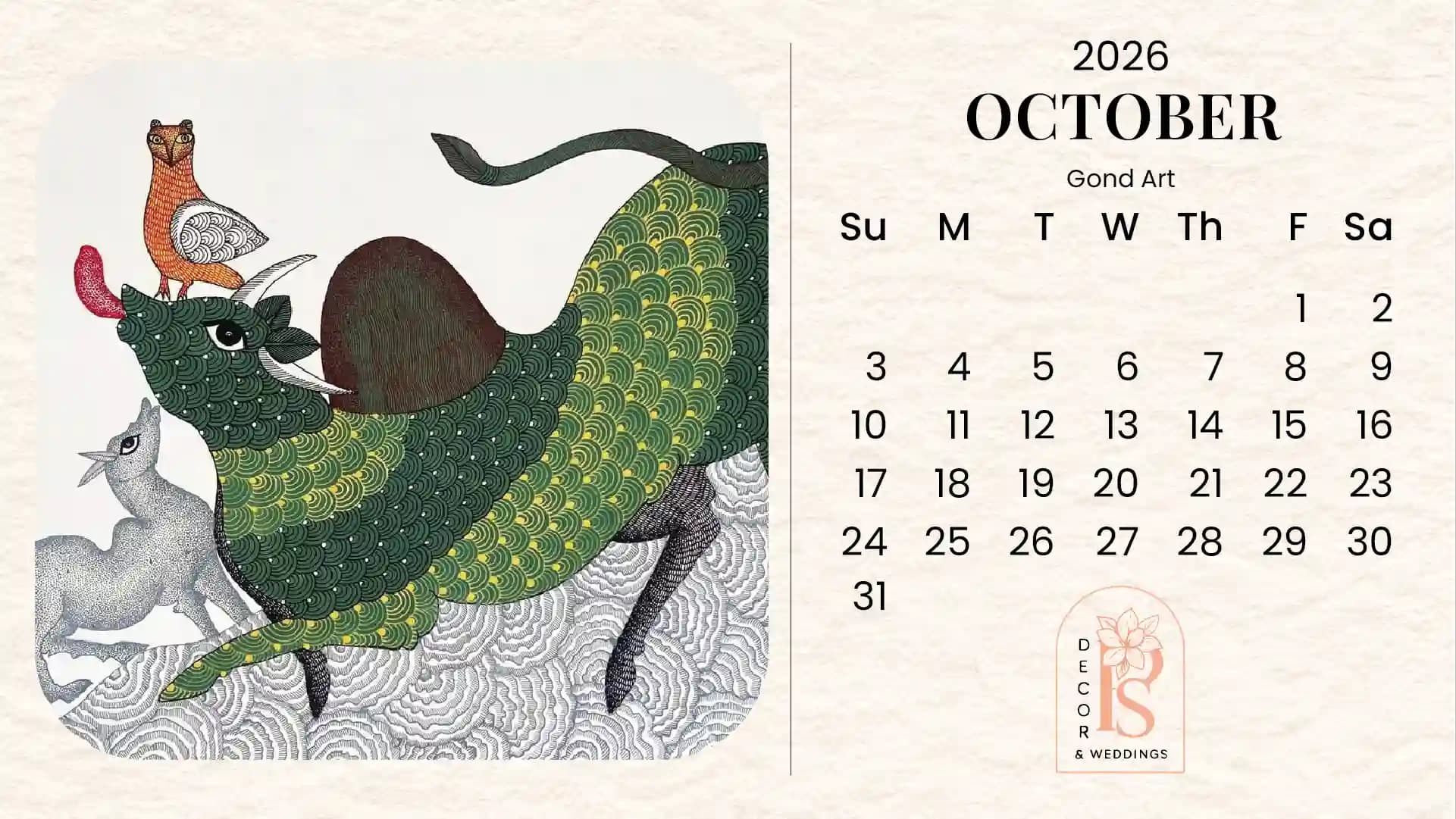
As per Dharmashastra injunctions, marriages are avoided during this period. The month is dedicated to ancestral rituals and Shraddha ceremonies.
November 2026 – Kartik & Margasheersh
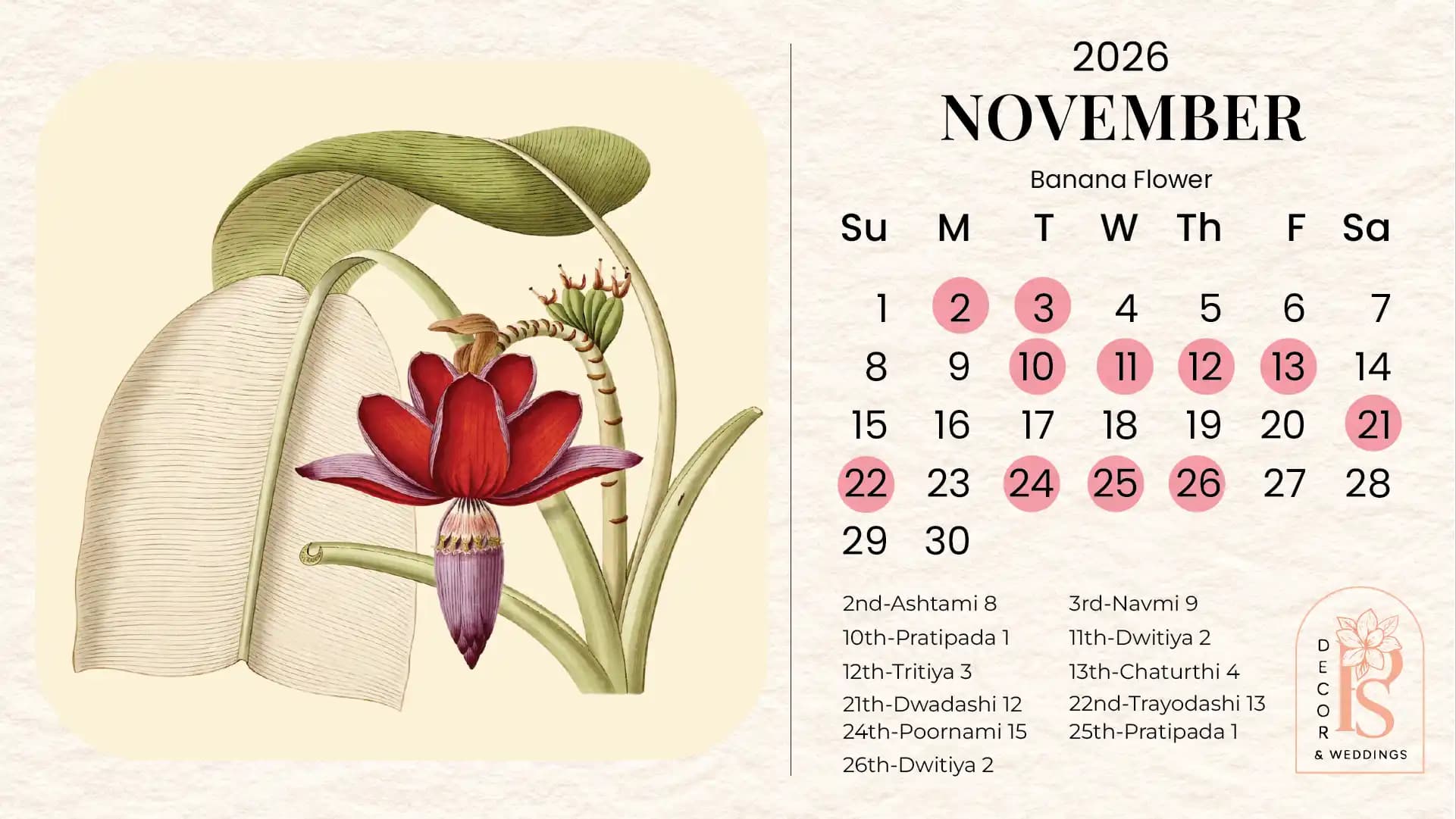
- 2 Nov – Ashtami – Magha
- 3 Nov – Navmi – Magha
- 10 Nov – Pratipada – Anuradha
- 11 Nov – Dwitiya – Anuradha
- 12 Nov – Tritiya – Mool
- 13 Nov – Chaturthi – Mool
- 21 Nov – Dwadashi – Revati
- 22 Nov – Trayodashi – Ashwini
- 24 Nov – Poornima – Rohini
- 25 Nov – Pratipada – Rohini
- 26 Nov – Dwitiya – Mrigshira
Post Diwali, Kartik Shukla is extremely auspicious. Rohini Poornima wedding is exceptionally powerful.
December 2026 – Margasheersh
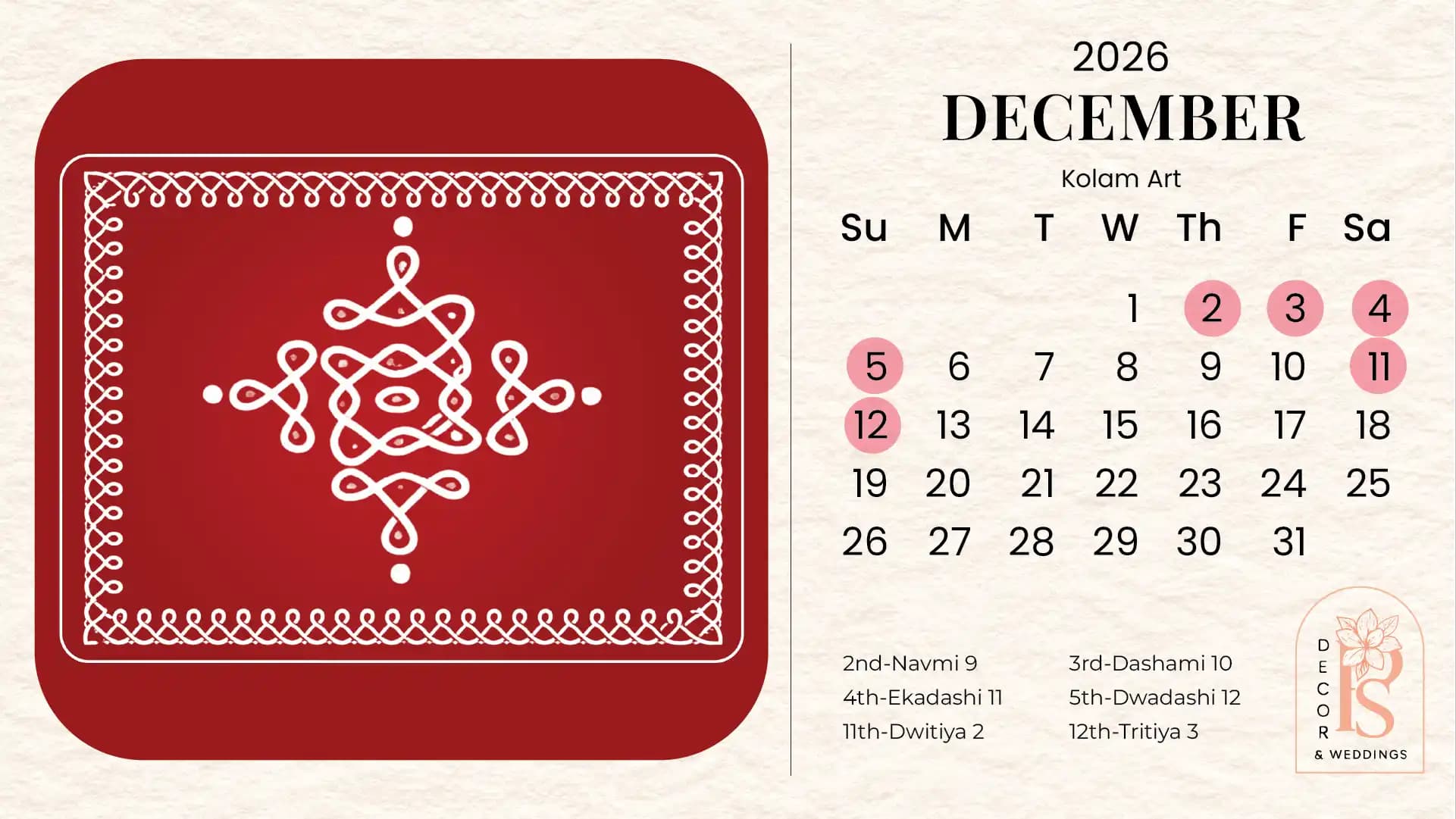
- 2 Dec – Navmi – Uttara Falguni
- 3 Dec – Dashami – Uttara Falguni
- 4 Dec – Ekadashi – Chitra
- 5 Dec – Dwadashi – Chitra
- 11 Dec – Dwitiya – Uttara Shadha
- 12 Dec – Tritiya – Uttara Shadha
Uttara Phalguni is explicitly praised for marriage in Muhurat texts.
January 2027 – Paush
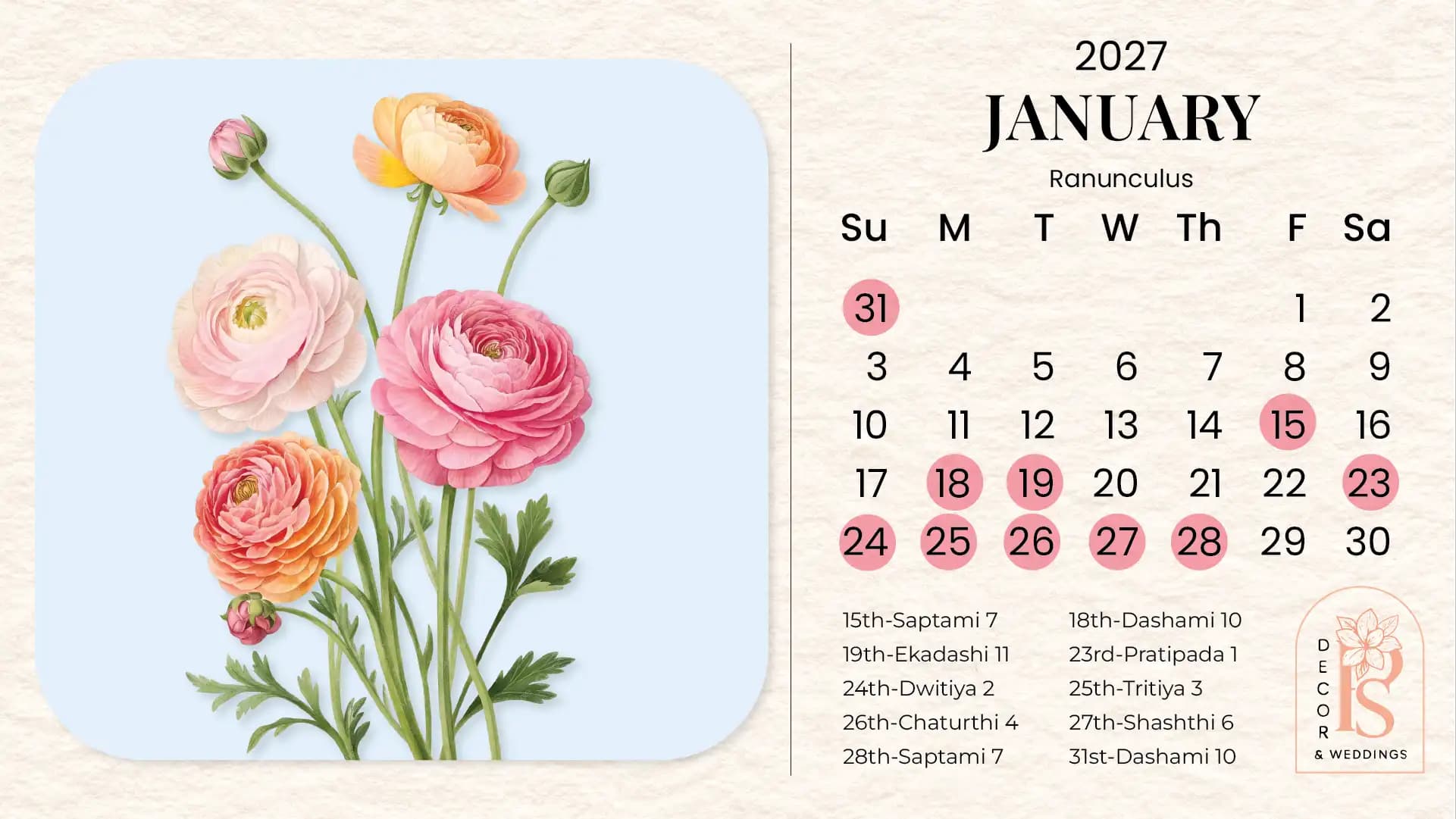
- 15 Jan – Saptami – Revati
- 18 Jan – Dashami – Rohini
- 19 Jan – Ekadashi – Rohini
- 23 Jan – Pratipada – Magha
- 24 Jan – Dwitiya – Magha
- 25 Jan – Tritiya – Uttara Falguni
- 26 Jan – Chaturthi – Uttara Falguni
- 27 Jan – Shashthi – Chitra
- 28 Jan – Saptami – Chitra
- 31 Jan – Dashami – Anuradha
January is packed with premium Nakshatras — Revati, Rohini, Uttara Falguni.
February 2027 – Maagh & Falgun
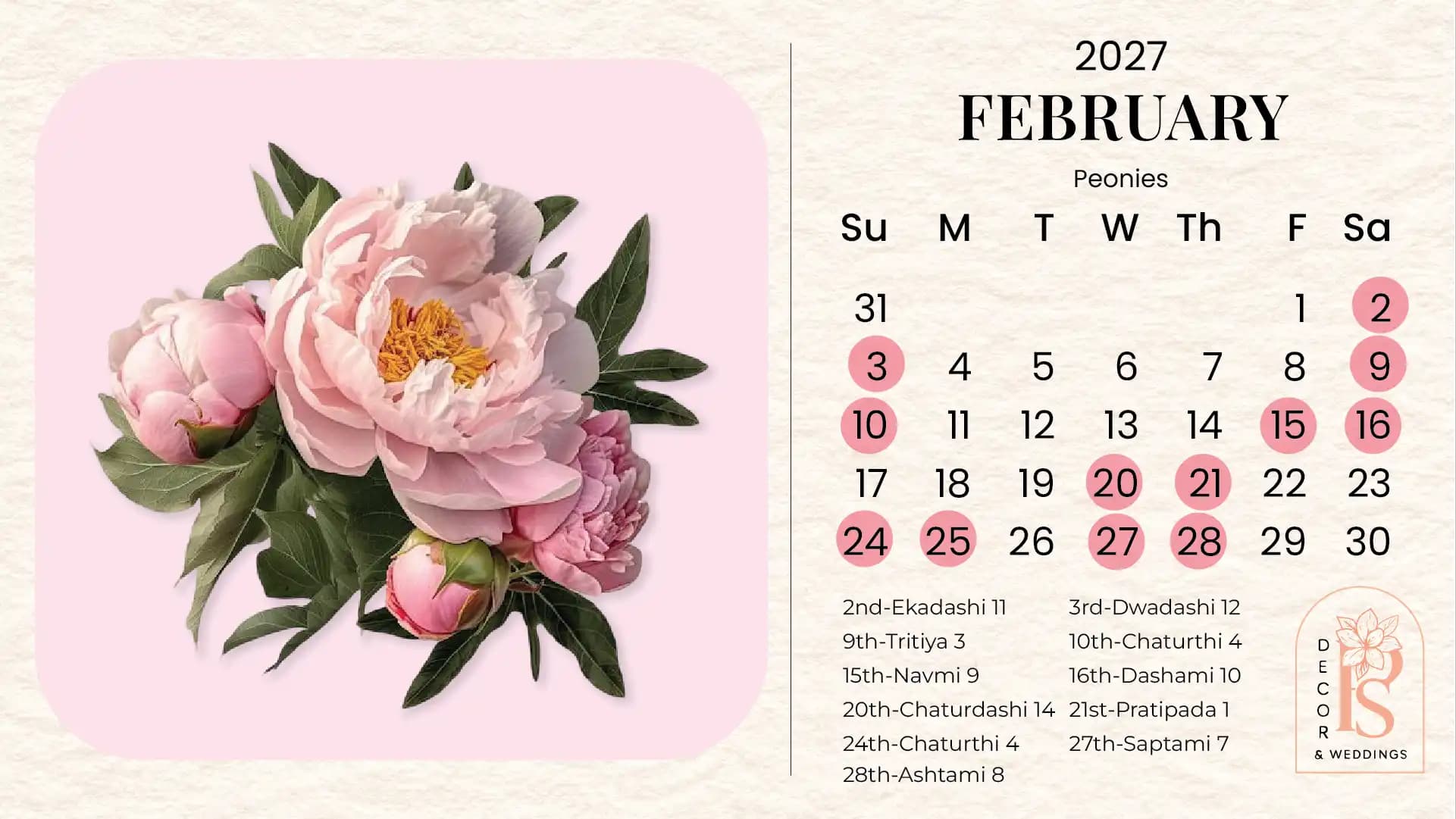
- 2 Feb – Ekadashi – Mool
- 3 Feb – Dwadashi – Mool
- 9 Feb – Tritiya – Uttara Bhadrapad
- 10 Feb – Chaturthi – Uttara Bhadrapad
- 15 Feb – Navmi – Rohini
- 16 Feb – Dashami – Mrigshira
- 20 Feb – Chaturdashi – Magha
- 21 Feb – Pratipada – Magha
- 24 Feb – Chaturthi – Chitra
- 27 Feb – Saptami – Anuradha
- 28 Feb – Ashtami – Anuradha
February is powerful for luxury winter weddings.
March 2027 – Falgun
- 1 Mar – Navmi – Mool
- 2 Mar – Dashami – Mool
- 3 Mar – Ekadashi – Uttara Shadha
- 4 Mar – Ekadashi – Uttara Shadha
- 9 Mar – Pratipada – Uttara Bhadrapad
- 10 Mar – Dwitiya – Uttara Bhadrapad
- 11 Mar – Tritiya – Ashwini
- 12 Mar – Chaturthi – Ashwini
Falgun symbolises celebration before Holi. High festive vibrance.
Special Observations for 2026–27
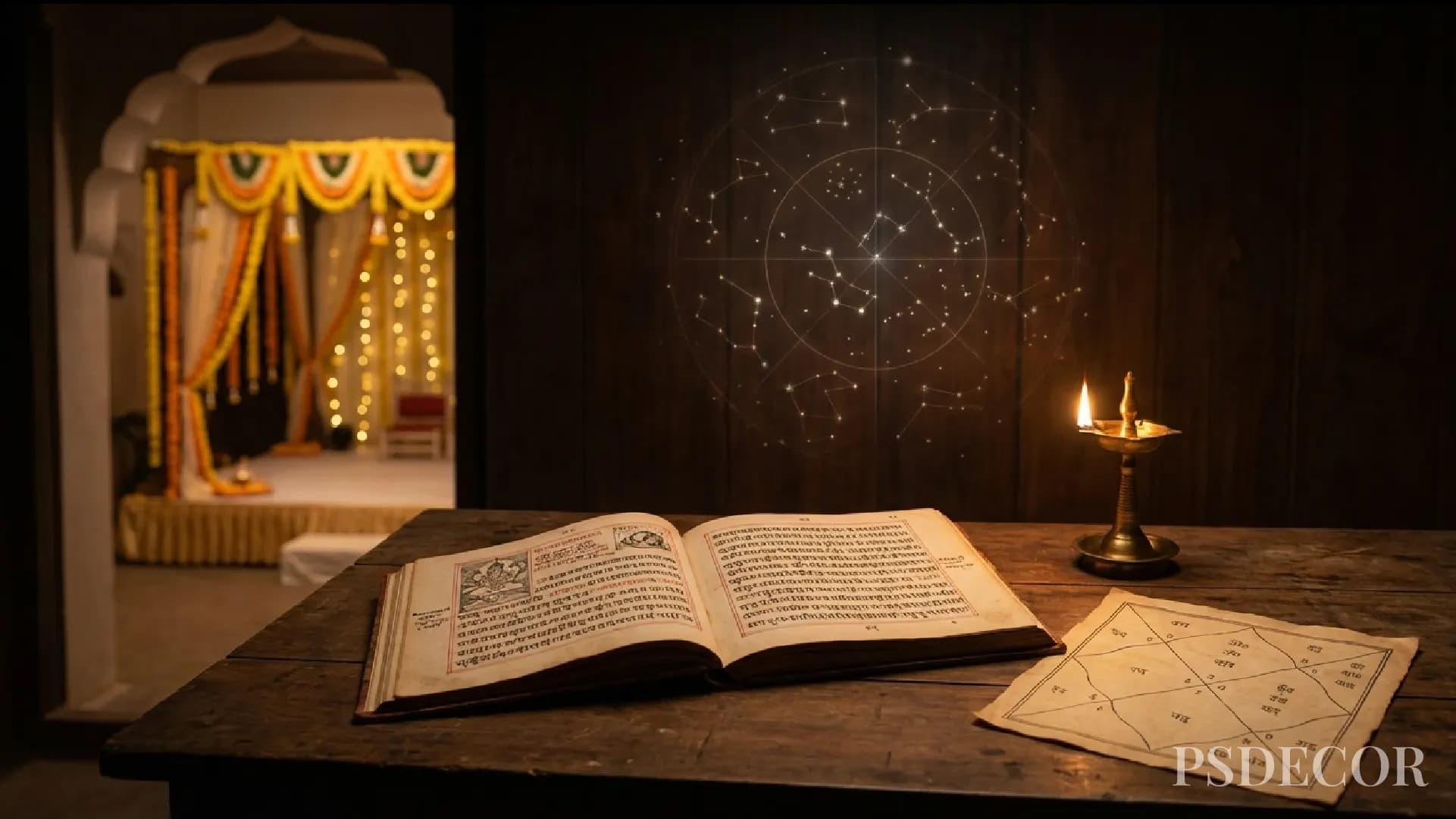
- Rohini appears multiple times — strongest prosperity indicator.
- Magha recurs — ancestral blessing trend.
- Anuradha appears consistently — partnership stability.
- Peak wedding months: April 2026, November 2026, January 2027.
- Winter weddings (Nov–Feb) dominate premium muhurats.
Why Professional Planning Matters Even with the Perfect Muhurat
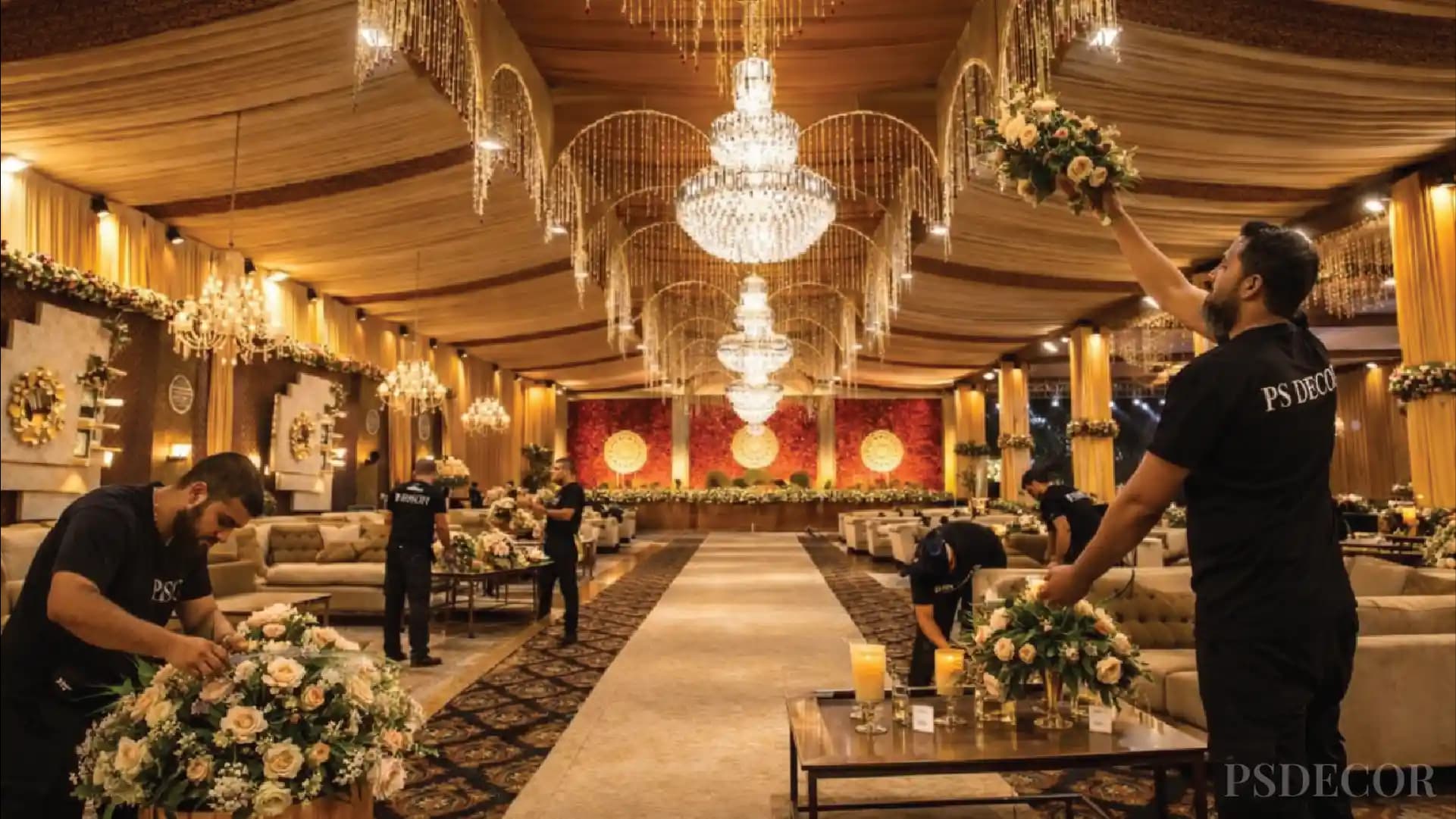
Even the most auspicious Muhurat can lose energetic balance if:
- Mandap direction is misaligned.
- Agni is placed incorrectly.
- Entry orientation clashes with Vastu.
- Wedding flow disrupts ritual sequencing.
Time alignment must be supported by spatial alignment.
How PS Decor Elevates Your Auspicious Wedding
At PS Decor, weddings are designed with reverence.
- Mandap placement aligned with Vedic direction principles.
- Sacred geometry incorporated in décor.
- Traditional aesthetics blended with modern luxury.
- Seamless execution on high-demand muhurat dates.
- Experience handling culturally rooted ceremonies with precision.
When time and space align, the ceremony transforms into a sacred experience.
Conclusion
Choosing a Vivah Muhurat is not superstition. It is astronomical timing wisdom preserved through millennia.
Sanatan Jyotish teaches that when cosmic rhythm and human intention align, marriage becomes not just an event, but a destiny sealed in harmony.
Plan wisely. Align consciously. Celebrate divinely.
Frequently Asked Questions (FAQs)
- 1. Why is Pitra Paksha avoided for marriage? — Because it is dedicated to ancestral rituals and Shraddha ceremonies.
- 2. Is Krishna Paksha suitable for marriage? — Yes, if supported by strong Nakshatra and planetary alignment.
- 3. Which Nakshatra is best for wedding? — Rohini, Uttara Phalguni, Revati, Anuradha, Magha.
- 4. Can we marry without Panchang consultation? — Traditionally discouraged in Sanatan Dharma.
- 5. Why is Rohini considered auspicious? — It signifies growth, prosperity, and emotional nourishment.
- 6. Does time of day matter? — Yes. Exact Muhurat timing is crucial.
- 7. Is Kundli matching necessary? — Highly recommended alongside Muhurat selection.
- 8. Are winter weddings more auspicious? — Winter 2026–27 shows strong Nakshatra clusters.
- 9. What if venue availability conflicts with Muhurat? — Consult astrologer for alternative timing windows.
- 10. How early should we book peak Muhurat months? — At least 6–9 months in advance.
Connect with PS Decor
- 📞 Call: +91 7599208222
- 📧 Email: info@psdecor.in
- 🌐 Website: www.psdecor.in