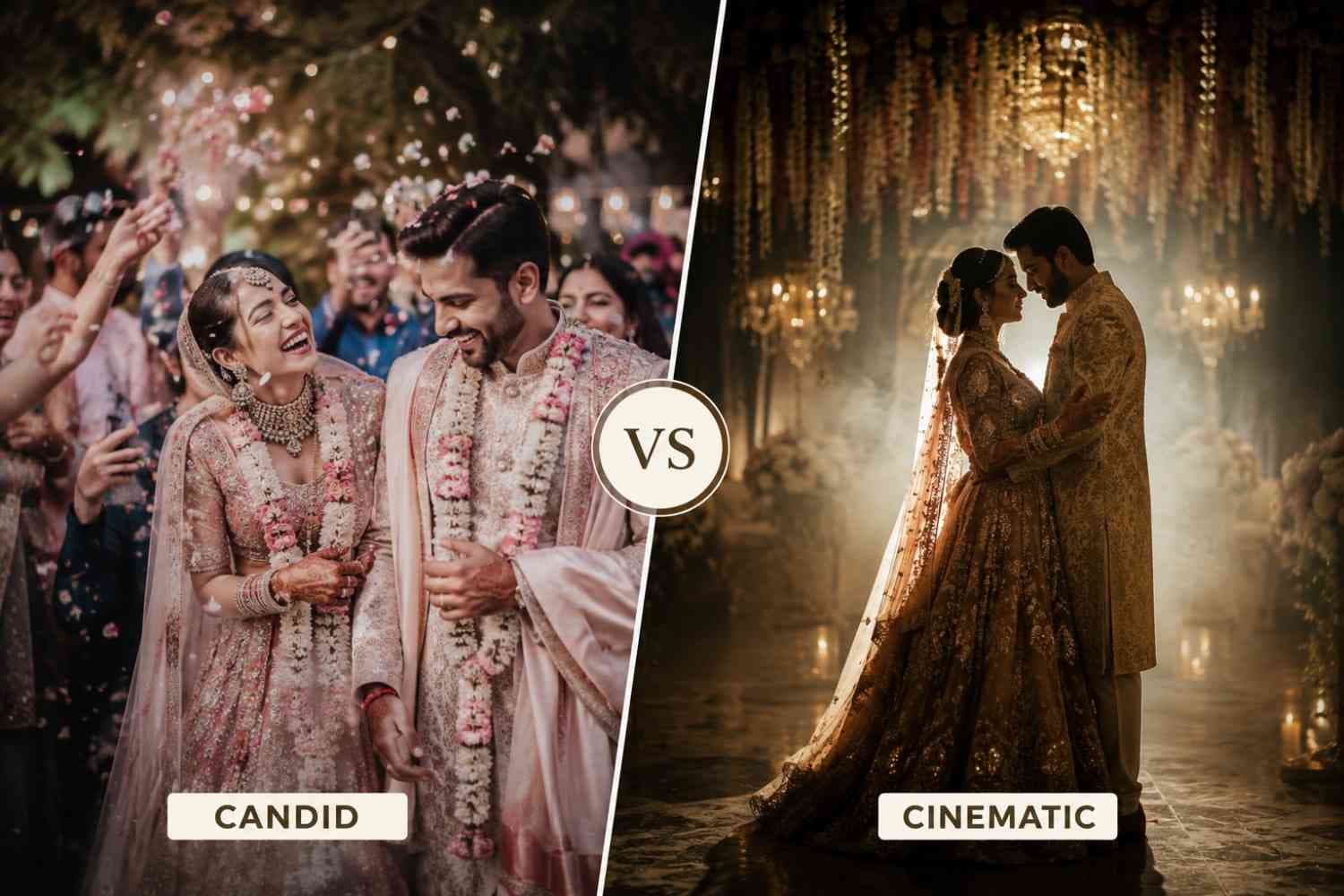
Choosing a wedding videographer today involves more than picking someone with a good camera. Couples now have to decide between two distinct storytelling approaches: candid films, which capture the wedding as it naturally unfolds, and cinematic films, which shape the day into a stylised, movie-like narrative. Both produce beautiful results, but they serve very different purposes and suit different couples.
Understanding the actual difference between the two, beyond just "candid feels real and cinematic feels dramatic," helps couples choose a style that matches how they actually want to remember their wedding.
What Makes a Film Candid
Candid wedding films focus on capturing genuine, unscripted moments as they happen, prioritising authenticity over staged visuals.
Key characteristics
- Minimal direction from the videographer, letting moments unfold naturally
- Focus on real emotional reactions, such as unguarded laughter, tears, or spontaneous interactions
- Documentary-style shooting, often with longer uninterrupted sequences
- Editing that follows the actual chronological flow of events rather than reconstructing a narrative
- Sound design typically uses live audio, such as actual vows, speeches or ambient wedding sounds
Best suited for
Couples who want their film to feel like an honest record of the day, not a performance. Weddings with strong emotional moments, close family interactions, or a storytelling-rich guest list. Couples uncomfortable with heavy posing or repeated takes for the camera.
What Makes a Film Cinematic
Cinematic wedding films borrow techniques from film production, treating the wedding day as source material for a stylised, movie-like story rather than a straightforward record.
Key characteristics
- Deliberate framing, movement and lighting choices designed for visual impact
- Use of drone shots, slow motion, and carefully composed wide shots
- Background music replaces most live audio, with voiceovers or scripted narration sometimes added
- Non-linear editing, often building the film around key emotional beats rather than strict chronology
- Colour grading and stylistic choices that give the film a distinct visual identity, similar to a short film
Best suited for
Couples who want a highly polished, shareable film with strong visual production value. Weddings with strong visual settings, such as destination or heritage venues, where cinematic techniques can fully showcase the location. Couples comfortable with some posed or directed shots to achieve specific visual sequences.
Key Differences at a Glance
Here's a quick comparison to help you choose the right storytelling style for your wedding film:
- Storytelling style - Candid: Documentary, chronological | Cinematic: Stylised, narrative-driven
- Direction level - Candid: Minimal | Cinematic: Higher, with planned shots
- Audio - Candid: Live sound, real vows/speeches | Cinematic: Background music, sometimes voiceover
- Visual style - Candid: Natural, unposed | Cinematic: Polished, movie-like
- Best for - Candid: Authentic emotional record | Cinematic: Highly shareable, visually dramatic film
- Typical turnaround - Candid: Often faster | Cinematic: Longer due to editing complexity
Can You Combine Both Styles?
Many couples in 2026 are not choosing strictly one or the other. A hybrid approach has become increasingly common, where:
- The ceremony and key emotional moments are shot candidly to preserve authenticity
- A separate cinematic highlight reel is created for reception entrances, couple portraits, or a dedicated pre-wedding shoot
- Drone and stylised shots are used for venue and destination footage, while family interactions remain documentary-style
This hybrid format allows couples to get an honest record of the day alongside a polished, highlight-style film for sharing on social media or with extended family who could not attend.
Questions to Ask Before Choosing a Style
- Do you want to remember the day exactly as it happened, or as a curated story?
- Are you comfortable with some posed shots and directed sequences, or do you prefer minimal interference?
- Is your venue visually striking enough to benefit from cinematic techniques like drone shots and wide compositions?
- Do you want live audio from vows and speeches, or are you comfortable with the moment being replaced by background music?
- How important is a highly shareable, trailer-style film versus a longer, complete record of the day?
Practical Considerations When Booking
Portfolio Review
Since both styles require different skill sets, it is important to review a videographer's actual portfolio in the specific style being considered, rather than assuming general wedding videography experience covers both equally well.
Team Size
Cinematic films often require a larger crew, including drone operators and additional camera angles, while candid films can sometimes be captured effectively with a smaller, less intrusive team.
Editing Timeline
Cinematic films generally take longer to deliver due to the complexity of editing, colour grading and music syncing, while candid films can often be delivered faster since editing follows a more straightforward chronological structure.
Cost Differences
Cinematic packages, particularly those involving drone footage, larger crews and extended editing, are typically priced higher than candid-only coverage, though exact costs vary by videographer and package inclusions.
Conclusion
Neither candid nor cinematic wedding films is objectively better, they simply serve different purposes. Candid films preserve the wedding as it genuinely happened, while cinematic films transform the day into a polished, story-driven film. Many couples now choose a hybrid approach, capturing authentic moments candidly while adding cinematic elements for highlight reels and venue showcases. The right choice ultimately depends on how a couple wants to relive their wedding day years from now.
At PS Decor, videography coordination includes working with videographers experienced in both candid and cinematic styles, helping couples choose or combine the right approach for their wedding.
Frequently Asked Questions
- Which style is better for a destination wedding?
Cinematic techniques, particularly drone shots and wide compositions, tend to showcase destination venues more dramatically, though many couples combine this with candid coverage for personal moments. - Does a cinematic film use less live audio from the actual ceremony?
Yes, cinematic films typically replace much of the live audio with background music, though some videographers retain key vows or speeches as audio highlights. - Is candid videography less expensive than cinematic?
Generally, yes, since cinematic packages often involve larger crews, drone equipment and more complex editing, though costs vary by videographer and specific package inclusions. - Can a wedding have both candid and cinematic coverage?
Yes, a hybrid approach is increasingly common, with candid coverage for the ceremony and family moments, and cinematic techniques used for highlight reels or venue showcases. - How long does it typically take to receive a cinematic wedding film?
Cinematic films generally take longer to deliver than candid edits due to the complexity of editing, colour grading and music syncing, so it's best to confirm delivery timelines with the videographer in advance.