
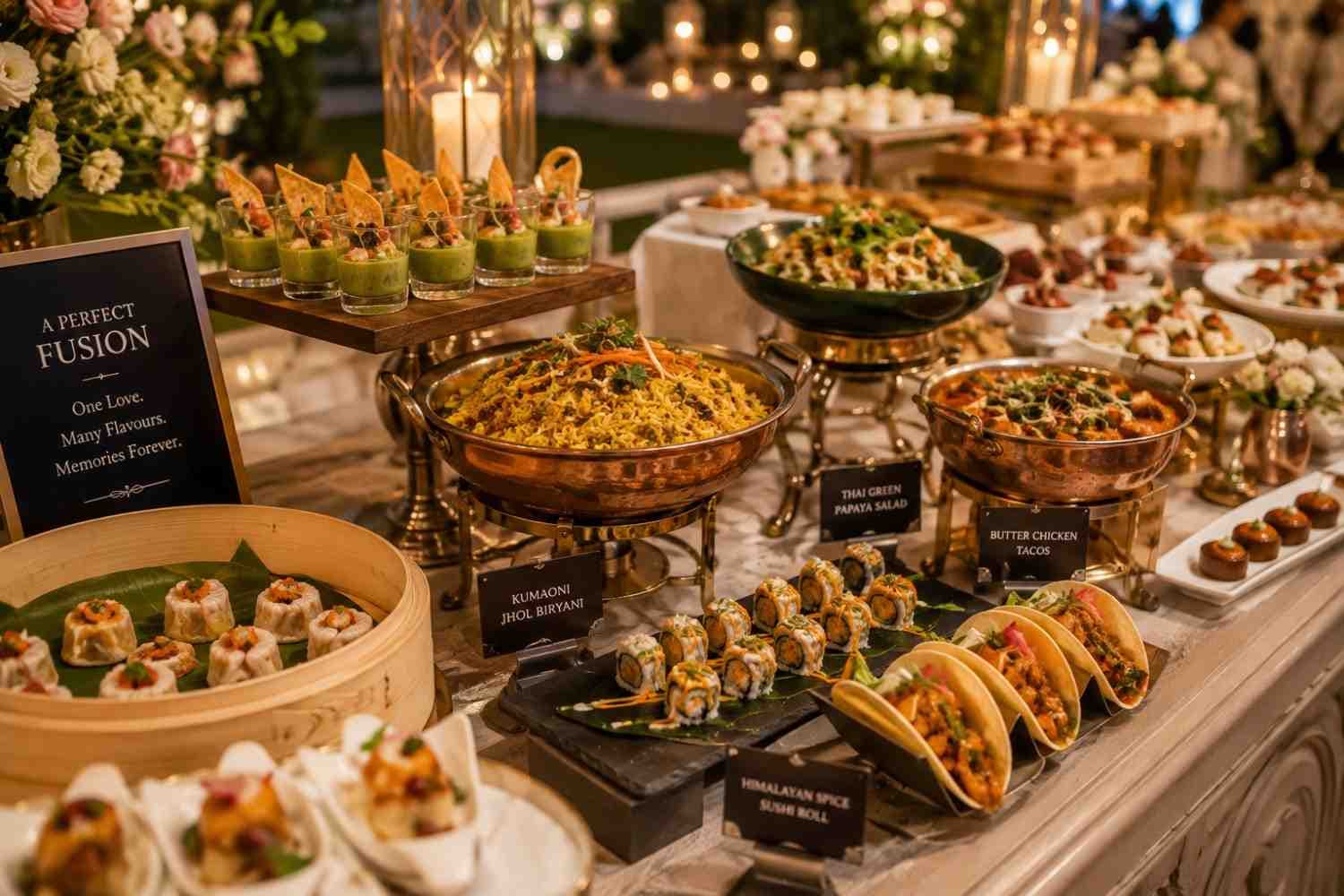
Wedding catering has moved well past the standard paneer-dal-biryani spread that dominated menus for decades. In 2026, couples are actively designing menus that combine regional Indian dishes with global cuisines, creating a food experience that feels curated rather than default. A fusion menu might pair a Hyderabadi biryani live station with a Mediterranean mezze counter, or serve Bengali fish preparations alongside a Japanese sushi bar, giving guests a spread that reflects both heritage and contemporary taste.
This shift is being driven by more well-travelled couples, greater exposure to global cuisines, and a general move toward wedding menus that feel personal rather than generic catering-hall fare.
Why Fusion Menus Are Trending in 2026
- Couples increasingly want their menu to reflect personal taste, not just tradition
- Multi-regional families use fusion menus to represent both sides without one cuisine dominating
- Guests have grown more food-adventurous, making global cuisine counters a genuine draw rather than a novelty
- Live counters and interactive food stations have become expected features at larger weddings, naturally lending themselves to cross-cuisine formats
- Destination weddings often incorporate local cuisine from the host region alongside the couple's own regional food
Popular Fusion Combinations Couples Are Choosing
Indian Regional + Mediterranean
Hummus, falafel and mezze platters paired with tandoori and kebab stations create a natural flavour bridge, since both cuisines share a strong grilling and spice tradition.
Indian Regional + East Asian
Sushi counters, dim sum stations or Korean barbecue setups alongside classic Indian curries and biryanis have become popular for couples wanting a more adventurous, contemporary spread.
North Indian + South Indian
For couples from different regions within India, combining a North Indian main course with South Indian counters, such as a dosa or idli live station, remains one of the most common and well-received fusion formats.
Indian + Italian
Wood-fired pizza counters, pasta stations and risotto bars paired with Indian starters and mains offer a familiar yet distinct addition, particularly popular at cocktail or reception events.
Indian + Middle Eastern
Shawarma counters, Arabic mezze and Middle Eastern desserts like baklava are frequently added alongside Indian food, especially at destination weddings in Gulf-adjacent or coastal locations.
Regional Fusion Within India
Beyond international pairings, couples are also blending distinct Indian regional cuisines, such as combining Kashmiri Wazwan dishes with South Indian counters, to represent both families' backgrounds in one spread.
Menu Formats That Work Well for Fusion Catering
Live Counters and Interactive Stations
Rather than a single buffet line, most fusion menus are built around multiple live counters, allowing guests to move between cuisines rather than committing to one style of plate.
Course-Based Fusion Dinners
For smaller, seated weddings, a structured course-based menu, moving from an Indian starter to a global main course or vice versa, offers a more curated dining experience than a buffet format.
Cocktail Hour Global Bites
Many couples reserve global cuisine specifically for the cocktail hour or welcome reception, keeping the main wedding meal traditional while introducing variety earlier in the event.
Dessert Fusion Counters
Pairing Indian sweets like gulab jamun or rasmalai with global desserts such as macarons, tiramisu or churros has become a popular way to close the meal with variety without overhauling the entire menu.
Planning a Fusion Menu: Key Considerations
Balancing Familiar and Adventurous Options
A common approach is keeping the main meal largely familiar for older or more traditional guests, while introducing global or adventurous options through separate counters or the cocktail hour, so no guest feels limited by the format.
Dietary and Cultural Considerations
Fusion menus need careful planning around dietary restrictions, including vegetarian, Jain, and religious dietary requirements, particularly when combining cuisines that may use ingredients not typically found in Indian cooking.
Caterer Expertise
Not all catering teams have genuine expertise across multiple cuisines. Couples should confirm whether a caterer has real experience preparing the specific global cuisine being considered, rather than a generic interpretation of it.
Tasting Sessions
Given the more experimental nature of fusion menus, a detailed tasting session becomes even more important than with a standard traditional menu, allowing couples to adjust spice levels, portion formats and counter combinations before finalising.
Guest Count and Station Planning
Multiple live counters require adequate space and staffing. For larger guest lists, couples should plan counter numbers and staffing carefully to avoid long queues at any single station.
Practical Tips for a Successful Fusion Menu
- Start menu planning at least three to four months before the wedding, allowing time for tastings and adjustments
- Limit fusion counters to three or four well-executed stations rather than spreading too thin across many cuisines
- Keep the main traditional meal as the anchor, using fusion elements to add variety rather than replace it entirely
- Confirm caterer experience with specific global cuisines through references or previous event samples
- Factor in additional staffing and equipment needs for specialised counters like sushi or wood-fired pizza stations
Conclusion
Fusion wedding menus reflect a broader shift toward wedding celebrations that feel personal, contemporary and representative of a couple's actual tastes and backgrounds. Blending regional Indian dishes with global cuisines, when planned carefully around guest preferences, dietary needs and caterer expertise, gives couples a memorable dining experience that goes well beyond a standard catering spread.
At PS Decor, menu planning includes coordinating with caterers experienced across multiple cuisines, helping couples design a fusion menu that balances tradition with contemporary variety for their guests.
Frequently Asked Questions
- How many fusion counters should a wedding menu include?
Most planners recommend three to four well-executed counters rather than spreading across too many cuisines, which can affect food quality and service speed. - Should the entire wedding menu be fusion, or just part of it?
Most couples keep the main meal largely traditional and introduce fusion elements through cocktail hour bites, live counters or dessert stations. - How do fusion menus handle dietary restrictions like vegetarian or Jain requirements?
Careful planning with the caterer is essential, since some global cuisines use ingredients not typically found in Indian cooking. Clear communication of dietary requirements upfront helps avoid last-minute menu gaps. - Do all caterers have experience with global cuisines?
Not necessarily. It's important to confirm a caterer's specific experience with the global cuisine being considered, rather than assuming general catering expertise covers it. - How far in advance should fusion menu tastings be scheduled?
Ideally three to four months before the wedding, giving enough time to adjust flavours, portions and counter combinations before finalising the menu.