
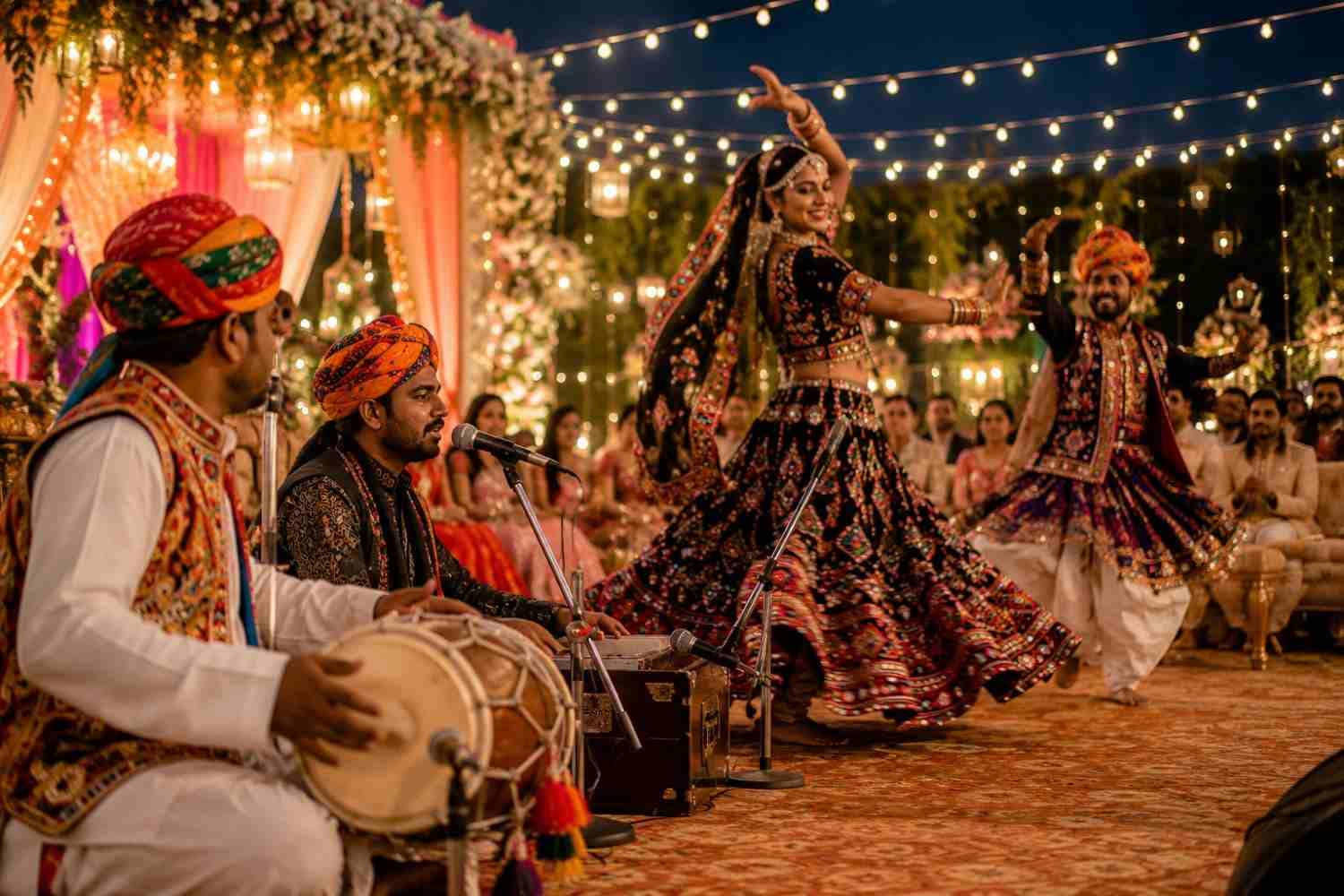
DJ nights and Bollywood dance floors remain a wedding staple, but in 2026, more couples are looking to add something that feels less generic and more rooted in identity. Folk and regional performers, from Rajasthani Kalbeliya dancers to Punjabi Bhangra troupes and Kerala's Kathakali artists, are increasingly being booked as dedicated entertainment segments rather than brief cultural add-ons.
This shift reflects a broader move toward weddings that reflect a couple's or family's actual heritage, rather than following a standard entertainment template regardless of regional background. For guests, especially those unfamiliar with a particular region's traditions, these performances also add a genuinely memorable, non-generic element to the celebration.
Why Folk and Regional Entertainment Is Gaining Popularity
- Couples want entertainment that reflects personal or family heritage, not a one-size-fits-all format
- Regional performances offer visual richness through costume, music and choreography that feels distinct from standard DJ sets
- Guests increasingly value cultural authenticity over repetitive Bollywood playlists at every wedding they attend
- Folk performances translate well to photography and video, often becoming standout moments in wedding coverage
- Multi-region families are using folk entertainment to represent both sides of the wedding, rather than defaulting to one dominant style
Popular Folk and Regional Performance Styles
Kalbeliya Dance (Rajasthan)
Known for its fluid, snake-like movements and vibrant black-and-silver costumes, Kalbeliya has become one of the most requested folk acts at desert and heritage-venue weddings, particularly for sangeet or welcome events.
Bhangra and Giddha (Punjab)
High-energy Bhangra performances, often paired with dhol players, work well as opening or closing acts for sangeet nights, while Giddha offers a softer, rhythmic alternative typically performed by women.
Garba and Dandiya Raas (Gujarat)
Beyond Navratri, Garba and Dandiya have become popular interactive formats for sangeet nights, encouraging guest participation rather than remaining a purely spectator performance.
Kathakali and Mohiniyattam (Kerala)
These classical and semi-classical dance forms, known for elaborate costumes and expressive storytelling, are often booked for Kerala destination weddings or as a distinctive cultural segment at receptions elsewhere.
Bihu Dance (Assam and Northeast India)
Featuring fast footwork and traditional attire, Bihu performances are increasingly requested by couples wanting to represent Northeastern heritage at their wedding celebrations.
Chhau Dance (Eastern India)
A masked dance form combining martial arts, acrobatics and folk storytelling, Chhau adds a dramatic, visually striking element well suited to evening stage performances.
Local Folk Musicians and Live Bands
Beyond dance, regional folk musicians playing traditional instruments, such as the dhol, shehnai, or ravanahatha, are being used for entrances, ceremony backdrops and ambient entertainment during dinner.
Where Folk Performances Fit Best in the Wedding Timeline
- Welcome or arrival ceremonies - folk musicians or a short dance segment as guests arrive sets a distinctive tone from the start
- Sangeet night - a dedicated folk performance segment alongside standard choreography adds variety to the evening's lineup
- Reception entertainment - interactive formats like Garba or Bhangra work well for encouraging guest participation later in the evening
- Ceremony backdrop - live regional musicians playing softly during the actual wedding rites add ambience without overwhelming the ceremony itself
Planning Considerations for Booking Folk Performers
Choosing Authentic Performers
Working with established folk troupes or cultural performance groups, rather than generic entertainment agencies offering a diluted version, ensures the performance reflects genuine regional style rather than a loosely themed act.
Performance Duration and Segment Length
Most folk performance segments run between 15 and 30 minutes, enough to make an impact without extending the overall event schedule significantly.
Stage and Space Requirements
Certain performances, particularly those involving props, fire elements or larger troupes, need adequate stage space and clearance, which should be confirmed with the venue in advance.
Costume and Cultural Accuracy
Reputable folk performance groups maintain authentic costumes and choreography specific to their region, which is worth confirming before booking, especially for couples specifically seeking cultural accuracy rather than a generalised "folk dance" act.
Combining with Modern Entertainment
Folk performances work well as a distinct segment within a broader entertainment lineup, rather than replacing DJ sets or Bollywood choreography entirely. Most couples use folk acts to open or punctuate the evening, with modern entertainment continuing afterward.
Representing Multiple Regions in One Wedding
For couples from different regional backgrounds, folk entertainment offers a natural way to represent both families without one culture dominating the celebration. This can include:
- A folk performance from each side of the family during different segments of the sangeet
- Combining musical styles, such as a fusion set blending Punjabi dhol with South Indian percussion
- Alternating cultural elements across pre-wedding events, so each family's traditions get dedicated visibility
Conclusion
Folk and regional performers bring a level of authenticity and visual richness to weddings that standard entertainment formats often cannot replicate. Whether it is a Kalbeliya performance at a desert wedding, Bhangra energy at a Punjabi sangeet, or Kathakali artistry at a Kerala celebration, these performances give guests a genuinely memorable experience rooted in real cultural tradition. Planned thoughtfully alongside modern entertainment, folk performances add depth and distinction to a wedding's overall entertainment lineup.
At PS Decor, entertainment planning includes sourcing authentic folk and regional performers, coordinating stage requirements and integrating these performances smoothly into the overall event schedule.
Frequently Asked Questions
- How long should a folk performance segment be at a wedding?
Most folk performance segments run between 15 and 30 minutes, enough to create impact without extending the event schedule significantly. - Can folk performers be booked alongside a DJ or Bollywood choreography?
Yes, most weddings use folk performances as a distinct segment within a broader entertainment lineup rather than a replacement for modern entertainment. - Are folk performances suitable for indoor banquet venues?
Yes, though certain performances involving props or larger troupes may need additional stage space, which should be confirmed with the venue in advance. - Can couples include folk performances representing both families' regional backgrounds?
Yes, many couples schedule performances from each side of the family during different segments of the sangeet or reception. - How far in advance should folk performers be booked?
It is best to confirm folk performance bookings at least two to three months in advance, particularly for well-known troupes with limited availability during peak wedding season.