
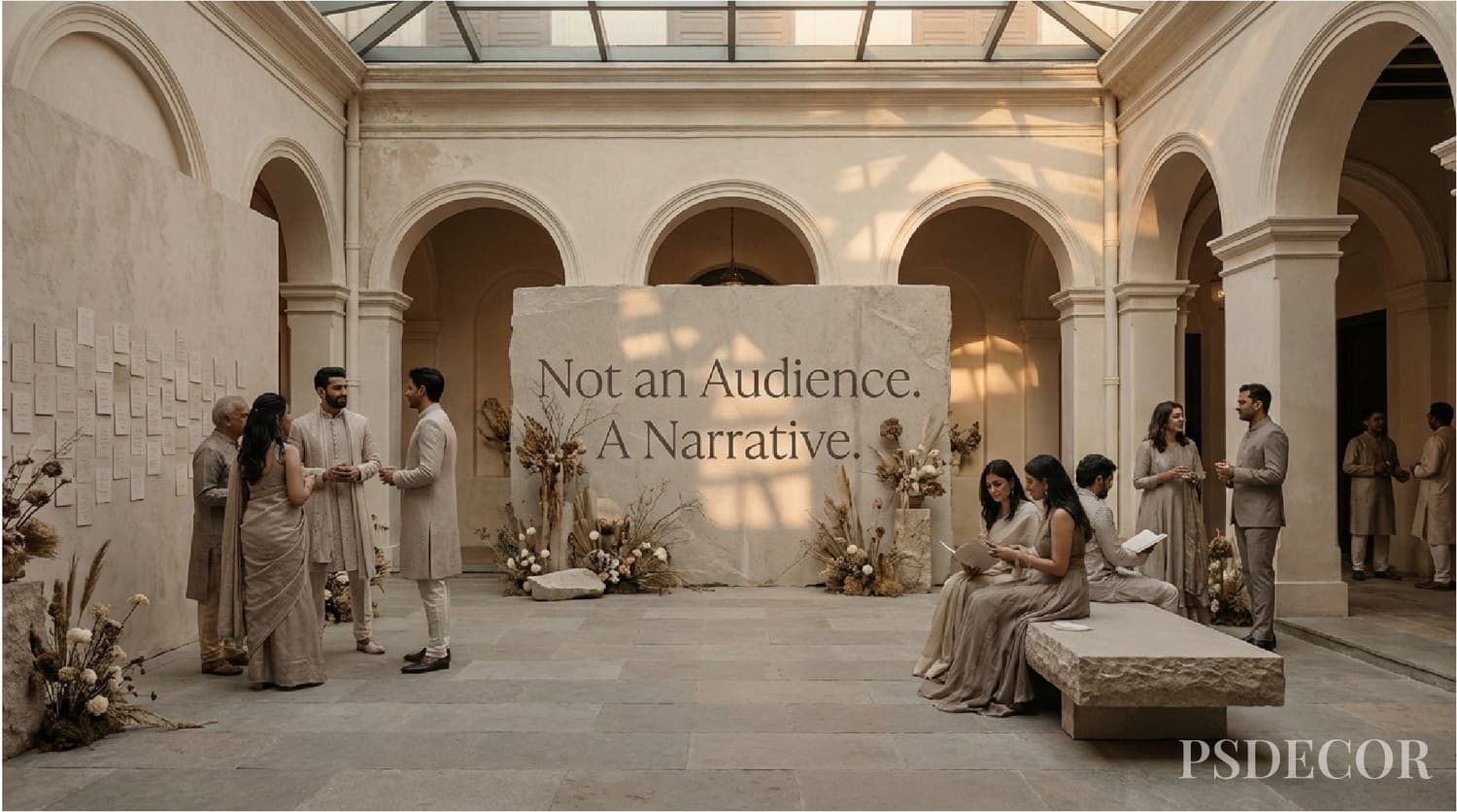
There was a time when weddings were staged like productions.
A central mandap. A decorated stage. Chairs aligned like a theater. Guests seated, watching rituals unfold in front of them—sometimes deeply moved, sometimes mildly distracted, often waiting for the next cue.
The couple performed. The guests observed.
That model is quietly breaking down.
Modern weddings are no longer about being watched. They're about being shared. The most meaningful celebrations today don't treat guests as an audience—they pull them into the narrative itself. Guests don't just witness the story anymore. They shape it.
This isn't a trend layered onto décor. It's a fundamental shift in how weddings are imagined, designed, and experienced.
From Stage-Centered to Story-Centered
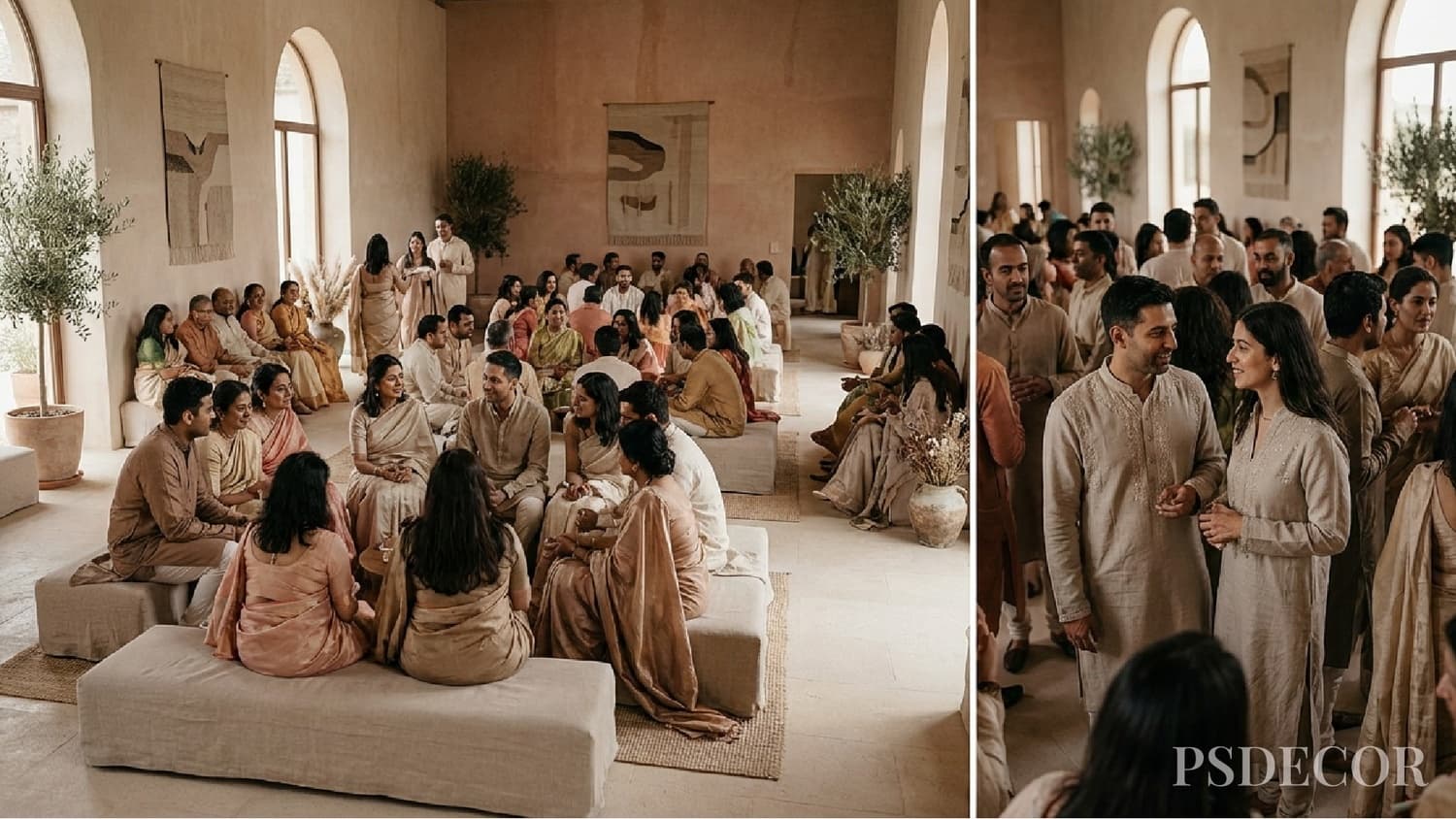
Traditional weddings were hierarchical by design. Attention flowed in one direction—from guest to couple. The décor reinforced this. Elevated stages. Frontal seating. Performances choreographed for visibility, not intimacy.
But something has changed in how couples think about meaning.
Today's couples aren't asking, 'How do we impress our guests?' They're asking, 'How do we include them?'
The focus has moved from spectacle to participation. From perfection to presence. From 'look at us' to 'walk with us.'
Design now begins with a different question: What role do our guests play in our story?
When that question leads the process, everything changes—layout, rituals, flow, even silence.
Interactive Rituals: When Meaning Is Co-Created
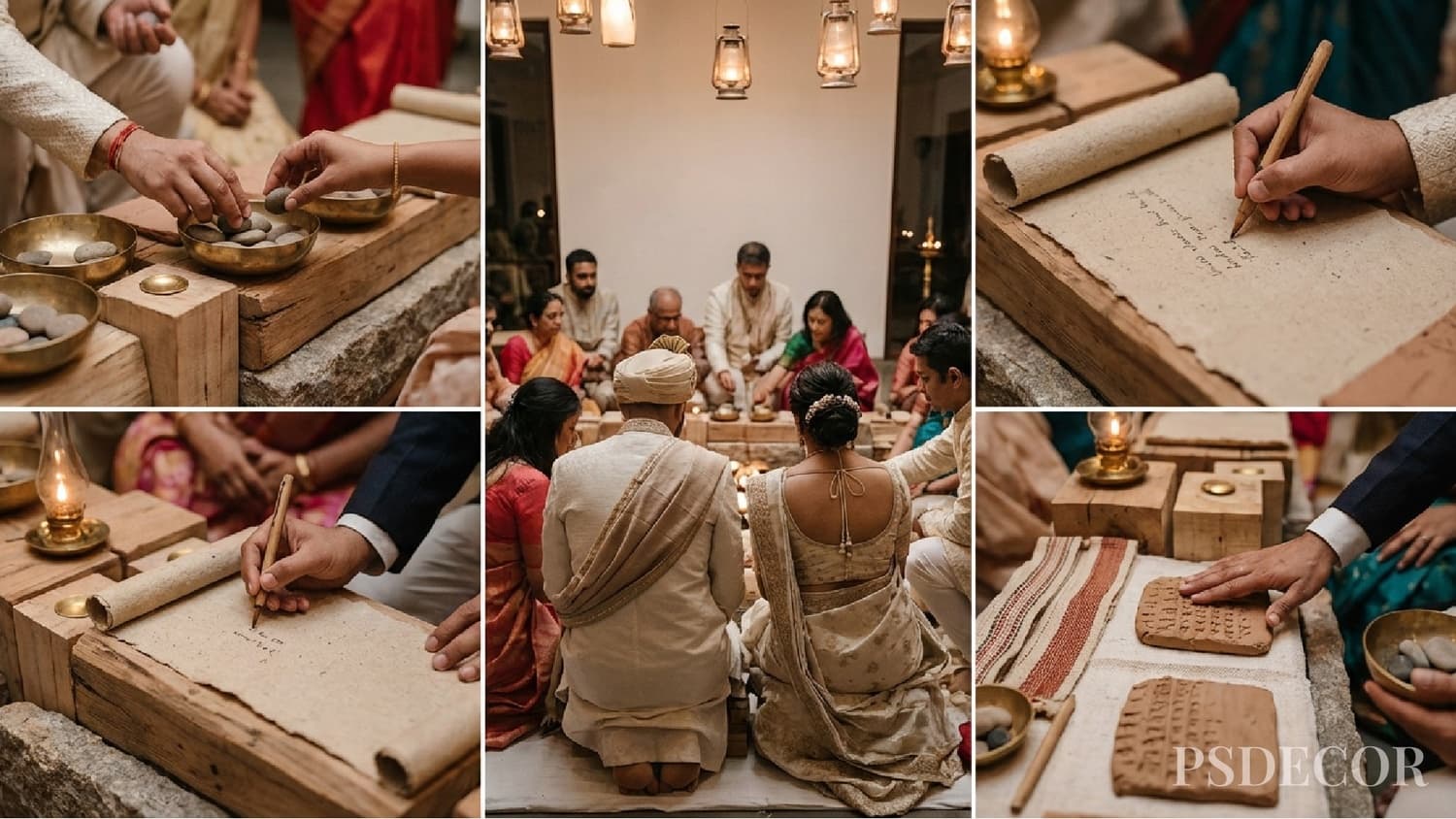
Rituals used to be fixed scripts, performed the same way for generations while guests watched respectfully from the sidelines.
Modern couples are rewriting that idea.
Not by discarding tradition, but by designing rituals as experiences—where guests become contributors rather than observers.
Shared intention moments replace passive blessings. Guests are invited to place symbols, offer thoughts, or participate in moments that feel collective instead of ceremonial. Rituals stretch across spaces instead of happening at one focal point, allowing people to engage when they feel ready, not when the program demands it.
What matters here isn't novelty—it's emotional accessibility.
Participation is never forced. It's invited. Quietly. Thoughtfully. With respect for personal comfort and cultural grounding.
The result? Rituals feel less like performances and more like lived moments. Guests don't just remember watching them—they remember being inside them.
Story Cards, Audio Messages & Memory-Led Touchpoints
The loudest storytelling no longer happens on stage.
It happens in corners. In pauses. In moments guests discover on their own.
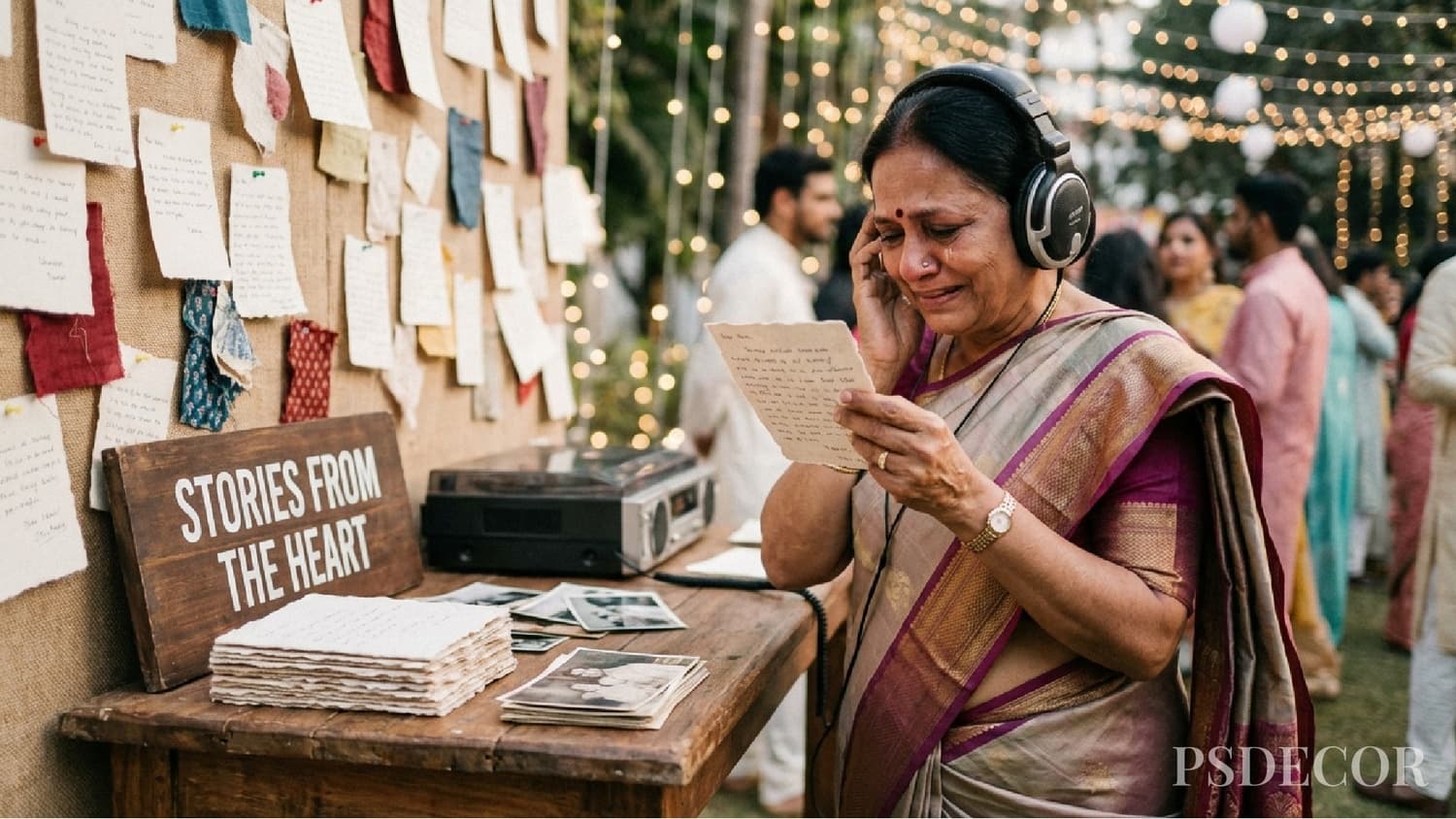
Story cards placed across the venue reveal fragments of the couple's journey—how they met, what they feared, what they learned. No timelines. No forced sequencing. Just moments waiting to be found.
Audio stations replace speeches. Voice notes from parents, letters recorded for the future, memories captured in sound rather than spectacle. Guests lean in. Headphones on. World muted. Emotion amplified.
Memory walls aren't pre-designed showpieces anymore. They evolve. Guests add thoughts, sketches, folded notes, Polaroids. The wall becomes a living artifact of the day—not a backdrop, but a collective memory in progress.
These touchpoints do something powerful: They slow people down.
In a world obsessed with instant content, they invite presence. They allow guests to engage on their own terms, at their own pace. No announcements. No pressure. Just quiet connection.
Choose-Your-Own-Experience Wedding Flows
Rigid schedules are losing relevance.
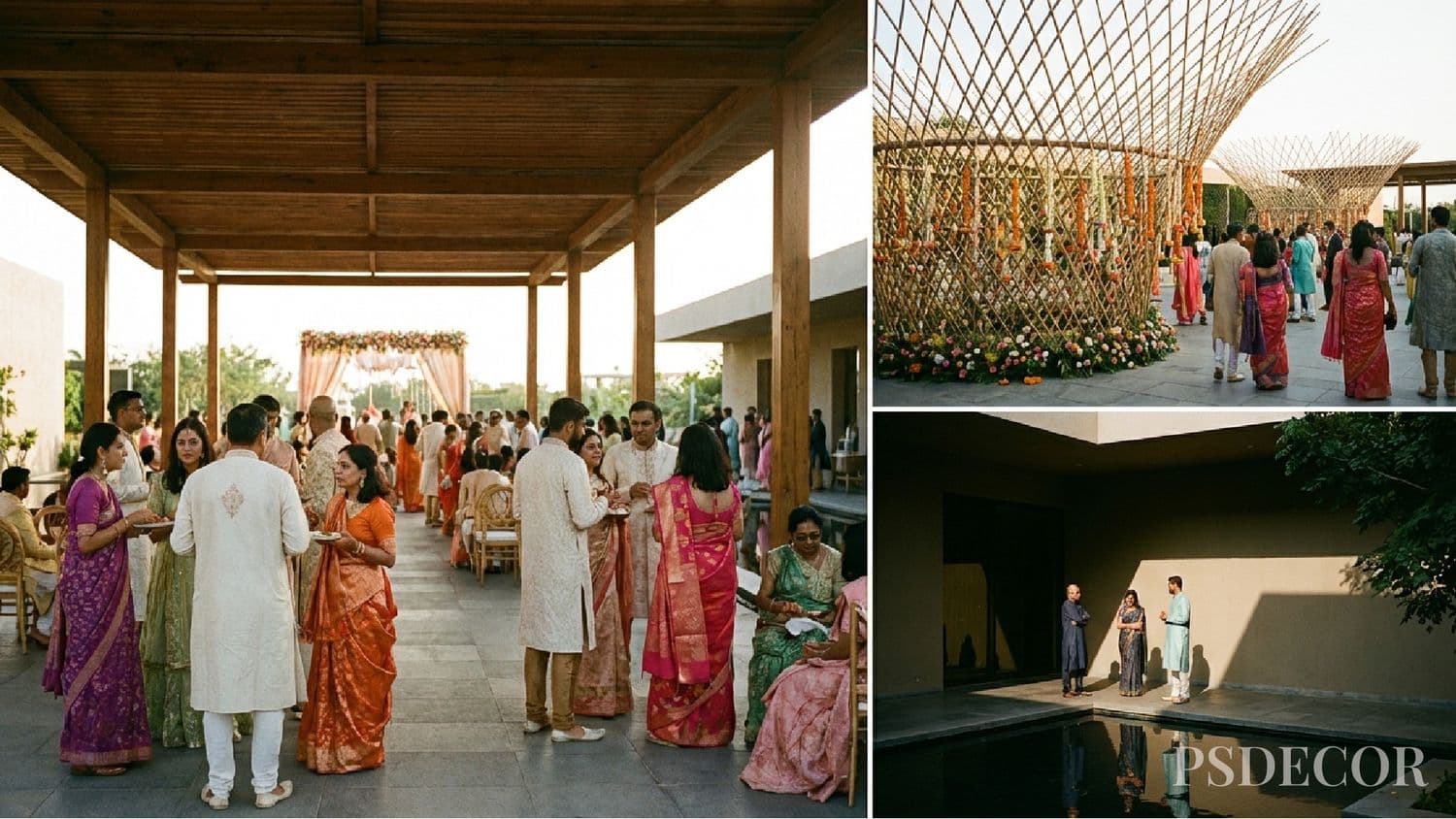
Today's most thoughtful weddings operate less like programs and more like narratives with multiple entry points.
Instead of forcing everyone to look at the same thing at the same time, couples design parallel experiences. While one group gathers for conversation, another explores an installation. Some linger near music. Others drift into stillness.
This isn't chaos—it's intentional freedom.
Guests choose where to be based on mood, energy, and connection. The design supports this movement through zoning, lighting, and spatial cues rather than signage and instructions.
The luxury here isn't scale. It's agency.
The most elevated weddings don't demand attention. They invite curiosity.
And when guests are trusted to find their own rhythm within the celebration, they engage more deeply—because the experience feels personal, not imposed.
When Guests Replace the Stage
Something else is quietly disappearing: the expectation of constant performance.
Sangeet stages stacked with acts. Perfectly rehearsed routines. Spotlight moments designed for applause rather than emotion.
In their place? Guest-led moments that aren't scheduled, scripted, or spotlighted.
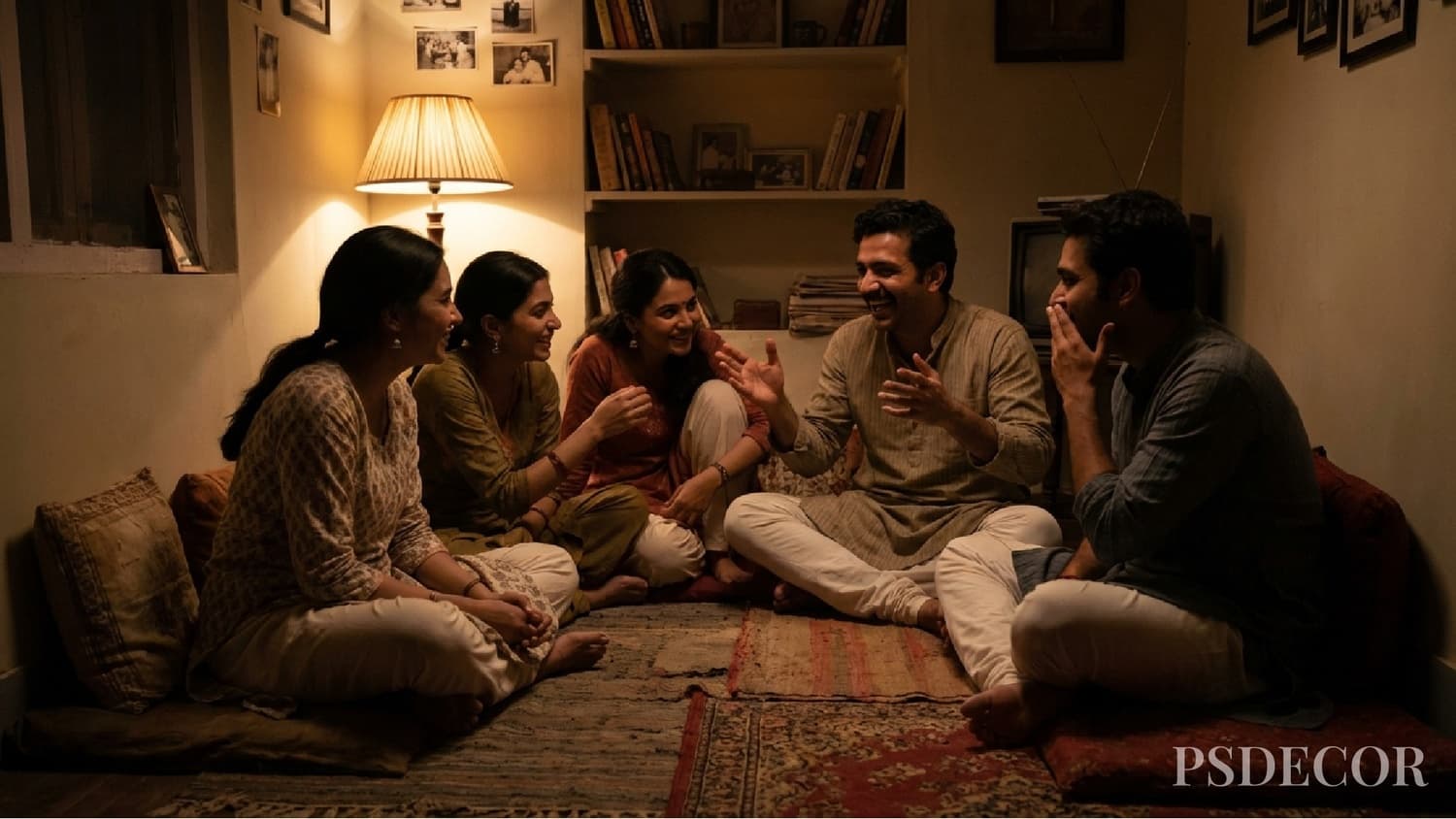
Small storytelling circles form organically. Friends share memories without microphones. A cousin becomes a narrator. A quiet conversation turns into laughter that ripples outward.
These moments don't need choreography. They don't need elevation. They don't even need décor.
They need space.
Design now works behind the scenes, creating environments where unscripted magic can happen without interruption. Where conversations feel held, not hurried. Where silence is allowed to exist alongside celebration.
Ironically, these are the moments guests remember most—not because they were spectacular, but because they were real.
The Rise of Intimate Micro-Interactions
Bigger weddings don't mean louder ones anymore.
In fact, the most luxurious celebrations are investing in micro-interactions—moments so small they almost go unnoticed, yet linger the longest.
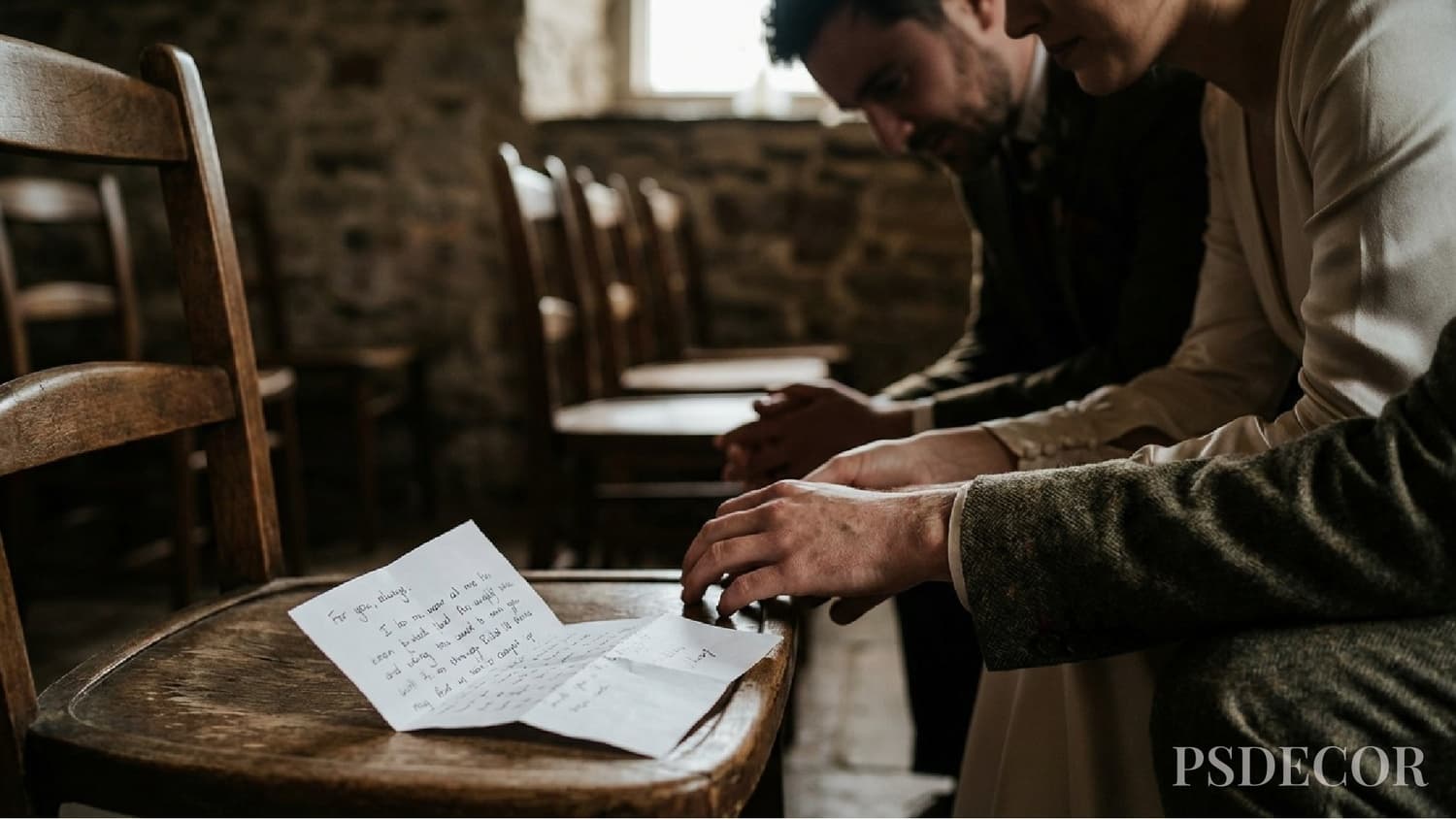
A handwritten note placed where only one guest will find it. A seating moment that encourages one-on-one conversation. A design cue that gently slows movement instead of accelerating it.
These moments aren't accidental. They're carefully designed pauses.
They acknowledge something deeply human: people don't remember everything, but they remember how they felt when they were seen.
When guests leave a wedding feeling emotionally acknowledged rather than entertained, the experience stays with them. Long after the lights dim. Long after the photos circulate.
What This Shift Means for Wedding Design
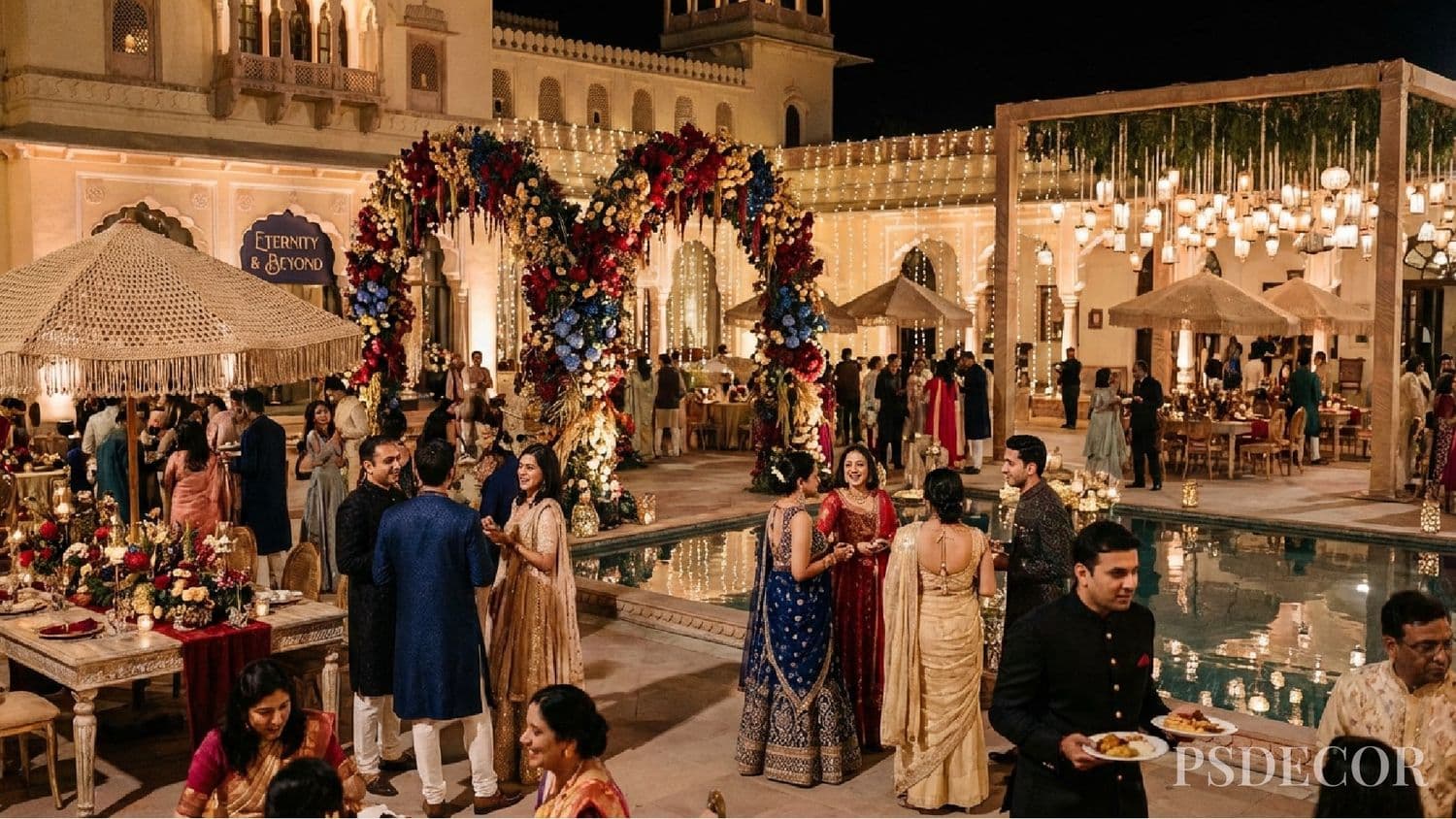
When guests become part of the plot, design can no longer be decorative alone.
It has to be experiential, psychological, and emotional.
Layouts respond to human behavior, not just aesthetics. Materials are chosen for how they feel in proximity, not just how they photograph. Negative space is treated as intentional, not empty.
Experience-first design replaces visual overload. Story replaces spectacle. Participation replaces performance.
This is where thoughtful design studios step into a new role—not as decorators, but as narrative architects. The job isn't to fill space. It's to shape experience.
At PS Decor, this philosophy isn't an add-on. It's the foundation. Every element—spatial, sensory, emotional—is considered through the lens of how people will move, interact, and remember.
Because when design works, it disappears into the experience. And when it disappears, what remains is meaning.
A Wedding Is No Longer a Show
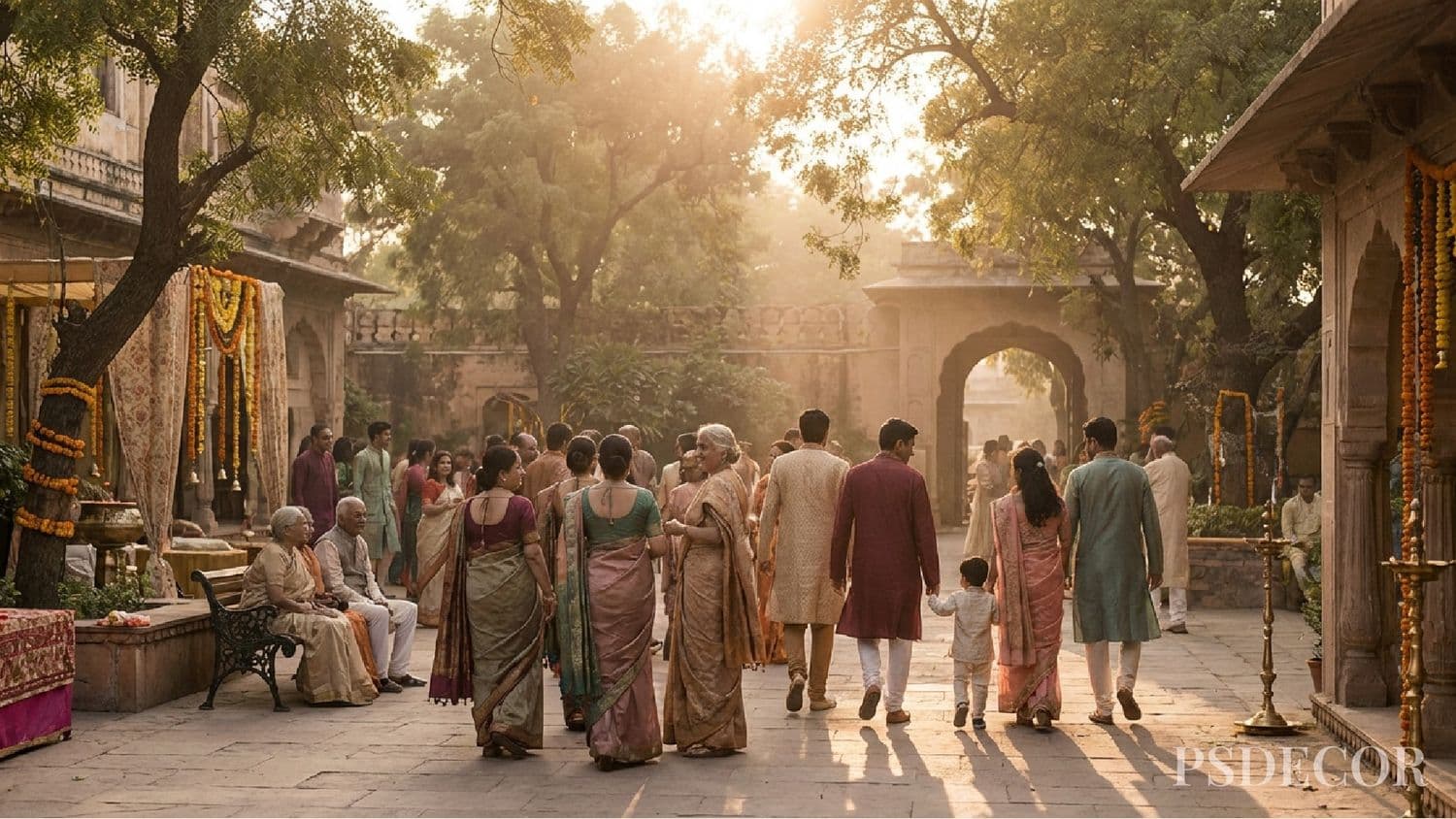
The idea of a wedding as a production—with performers and spectators—is fading.
In its place is something quieter. Richer. More human.
A wedding is now a shared narrative. A living story where every guest holds a thread. Where presence matters more than perfection. Where design doesn't shout—it listens.
Guests are no longer sitting in rows, waiting to be impressed.
They're walking through memories. Adding to them. Carrying them forward.
And that's the shift that defines modern celebrations—not how they look, but how deeply they're felt.
If you're reimagining your wedding as an experience rather than an event, it might be time to think beyond décor, and start designing the story itself.
Because the most unforgettable weddings aren't watched.
They're lived.
For couples who believe a wedding should feel lived-in, not staged, design becomes a dialogue, not a display.
Connect with PS Decor
- 📞 Call: +91 7599208222
- 📧 Email: info@psdecor.in
- 🌐 Website: www.psdecor.in