
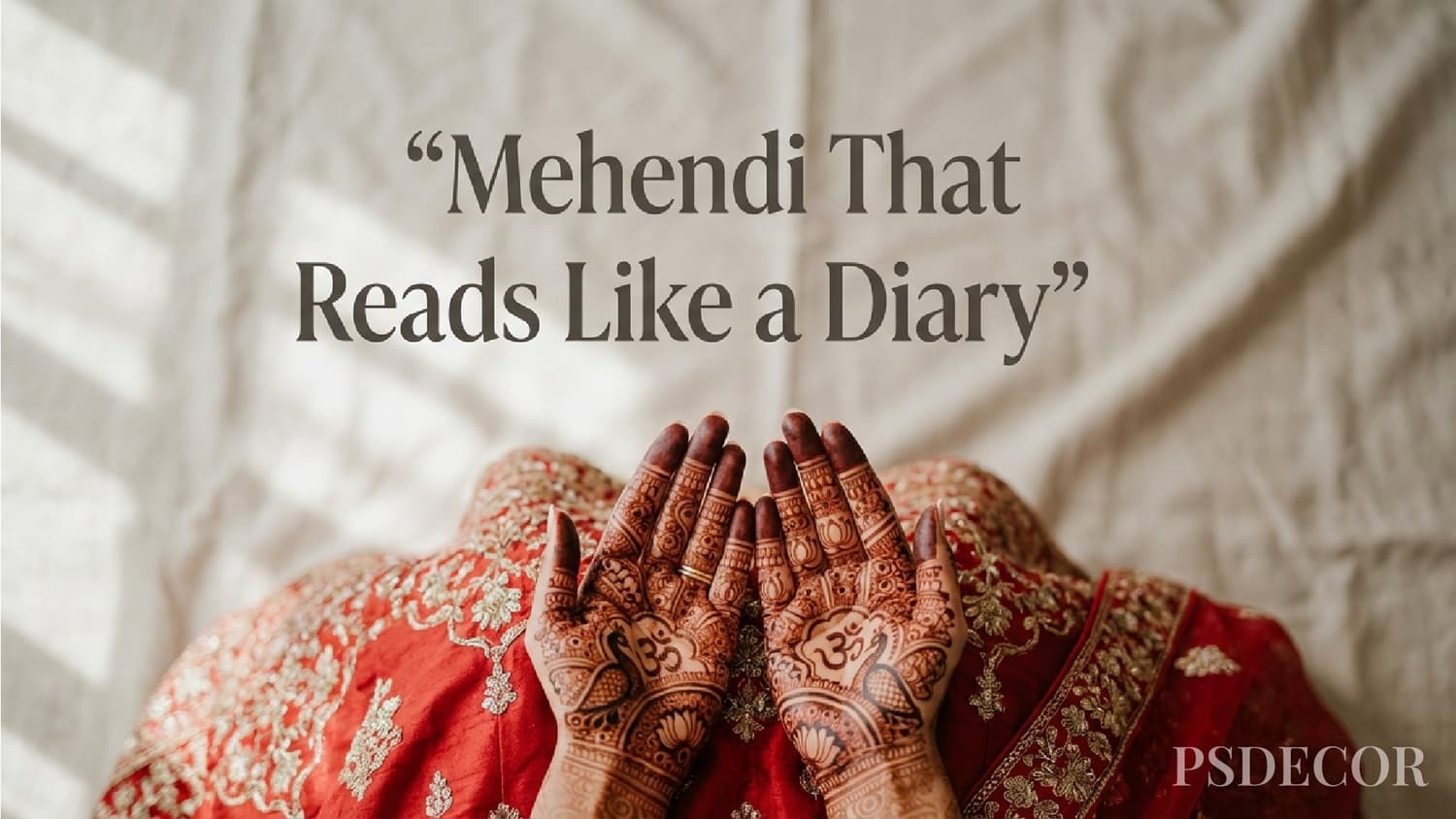
There was a time when mehendi was expected to be loud. Dense. Packed. Maximal. Every inch filled as if empty skin meant missed opportunity.
But something has shifted.
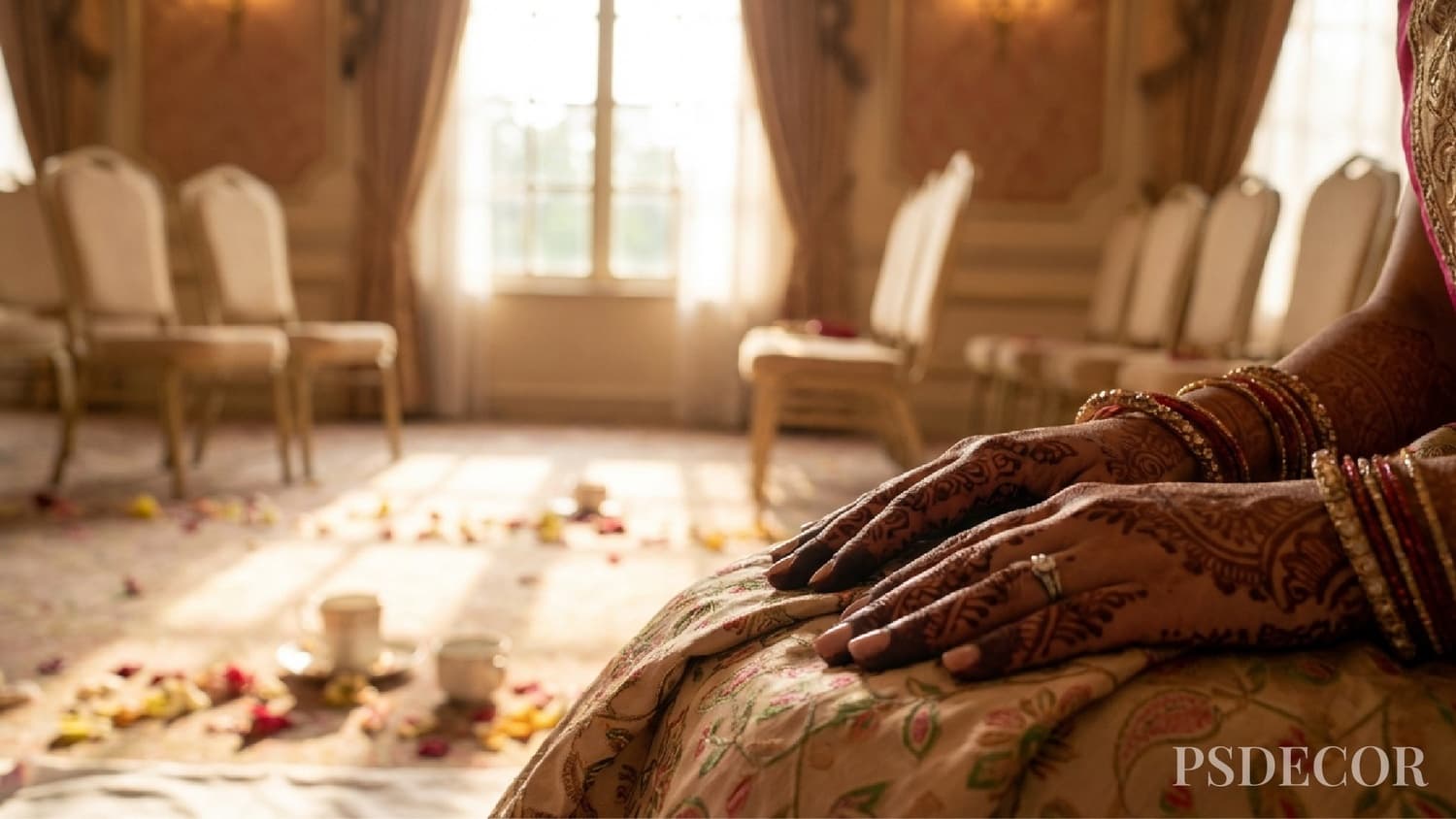
Today's mehendi isn't trying to impress from across the room. It's trying to be understood up close. It doesn't shout tradition; it whispers memory. It asks you to look longer, ask questions, and listen.
In 2026-27 weddings, mehendi has quietly evolved from ornament to language. From pattern to prose. From something you wear to something you tell.
This is mehendi that reads like a diary—layered, personal, selective, and deeply intentional.
Mehendi Is No Longer Silent
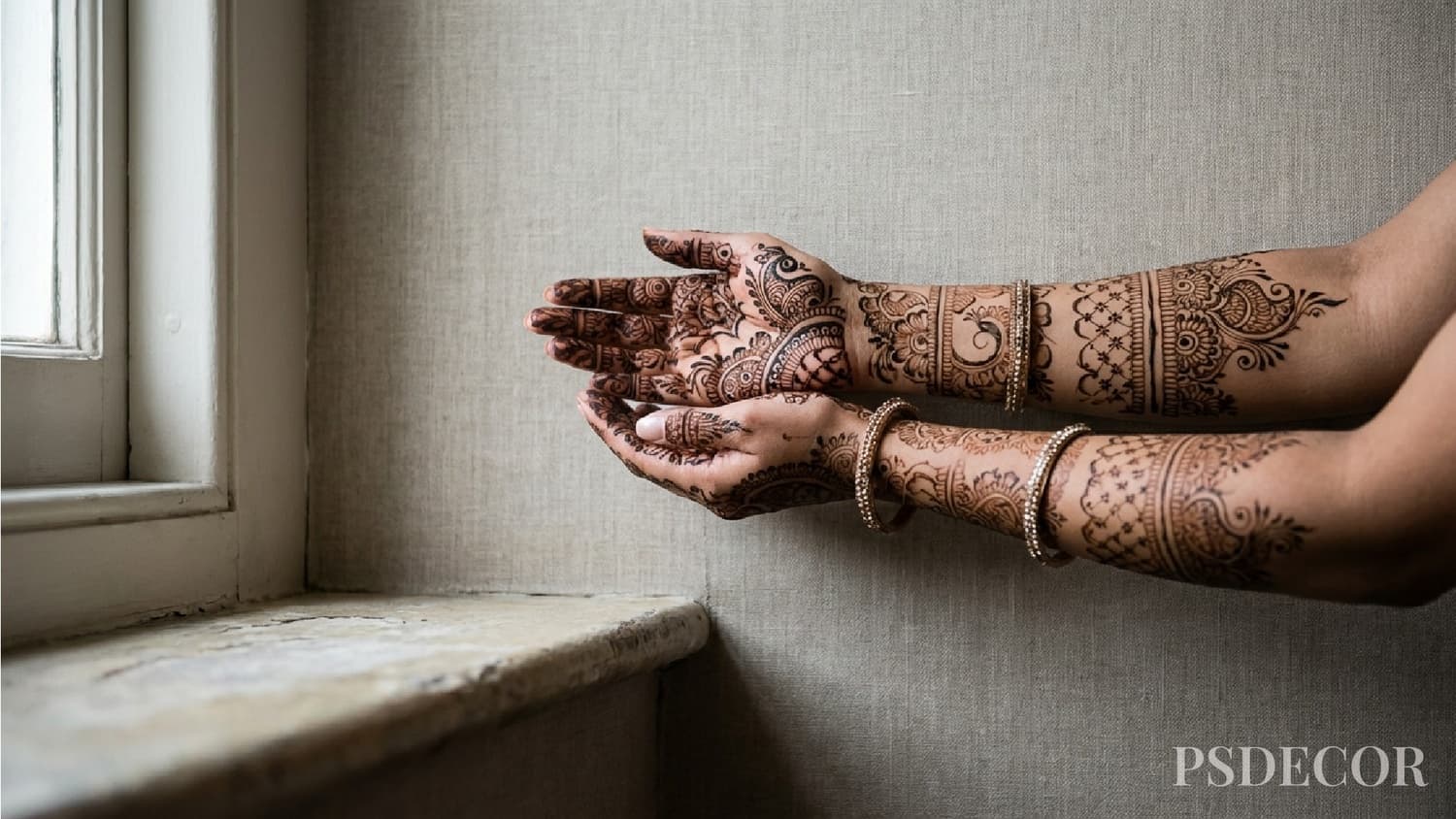
Traditional mehendi was visual rhythm. Paisleys, florals, symmetry—beautiful, yes, but largely interchangeable. Two brides from two different cities could carry nearly identical designs, and no one would blink.
Modern mehendi doesn't work like that anymore.
Now, hands are becoming narrative spaces. Arms are becoming timelines. Skin is becoming a medium for memory, not decoration for decoration's sake.
The question has changed from 'How full should it be?' to 'What deserves to live here?'
And that question is reshaping everything.
Illustrated Love Timelines Hidden in Mehendi
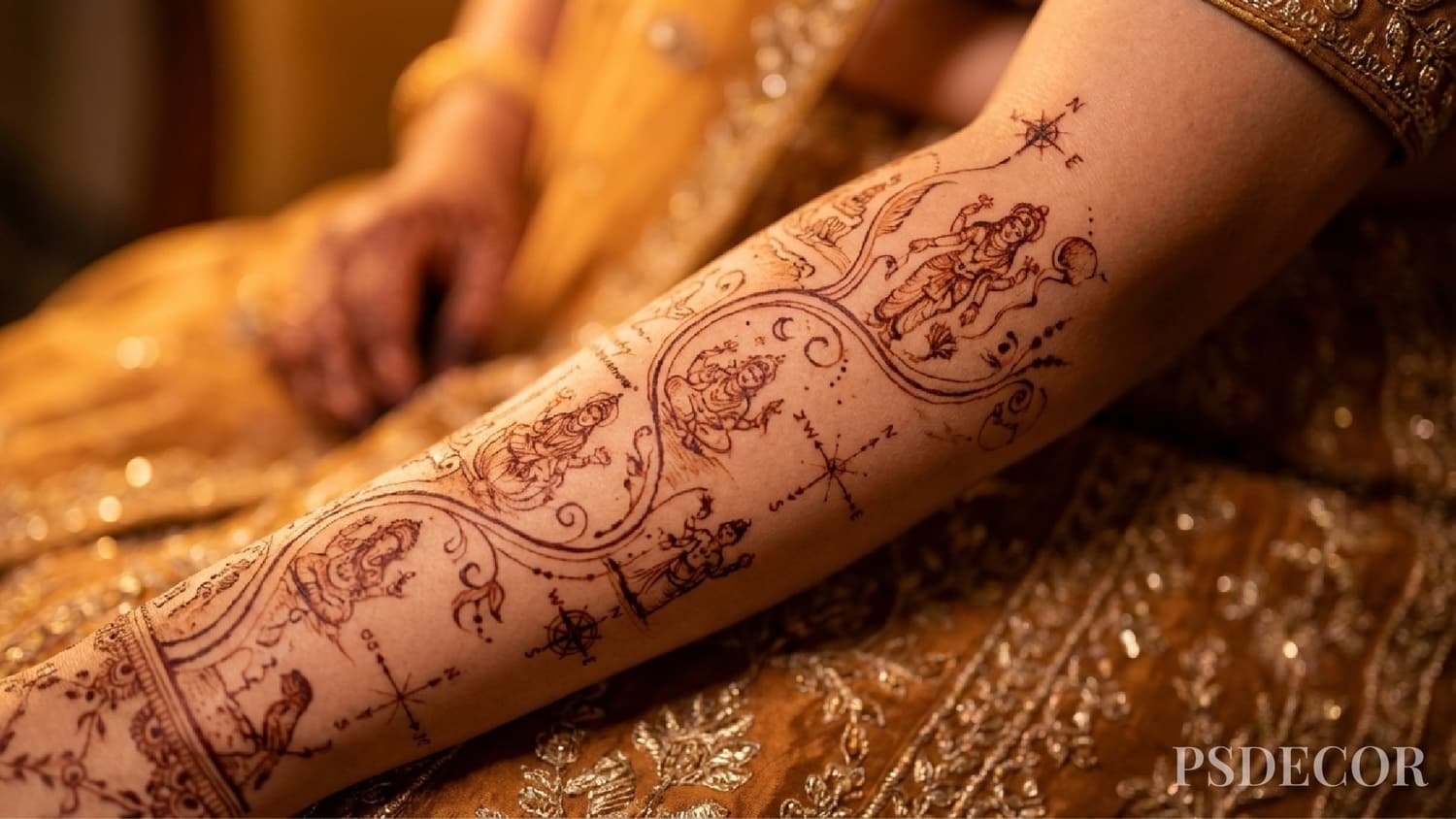
One of the most striking shifts is how couples are embedding entire relationship arcs into mehendi—quietly, cleverly, almost secretly.
Instead of a single symbolic motif, mehendi now unfolds like a sequence:
- A tiny book icon marking the first conversation
- Coordinates of the city where they met
- A minimal train line referencing years of long distance
- A half-hidden ring sketch near the wrist
- Dates written in numerals only the couple recognizes
These aren't obvious designs meant for instant recognition. They're illustrated timelines, meant to be decoded.
To guests, the mehendi looks elegant and restrained.
To the couple, it's a private archive—each symbol unlocking a chapter.
And that's the magic. Mehendi no longer performs for everyone. It belongs, first and foremost, to the people wearing it.
Custom Symbols Are Replacing Generic Paisleys
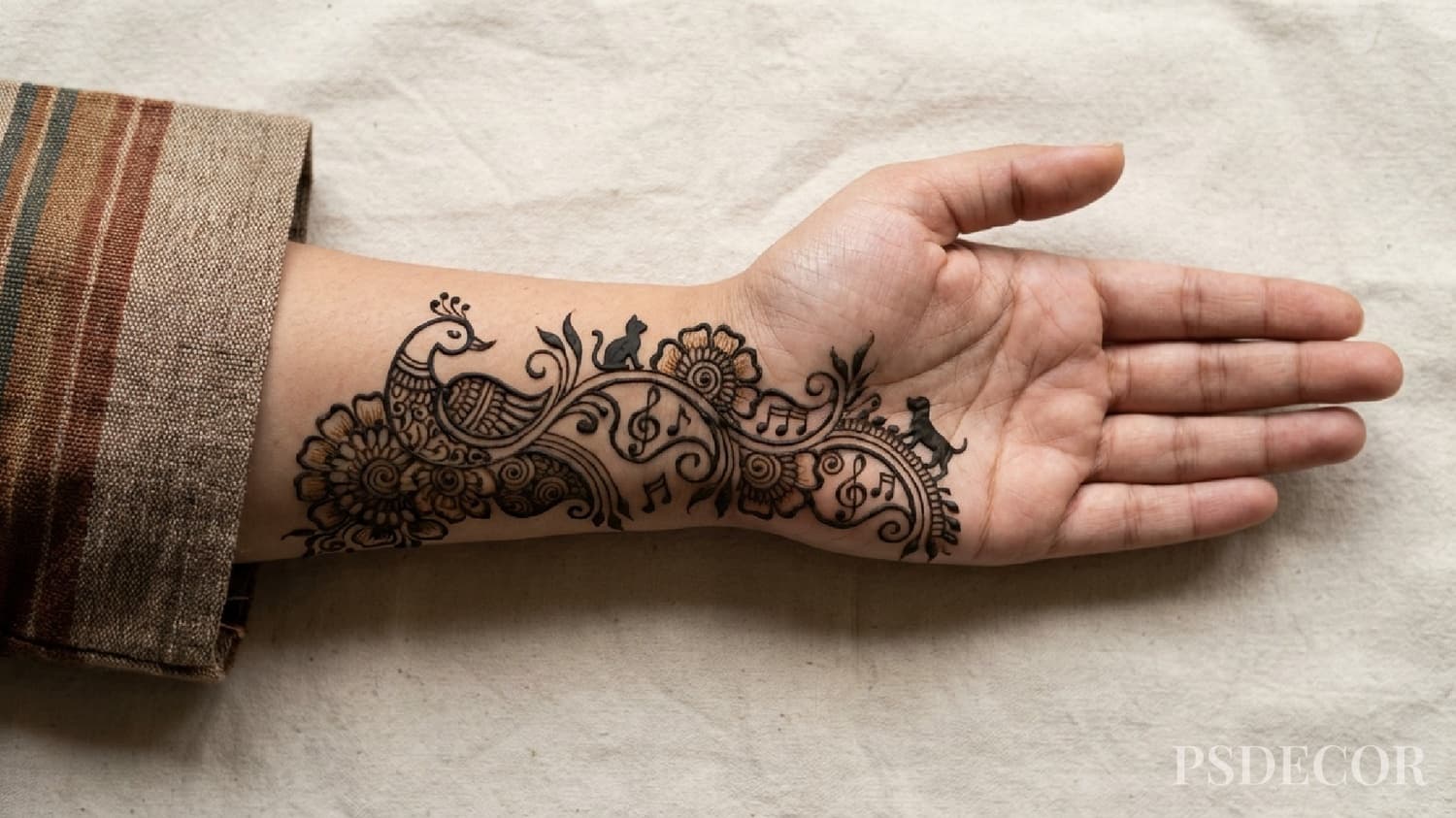
The paisley isn't cancelled, but it's no longer the default.
In its place, couples are choosing symbols pulled straight from their real lives:
- Pets instead of peacocks
- Favorite book spines instead of florals
- Tarot cards instead of mandalas
- Musical notes instead of vines
- Protest symbols, pride markers, or personal affirmations woven subtly into the flow
These designs don't aim for universal beauty. They aim for specific truth.
And that's the point.
This shift isn't about rejecting tradition—it's about refusing impersonality. Brides are no longer interested in wearing someone else's idea of auspiciousness. They want their hands to reflect who they are, what they believe, and what they've lived through.
Mehendi has become identity work.
Partner-Led Mehendi Design Collaborations
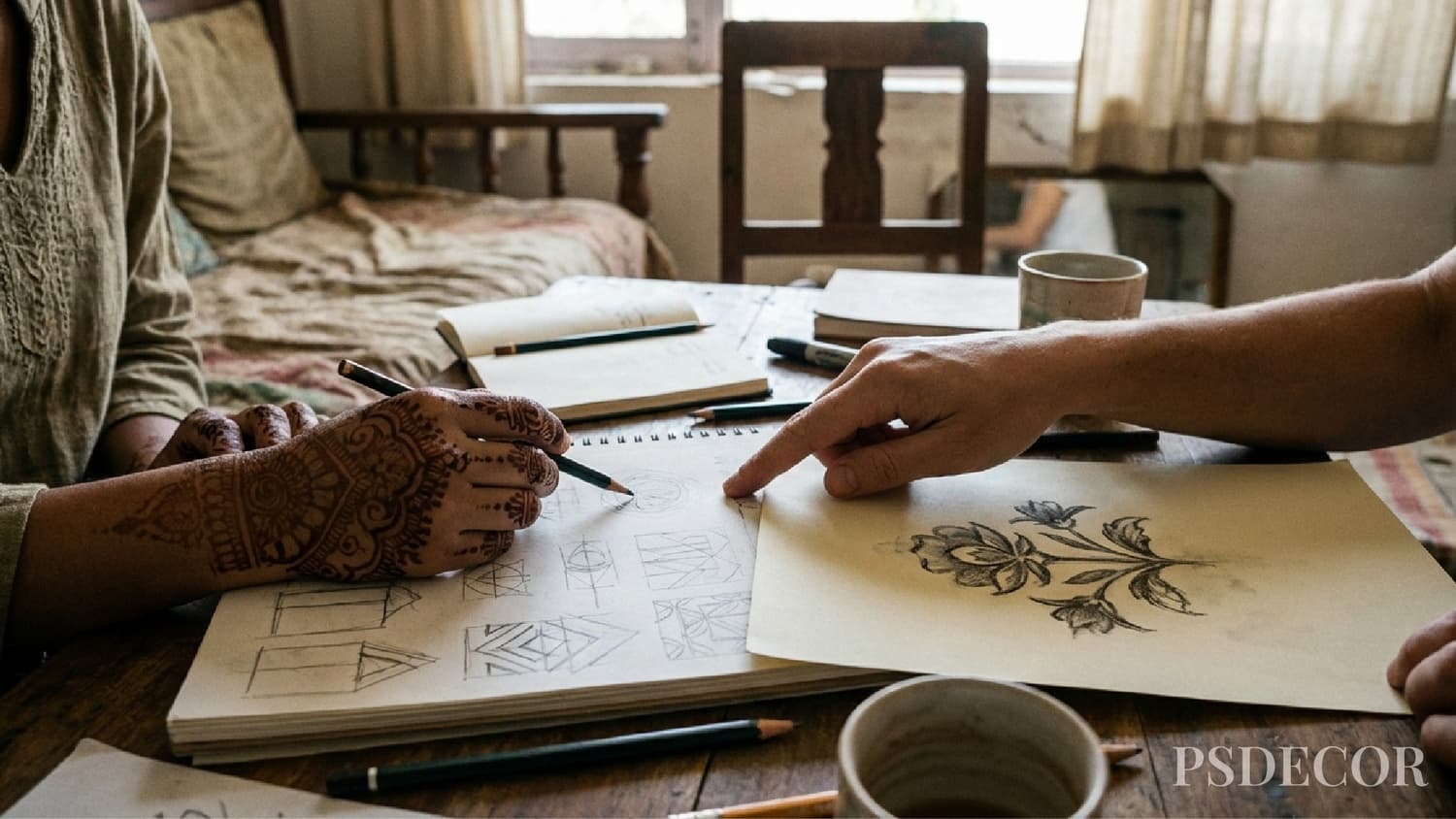
Perhaps the most emotionally telling change?
Mehendi is no longer designed in isolation.
Earlier, the bride and the mehendi artist would decide everything. The partner would show up later, maybe try to find their initials hidden somewhere, smile, move on.
That era is done.
Now, couples are designing mehendi together.
Partners are sketching ideas. Suggesting symbols. Negotiating what stays and what doesn't. Deciding which memories feel sacred enough to mark permanently, even if only for a few days.
Sometimes it's playful:
• Inside jokes
• Shared fandom references
• Nicknames disguised as motifs
Sometimes it's deeply serious:
• Grief markers
• Reminders of survival
• Acknowledgments of mental health journeys
What matters is this: mehendi has become a shared artifact of the relationship, not a bridal accessory.
And that alone signals how far wedding culture has moved.
White-Space Mehendi: The Confidence of Restraint
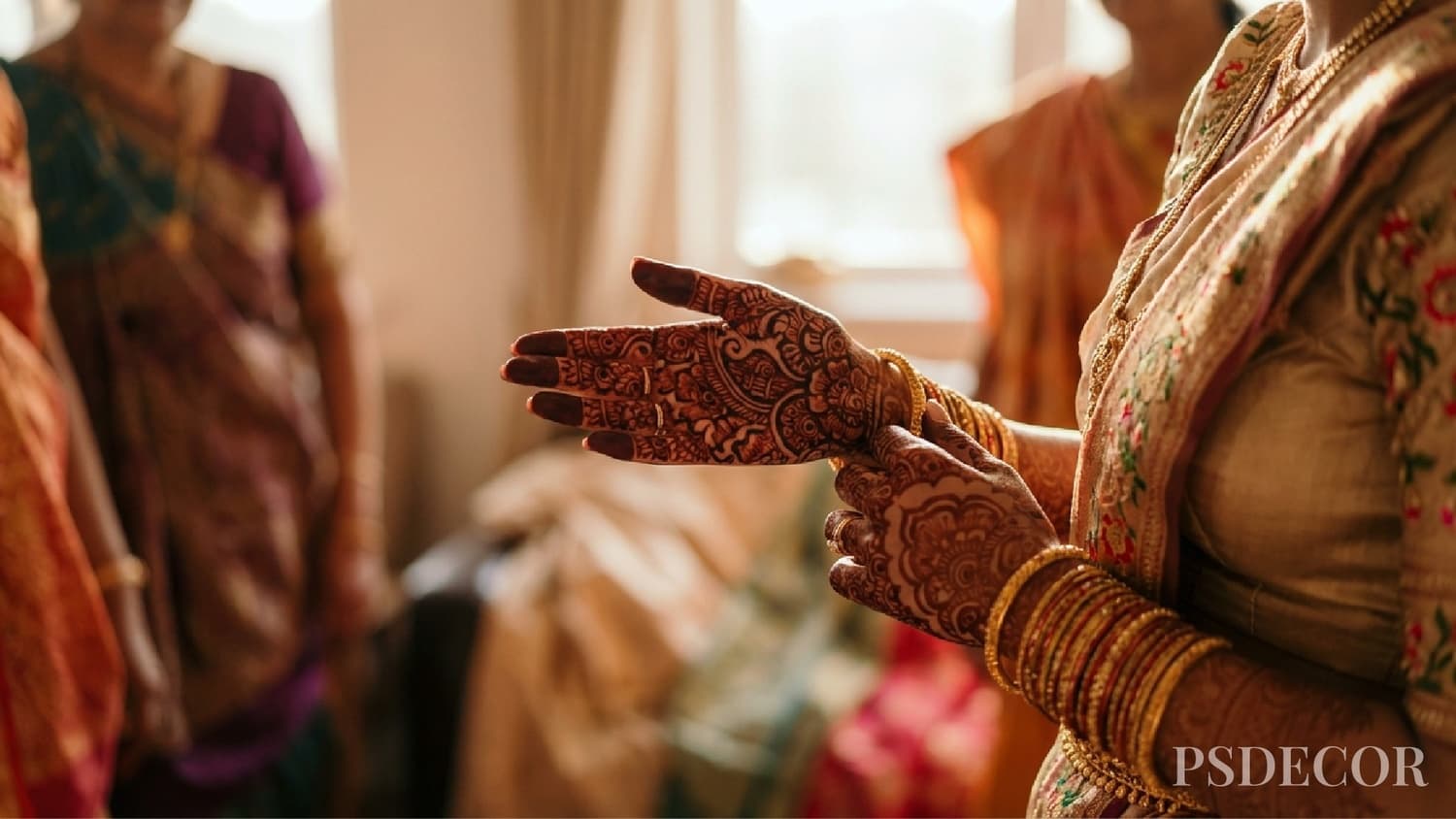
One of the boldest design moves right now isn't what's added—it's what's left out.
White-space mehendi is having a moment. And it's not accidental.
Negative space allows symbols to breathe. It gives meaning room to stand alone. It tells the viewer: nothing here is filler.
Modern brides are choosing:
- Lighter density
- Intentional gaps
- Asymmetry
- Designs that stop mid-arm instead of climbing endlessly
This isn't minimalism for trend's sake. It's restraint as self-assurance.
White space photographs better, yes, but more importantly, it reads better. When there's less visual noise, symbols carry weight. A single icon can hold an entire memory without competing for attention.
Quiet mehendi is powerful mehendi.
Mehendi Reveals as Storytelling Moments
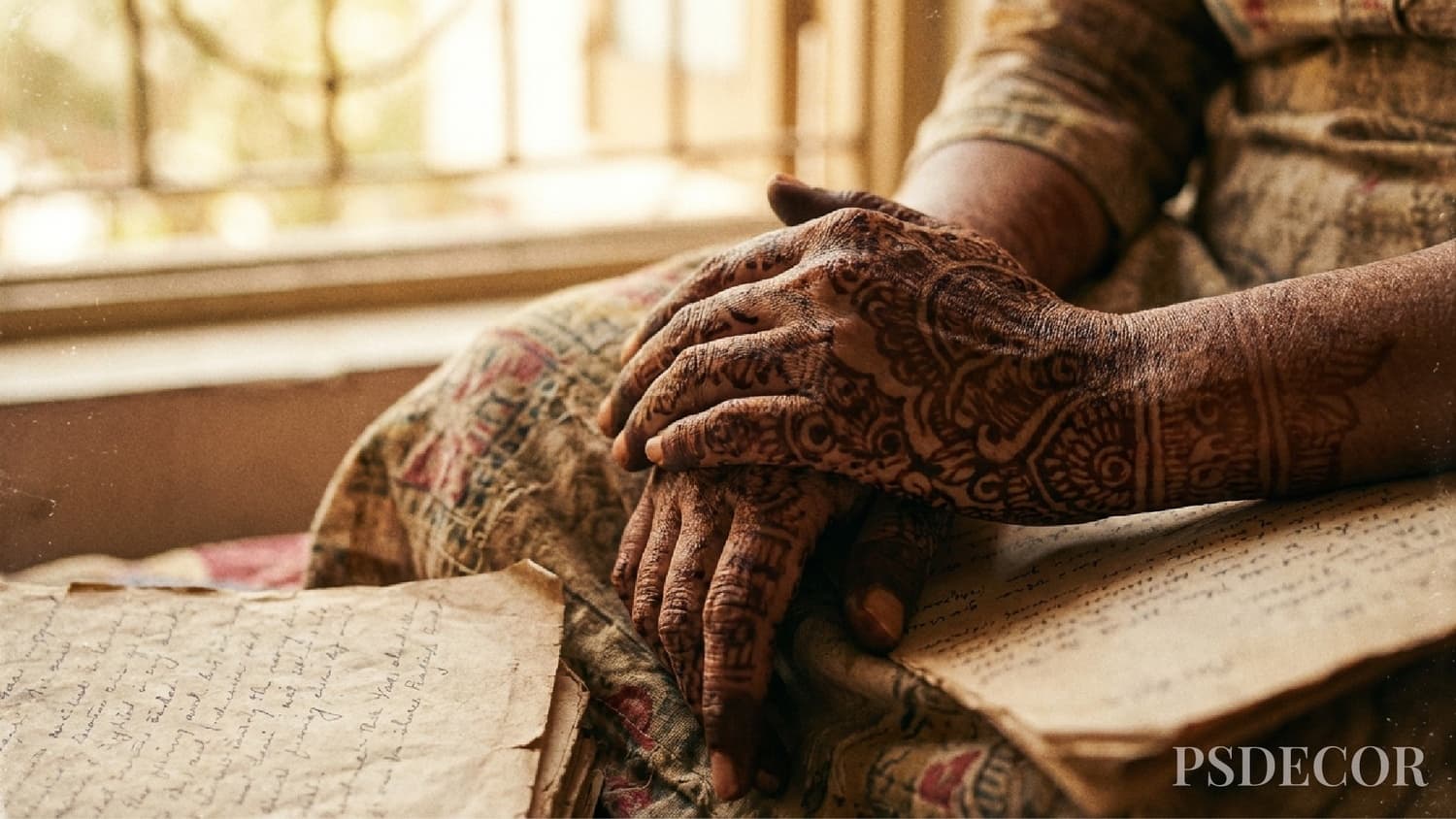
Another shift you'll notice? Mehendi is no longer just applied—it's revealed.
Not in the dramatic sense, but in a slow, conversational way.
Brides are:
• Explaining symbols to close friends
• Letting guests discover details over time
• Turning casual compliments into storytelling moments
'What does this mean?'
'Oh, that's where we first met.'
'And this?'
'That's our dog.'
'And this tiny symbol here?'
'That one's just for us.'
Suddenly, mehendi becomes interactive. Guests aren't just looking—they're listening. They're reading. They're engaging.
It transforms the mehendi ceremony from a passive ritual into a living narrative exchange.
Mehendi as Emotional Documentation
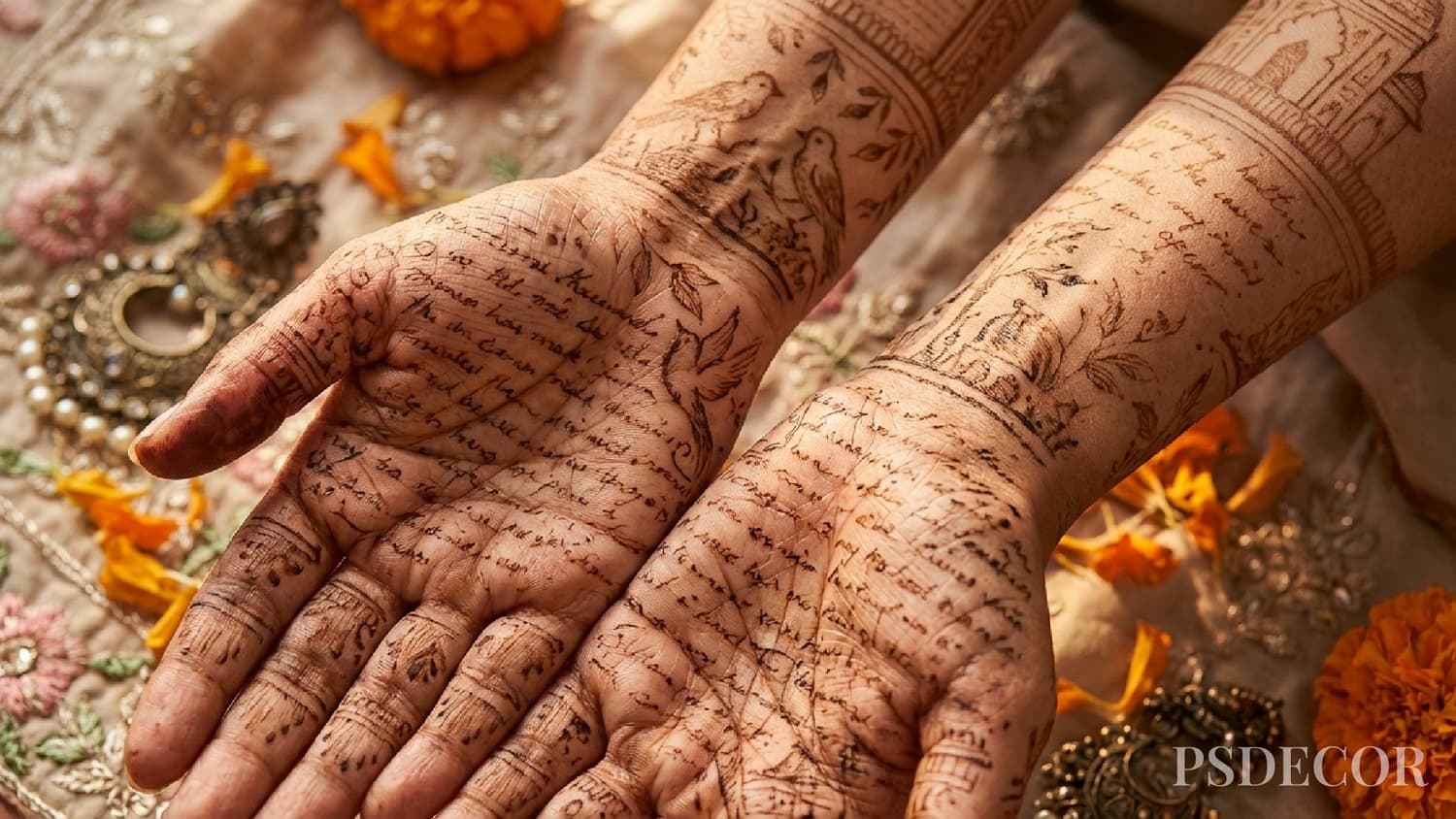
Zoom out, and this shift says something bigger about modern weddings.
Couples today are less interested in performance and more invested in preservation. They want rituals to hold something, not just signal that something is happening.
Mehendi has become emotional documentation:
• Of love that evolved slowly
• Of identities that refused to be simplified
• Of relationships that didn't follow templates
It's not about aesthetic validation anymore. It's about truth. About saying, this happened, this mattered, this shaped us.
And there's something quietly radical about choosing to mark that on your skin.
Skin as Story, Not Just Canvas
At its core, this evolution asks a simple but profound question:
If you're going to wear something on your body during one of the most significant moments of your life, why shouldn't it mean something?
Mehendi that reads like a diary doesn't try to impress strangers. It doesn't chase symmetry or density or approval. It prioritizes resonance.
It reminds us that weddings don't have to be louder to be richer. They just have to be more honest.
And when mehendi becomes story instead of surface, hands stop being decorative objects and start becoming archives.
A Quiet Note on Creating Meaningful Wedding Narratives
Designing mehendi like this requires more than technical skill. It requires listening, emotional literacy, and the ability to translate lived experiences into visual language.
For couples who see their wedding not as a checklist, but as a story worth telling thoughtfully, conversations matter. Collaborations matter. The right creative partners matter.
Sometimes that journey begins with a simple exchange—maybe a conversation, a call, or even a quiet email asking, 'Can we do this differently?'
Not every story deserves to be worn. Only the ones that shaped you.
If you're dreaming of a wedding where rituals are designed with meaning, not templates, let's begin with a conversation.
Connect with PS Decor
- 📞 Call: +91 7599208222
- 📧 Email: info@psdecor.in
- 🌐 Website: www.psdecor.in