
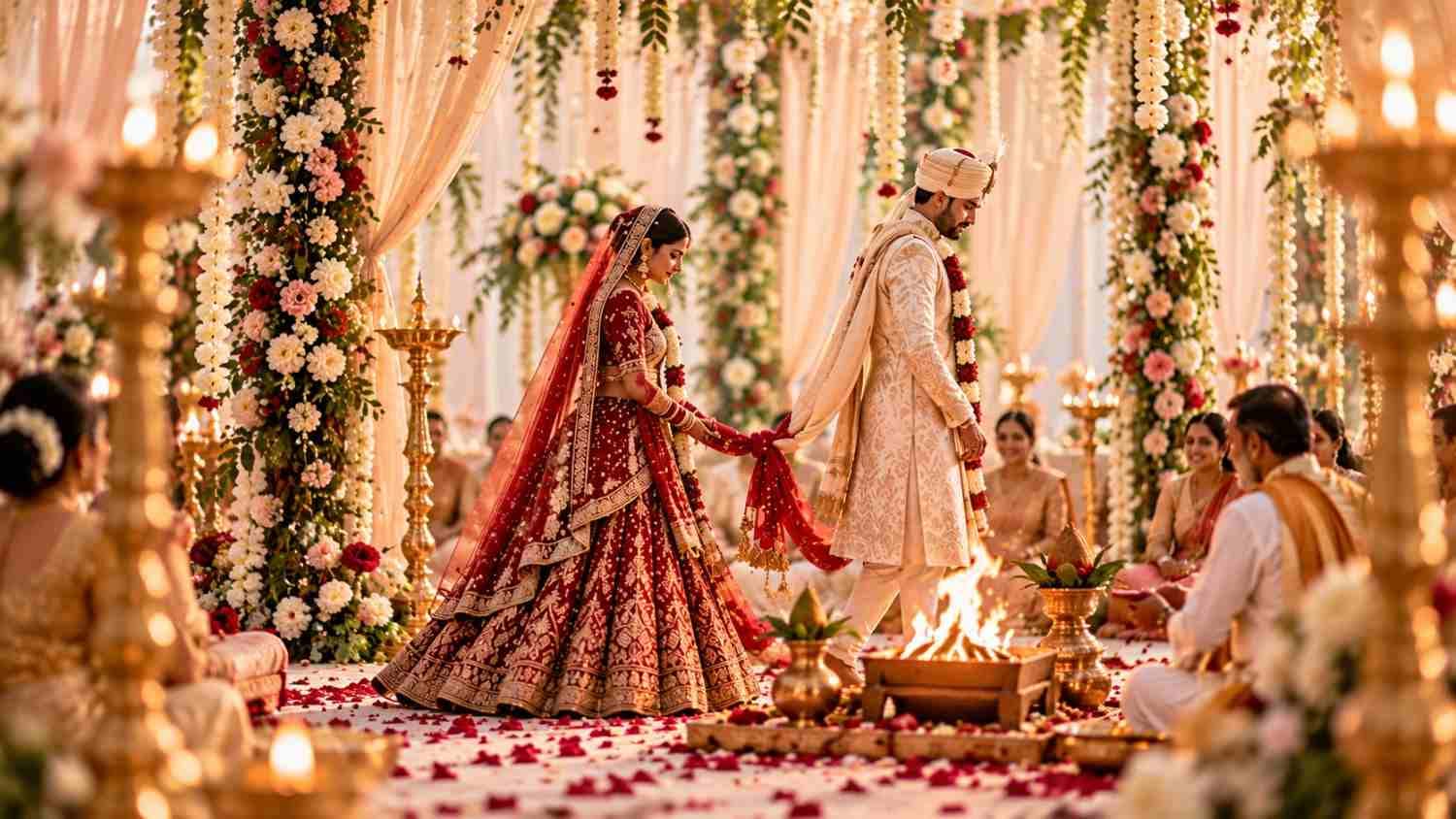
Among all the rituals in a Hindu wedding, Saat Phere, the seven circles taken around the sacred fire, remains the single most significant moment of the ceremony. It is during these seven rounds, known formally as Saptapadi, that the couple's marriage is considered complete under Hindu tradition. Each phera is paired with a specific vow, spoken or silently affirmed, that outlines a distinct promise the couple makes to each other as they begin married life together.
While many guests recognise the ritual visually, fewer are familiar with what each individual vow actually represents. Understanding the meaning behind each phera adds depth to what is often the emotional centrepiece of the wedding.
What Is Saat Phere?
Saat Phere, derived from Sanskrit, translates to "seven rounds." The ritual is performed around Agni, the sacred fire, which serves as a witness to the marriage in Hindu tradition. The bride and groom walk around the fire seven times, with the groom typically leading the first four rounds and the bride leading the remaining three in most traditions, though specific customs vary by region and community.
Each round corresponds to a vow, collectively covering the core commitments a couple makes to one another, spanning nourishment, strength, prosperity, happiness, family, companionship and lifelong loyalty.
The Seven Vows and Their Meaning
First Vow: Nourishment and Sustenance
The couple prays for a life free of hunger and difficulty, committing to providing for one another and ensuring mutual sustenance and physical wellbeing throughout their marriage.
Second Vow: Strength and Courage
This vow represents a commitment to face life's challenges together, drawing strength from one another and supporting each other through emotional and physical hardships.
Third Vow: Prosperity
The couple vows to work together toward shared prosperity, committing to honest means of earning and building a stable, secure life together.
Fourth Vow: Happiness and Harmony
This round represents a promise to bring joy, respect and harmony into the relationship, with both partners committing to each other's happiness and wellbeing.
Fifth Vow: Family and Progeny
The couple prays for a strong, healthy family, including the wellbeing of children they may have, and commits to raising a family rooted in respect and shared values.
Sixth Vow: Health and Longevity
This vow is a prayer for the couple's long, healthy life together, along with a commitment to caring for each other's wellbeing throughout their years of marriage.
Seventh Vow: Companionship and Loyalty
The final round represents the deepest commitment of the ritual, a vow of eternal friendship, loyalty and unwavering companionship, marking the couple as life partners in the truest sense.
The Ritual Process
Preparation Before the Pheras
Before the phera ceremony begins, the couple typically completes the Kanyadaan ritual, where the bride's parents formally give her hand in marriage, followed by the Hasta Milap, where the couple's hands are joined, often with a cloth or garland, symbolising their union.
The Walk Around the Fire
The couple, connected by a cloth or garland tied between them, circles the sacred fire seven times. The priest recites Vedic mantras corresponding to each vow as the couple completes each round.
Leading Order
In most traditions, the groom leads the first four rounds, followed by the bride leading the remaining three, though some regional and community customs reverse this order or vary the sequence entirely.
Completion of the Ritual
Once the seventh phera is completed, the marriage is considered sacramentally sealed under Hindu tradition, marking the couple as husband and wife.
Regional Variations in the Ritual
While the core structure of Saat Phere remains consistent across most Hindu wedding traditions, specific customs vary by region and community:
- Some South Indian traditions incorporate the Saptapadi with additional rituals specific to regional customs, such as the tying of the Mangalsutra occurring alongside or shortly after the pheras
- Certain Northeast Indian and regional communities include additional symbolic elements during the pheras, such as specific offerings made to the fire at each round
- The exact wording and language of the mantras recited may vary depending on the specific Vedic tradition followed by the priest and family
Despite these regional differences, the underlying meaning, seven vows representing the foundational commitments of marriage, remains largely consistent across Hindu wedding traditions in India.
Why This Ritual Remains Central to Hindu Weddings
Saat Phere is considered the point at which the marriage becomes valid under Hindu tradition and, in India, holds legal significance in establishing a Hindu marriage under applicable personal law. Beyond its ceremonial weight, the ritual also serves as a structured, meaningful moment for the couple to publicly affirm the values they intend to build their marriage around, witnessed by family, friends and the sacred fire itself.
For many couples, understanding the meaning behind each vow, rather than simply performing the ritual as tradition dictates, adds a layer of personal significance to what can otherwise become a purely ceremonial moment amid a long wedding day.
Incorporating the Ritual Meaningfully Into the Wedding
Some couples choose to have the priest explain each vow's meaning aloud in the couple's spoken language, alongside the traditional Sanskrit mantras, helping guests unfamiliar with the ritual understand its significance in real time. Others print a brief explanation of the seven vows in the wedding program or invitation insert, giving guests context before the ceremony begins.
Conclusion
Saat Phere represents far more than a ceremonial walk around a fire. Each of the seven vows carries a distinct, meaningful commitment, covering sustenance, strength, prosperity, happiness, family, health and lifelong companionship. Understanding this structure allows both the couple and their guests to appreciate the depth behind one of the most visually recognisable, yet often under-explained, moments of a Hindu wedding.
At PS Decor, ceremony planning includes coordinating with priests and families to ensure traditional rituals like Saat Phere are conducted smoothly and meaningfully, staying true to their cultural and spiritual significance.
Frequently Asked Questions
- Why are there exactly seven vows in Saat Phere?
The number seven holds significance in Hindu tradition, and each of the seven vows represents a distinct commitment covering different aspects of married life, from sustenance to lifelong companionship. - Who leads the pheras, the bride or the groom?
In most traditions, the groom leads the first four rounds, and the bride leads the remaining three, though this order can vary by regional and community customs. - Is Saat Phere legally significant, or purely ceremonial?
In India, the completion of Saptapadi holds legal significance in establishing a valid Hindu marriage under applicable personal law, in addition to its religious and ceremonial importance. - Do all Hindu communities in India follow the same phera rituals?
The core structure remains largely consistent, though specific customs, mantra language and accompanying rituals can vary by region and community. - Can the vows be explained to guests during the ceremony?
Yes, many couples ask the priest to explain each vow's meaning in the couple's spoken language, or include a brief explanation in the wedding program for guests unfamiliar with the ritual.