
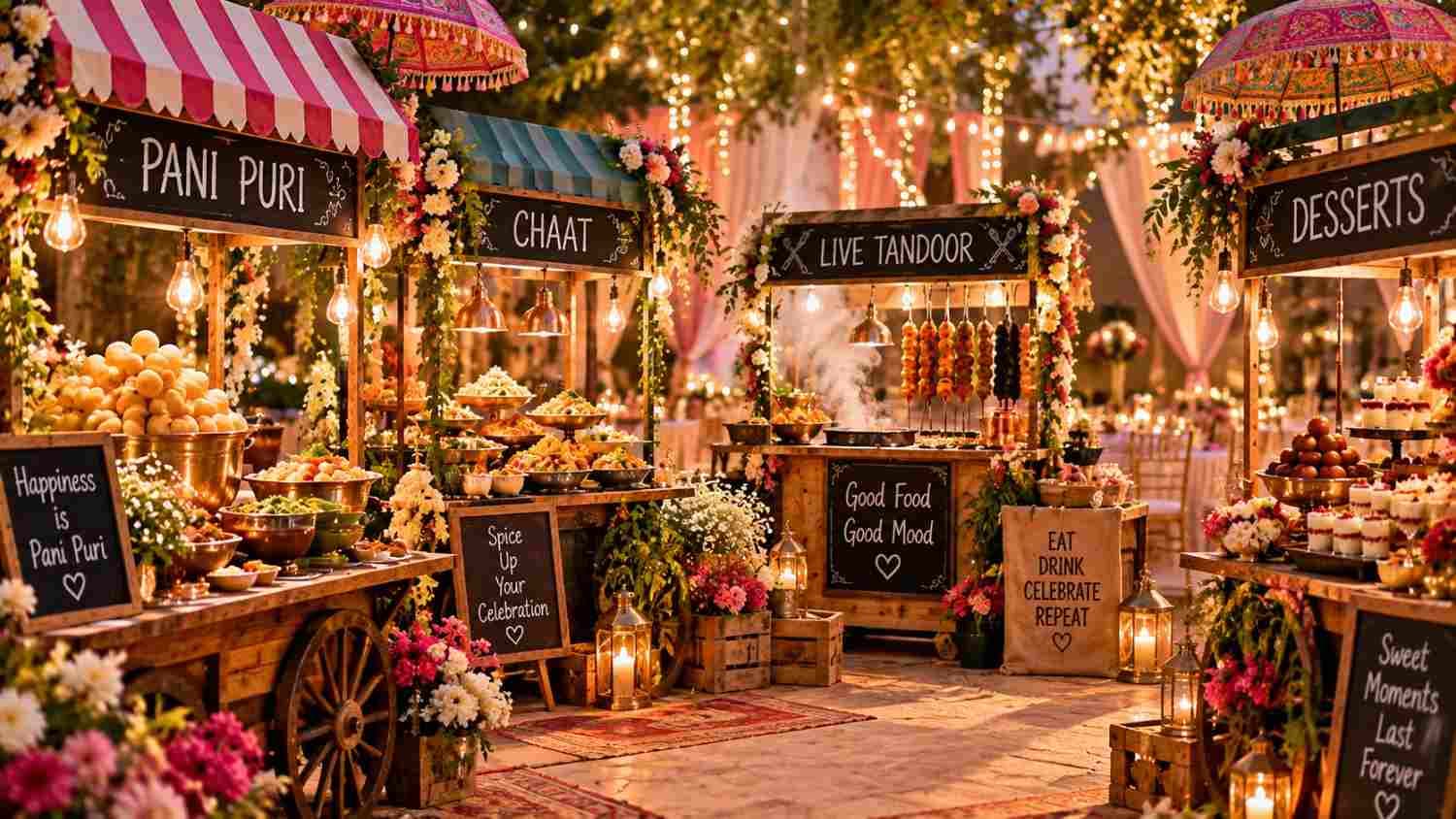
Formal plated dinners and standard buffet lines still have their place at Indian weddings, but in 2026, couples are increasingly adding something more playful to the mix: street-style food stalls. Recreating the look and energy of a bustling Indian street food market, complete with chaat counters, live tawa stations and roadside-style setups, these stalls have become one of the most popular additions to modern wedding menus, particularly for cocktail hours, sangeet nights and late-evening reception snacking.
The appeal goes beyond taste. Street-style stalls bring an interactive, nostalgic energy to the wedding, giving guests a food experience that feels casual, fun and genuinely different from the formal dining segments of the event.
Why Street-Style Food Stalls Are Trending
- They add a fun, informal energy that balances out the more formal segments of a wedding
- Guests get to interact directly with chefs preparing food live, rather than picking from a static buffet
- The visual setup, carts, string lights, rustic signage, doubles as a décor element in itself
- Nostalgic street food flavours resonate strongly across age groups and regional backgrounds
- They work well as a late-night food option, keeping guests energised during longer reception hours
Popular Street-Style Stall Concepts
Chaat Counters
Classic favourites like pani puri, bhel puri, sev puri and aloo tikki chaat remain the most requested street-style addition, often set up as a self-serve or chef-assisted live counter.
Chinese and Indo-Chinese Carts
Momos, noodles and Manchurian-style dishes prepared live on a tawa or wok cart have become a reliable crowd favourite, especially for younger guests and late-evening snacking.
Kathi Roll and Frankie Stations
A live rolling station serving customisable kathi rolls or frankies allows guests to choose fillings, adding an interactive element alongside the food itself.
South Indian Tiffin Carts
Mini dosas, idli and vada served from a compact live counter bring a South Indian street food touch, particularly popular at weddings blending regional cuisines.
Golgappa and Jaljeera Bars
A dedicated golgappa station, often paired with multiple flavoured water options, has become a signature interactive stall at many weddings, drawing consistent queues throughout the evening.
Kulfi and Falooda Carts
For dessert, traditional kulfi and falooda carts offer a nostalgic, street-style alternative to standard dessert tables, often finished with a live churning or serving element.
Regional Street Food Specialities
Depending on the couple's background, regional specialities such as Mumbai-style vada pav, Delhi's chole bhature, or Lucknow's kebabs are increasingly featured as dedicated stalls representing local food culture.
Styling the Street-Style Setup
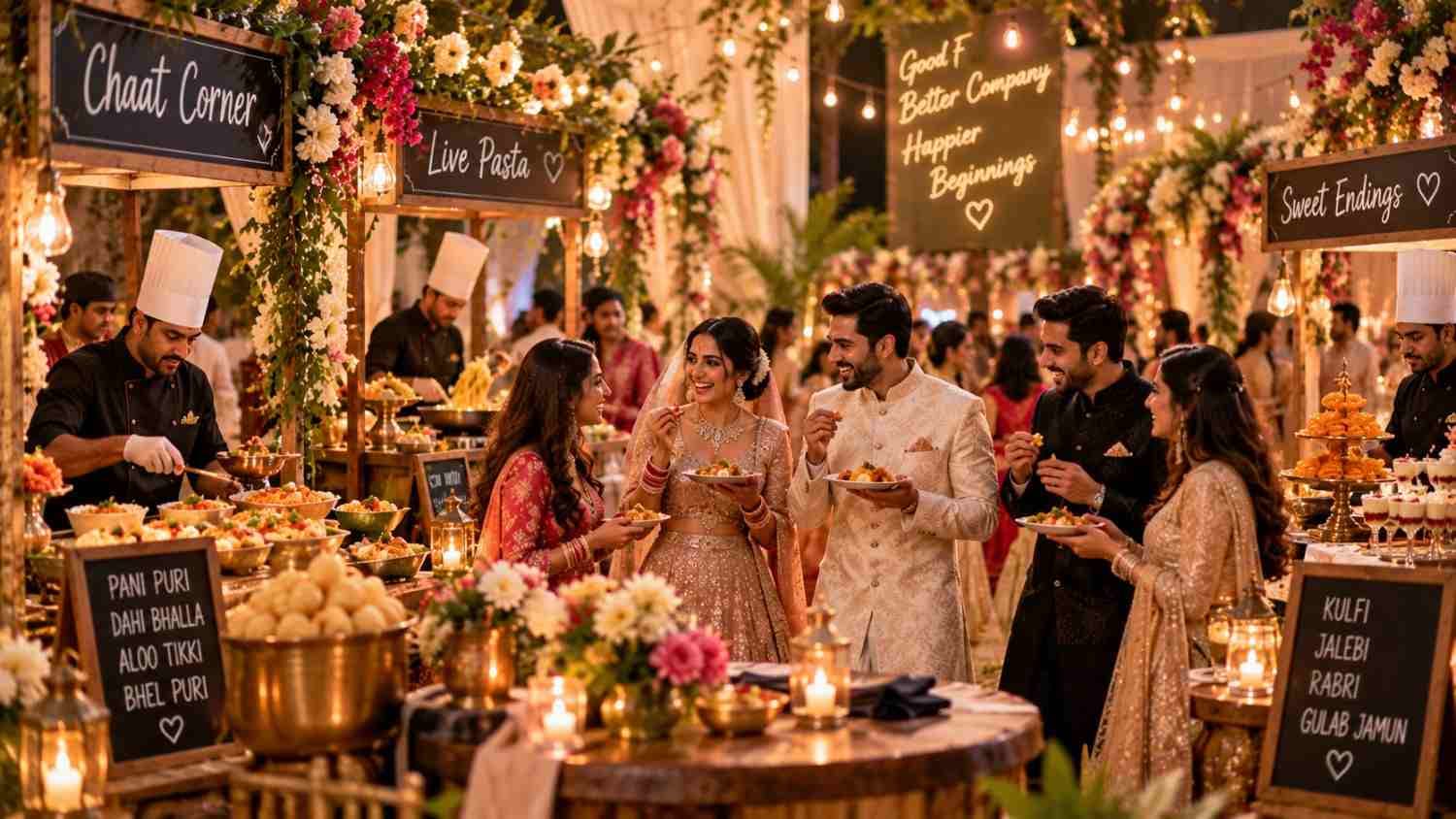
Part of the appeal of these stalls lies in their presentation, which is designed to recreate an authentic street market feel rather than a polished catering counter.
- Rustic carts and vintage-style stalls with wooden or metal cart structures rather than standard catering tables
- String lights and hanging lanterns to recreate a warm, evening market atmosphere
- Hand-painted signage and menu boards listing stall names and offerings in a playful, informal font style
- Newspaper-style or banana leaf serveware for an authentic, nostalgic presentation
- Small stools or standing counters encouraging a casual, mingling atmosphere rather than formal seated dining
Where Street-Style Stalls Fit in the Wedding Timeline
- Cocktail hour — a natural fit for interactive, casual bites before the formal dinner service begins
- Sangeet night — high-energy stalls like chaat and Indo-Chinese carts complement the evening's overall festive atmosphere
- Late-night reception snacking — offering lighter street-style options later in the evening keeps guests engaged as the night continues
- Mehendi or daytime functions — lighter stalls like golgappa or fruit chaat work well for daytime celebrations with a more relaxed vibe
Planning Considerations for Street-Style Stalls
Vendor Selection
Working with vendors experienced specifically in live street-style setups, rather than standard catering teams attempting an unfamiliar format, ensures both authenticity and smooth live cooking execution.
Guest Flow and Queue Management
Popular stalls like golgappa and chaat counters can draw longer queues, so planning multiple stations or staggered stall openings helps manage guest flow, especially for larger weddings.
Hygiene and Food Safety
Since these stalls often involve live preparation and shared serving elements, confirming hygiene standards and food safety practices with vendors is particularly important given the higher guest interaction involved.
Space and Layout
Street-style stalls need adequate spacing to recreate an authentic market feel without overcrowding, so layout planning should account for both stall size and expected guest footfall.
Dietary Considerations
As with any wedding menu, planning vegetarian, Jain and other dietary requirements across street-style stalls ensures all guests have suitable options, particularly for stalls involving shared cooking surfaces.
Balancing Street-Style Stalls With the Formal Menu
Most couples use street-style stalls as a complement to, rather than a replacement for, the main wedding meal. A common approach places street-style stations during cocktail hour or as a late-night addition, while keeping a structured plated or buffet dinner as the main event, giving guests both a fun interactive experience and a proper formal meal.
Conclusion
Street-style food stalls bring a playful, nostalgic energy to modern wedding menus, turning food service into an interactive, memorable part of the celebration rather than a purely functional element. From chaat counters to kulfi carts, these stalls add both flavour and atmosphere, particularly when styled authentically and planned thoughtfully alongside the main wedding meal.
At PS Decor, menu planning includes coordinating street-style food stall vendors and styling, helping couples add this fun, interactive element to their wedding without compromising the overall dining experience.
Frequently Asked Questions
- Are street-style food stalls suitable as a replacement for the main wedding meal?
Not typically. Most couples use them to complement the main meal, often during cocktail hour or late-night snacking, rather than as a full replacement. - How many street-style stalls should a wedding include?
This depends on guest count and venue space, but three to five well-curated stalls generally work better than spreading too thin across many options. - Are these stalls hygienic given the live cooking element?
Reputable vendors experienced in live street-style setups follow proper food safety practices, so it's important to confirm hygiene standards specifically when booking this type of catering. - Can street-style stalls accommodate dietary restrictions like Jain or vegetarian requirements?
Yes, with advance planning, most stalls can offer suitable variations, though this should be confirmed clearly with the vendor before finalising the menu. - What time during the wedding works best for street-style stalls?
Cocktail hour and late-night reception snacking are the most popular slots, though lighter stalls also work well for daytime functions like mehendi.